
在低收入和中等收入国家,人际心理治疗与其他心理和药物干预措施相比,对减轻被诊断为产后抑郁症的女性抑郁症状的有效性:一项系统评价。
Effectiveness of interpersonal psychotherapy in comparison to other psychological and pharmacological interventions for reducing depressive symptoms in women diagnosed with postpartum depression in low- and middle-income countries: A systematic review.
作者信息
Kang Harmeet Kaur, Bisht Bandana, Kaur Manmeet, Alexis Obrey, Worsley Aaron, John Denny
机构信息
Chitkara School of Health Sciences Chitkara University Punjab India.
Department of Psychiatry Government Medical College & Hospital Chandigarh India.
出版信息
Campbell Syst Rev. 2024 Apr 21;20(2):e1399. doi: 10.1002/cl2.1399. eCollection 2024 Jun.
BACKGROUND
Postpartum depression (PPD) is a condition that can affect any woman regardless of ethnicity, age, party, marital status, income, and type of delivery. This condition is highly prevalent worldwide. PPD, if not treated timely, can affect the maternal-child bond and can have a detrimental impact on the future cognitive, emotional, and behavioral development of the child. Interpersonal psychotherapy (IPT) has been reported as an effective treatment of PPD in previous studies as this focuses on relationship and social support issues. Previous reviews conducted in developed nations have reported the superior efficacy of IPT in comparison to other treatment options. There is no systematic review conducted in low to middle-income countries on the efficacy of IPT on PPD. Therefore it was necessary to undertake a systematic review to assess the effectiveness of IPT in reducing the depression among postpartum women in low and middle-income countries (LMICs).
OBJECTIVES
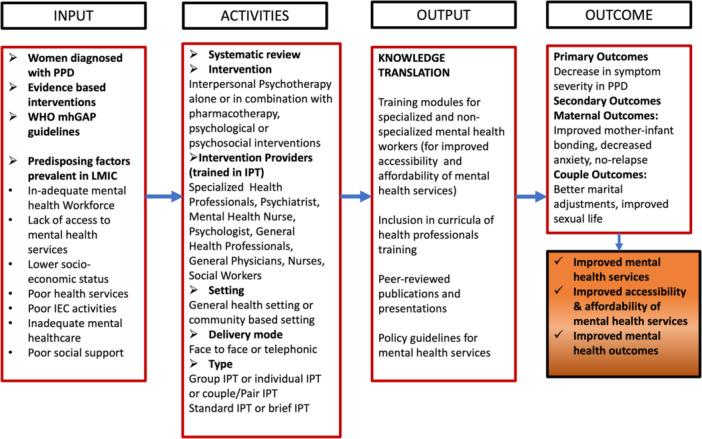
The main aim of this systematic review was to assess the effectiveness of IPT alone or in conjunction with pharmacological therapy and/or other psychological and psychosocial interventions, in reducing depressive symptoms among women diagnosed with PPD residing in LMICs.
SEARCH METHODS
The systematic search encompassed several prominent databases and grey literature. Furthermore, experts specializing in the field of IPT were consulted to identify any relevant studies conducted in LMICs that fulfilled the predetermined eligibility criteria. The most recent search update was performed in July 2022.
SELECTION CRITERIA
The PICOS criteria were meticulously defined for this review as described. Participants: Postpartum women diagnosed with PPD in LMICs were included. Intervention: IPT either as a standalone treatment or in conjunction with pharmacological therapy was included. Comparison: any form of psychological therapy or pharmacological therapy, whether administered individually or in combination, was considered for comparison. Study designs: experimental and quasi-experimental, factorial designs, and quantitative components (experimental, quasi-experimental, factorial designs) of mixed methods designs were eligible to be included. Studies with single-group study designs and qualitative studies were excluded from the review.
DATA COLLECTION AND ANALYSIS
Two reviewers from our team conducted a rigorous screening process to determine the eligibility of articles for inclusion. This involved an initial evaluation of titles and abstracts, followed by a comprehensive assessment of the full text of selected articles. In instances where discrepancies arose between the two reviewers, resolution was achieved through discussion or consultation with a third author to establish a consensus. Following the screening process, two team members independently extracted pertinent information and data from the studies that met the inclusion criteria. The treatment effect of the intervention, in comparison to the control group, was subsequently analyzed utilizing the fixed effects model taking into account the small number of studies.
MAIN RESULTS
A total of 17,588 studies were identified from various databases, and 6493 duplicate studies were removed. Subsequently, 9380 studies underwent independent title and abstract screening resulting in the exclusion of 9040 studies. 345 full texts were thoroughly assessed leading to the exclusion of 341 studies, finally including 4 studies for review. The four included trials were randomized trials and comprised a total sample size of 188 women diagnosed with PPD residing in LMICs. Among these studies, three compared IPT with usual treatment, while one study compared IPT with antidepressant medications (ADMs). In terms of the providers of IPT, in one study, IPT was administered by nurses, while psychologists delivered IPT in another study. In one study, community health workers were responsible for providing IPT. However, in one study, information regarding the specific providers of IPT was not available or reported. The primary outcome measure reported in all four studies was depression, assessed using the Edinburgh Postnatal Depression Scale (EPDS). The geographical distribution of the studies included; one conducted in Zambia, one in Kenya, one in Pakistan, and one in Iran. Out of the four studies, three were included in the meta-analysis, as missing data from one study could not be obtained. Based on the overall treatment effect, it was found that depression scores decreased significantly more in the IPT group compared to other interventions (usual treatment or ADMs) (standardized mean difference [SMD] -0.62, 95% confidence interval [CI] (-1.01, -0.23), = 3.13 ( = 0.002), = 49.49; df = 2; < 0.00001; = 96%; 3 studies, = 136). Out of the three studies, two studies compared the effectiveness of IPT in reducing depression scores specifically when compared to the usual treatment, and in both studies, depression scores were reduced significantly in the IPT group as compared to the usual treatment group. Only one study directly compared the effectiveness of IPT with ADM, reporting that IPT was more effective than ADM in reducing depression scores among postpartum women. Regarding adverse outcomes, only one study reported suicidal ideation with one participant in the IPT group and two in the ADM group (RR 0.50, 95% CI (0.05, 5.30), = 0.56, = 78). The same study reported seven participants in the ADM group had adverse drug reactions as compared to none in the IPT group (RR 15.0, 95% CI (0.89, 254), = 0.06, = 78).
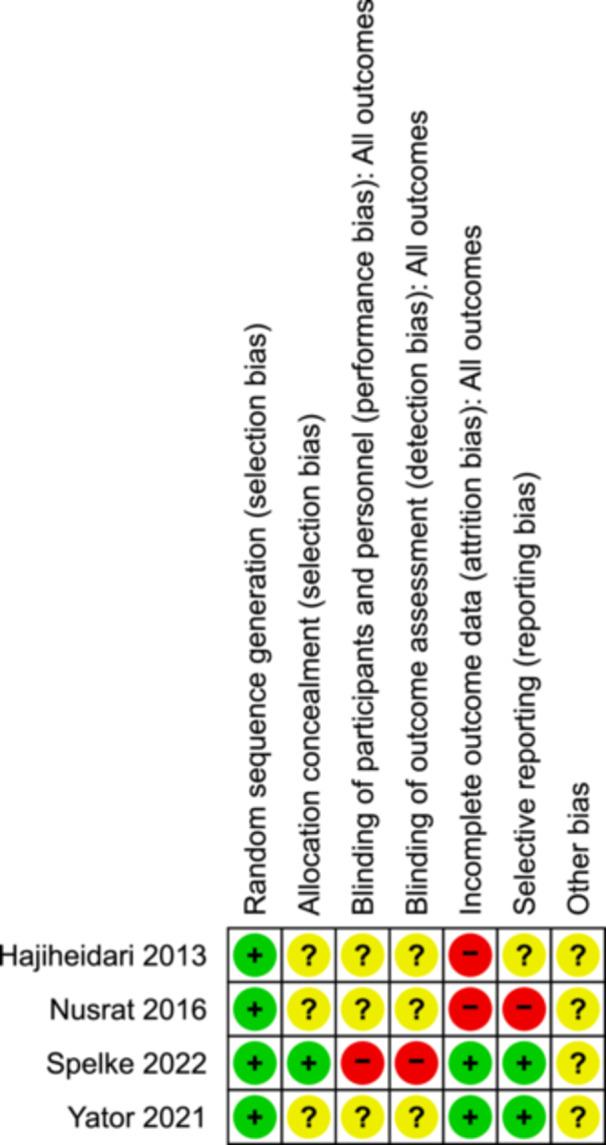
AUTHORS' CONCLUSIONS: Our comprehensive search yielded a limited number of four studies conducted in such settings. Despite the scarcity of available evidence, the findings collectively suggest that IPT is indeed an effective treatment for reducing PPD when compared to usual treatment and pharmacological therapy. However given the low certainty of evidence, there is a need for further research in the form of well-designed randomized controlled trials with larger sample sizes and a reduced risk of bias. Such studies would greatly contribute to enhancing the strength and reliability of the evidence base regarding the effectiveness of IPT in the context of PPD in LMICs. The knowledge generated from future research endeavors would be highly valuable in guiding the development of more affordable and cost-effective treatment approaches for PPD in resource-limited settings.
背景
产后抑郁症(PPD)是一种可影响任何女性的疾病,无论其种族、年龄、党派、婚姻状况、收入和分娩方式如何。这种疾病在全球范围内高度流行。如果不及时治疗,PPD会影响母婴关系,并对儿童未来的认知、情感和行为发展产生不利影响。人际心理治疗(IPT)在先前的研究中已被报道为治疗PPD的有效方法,因为它侧重于人际关系和社会支持问题。在发达国家进行的先前综述报告称,与其他治疗选择相比,IPT具有更高的疗效。在低收入和中等收入国家,尚未对IPT治疗PPD的疗效进行系统综述。因此,有必要进行系统综述,以评估IPT在降低低收入和中等收入国家(LMICs)产后妇女抑郁症方面的有效性。
目的
本系统综述的主要目的是评估单独使用IPT或与药物治疗和/或其他心理和社会心理干预相结合,在降低LMICs中被诊断为PPD的女性抑郁症状方面的有效性。
搜索方法
系统搜索涵盖了几个著名的数据库和灰色文献。此外,还咨询了IPT领域的专家,以确定在LMICs中进行的符合预定纳入标准的任何相关研究。最近一次搜索更新于2022年7月进行。
选择标准
如前所述,为本综述精心定义了PICOS标准。参与者:纳入在LMICs中被诊断为PPD的产后妇女。干预措施:包括单独使用IPT或与药物治疗相结合的IPT。对照:考虑任何形式的心理治疗或药物治疗,无论是单独使用还是联合使用,进行比较。研究设计:实验性和准实验性、析因设计以及混合方法设计的定量部分(实验性、准实验性、析因设计)均符合纳入条件。单组研究设计的研究和定性研究被排除在综述之外。
数据收集与分析
我们团队的两名评审员进行了严格的筛选过程,以确定纳入文章的资格。这包括对标题和摘要进行初步评估,然后对选定文章的全文进行全面评估。当两名评审员之间出现差异时,通过讨论或与第三位作者协商来达成共识。在筛选过程之后,两名团队成员独立从符合纳入标准的研究中提取相关信息和数据。随后,考虑到研究数量较少,使用固定效应模型分析干预措施与对照组相比的治疗效果。
主要结果
从各种数据库中识别出总共17588项研究,并删除了6493项重复研究。随后,对9380项研究进行了独立的标题和摘要筛选,排除了9040项研究。对345篇全文进行了全面评估,排除了341项研究,最终纳入4项研究进行综述。纳入的四项试验均为随机试验,总样本量为188名居住在LMICs中被诊断为PPD的女性。在这些研究中,三项将IPT与常规治疗进行了比较,而一项研究将IPT与抗抑郁药物(ADMs)进行了比较。就IPT的提供者而言,在一项研究中,IPT由护士实施,而在另一项研究中,心理学家提供IPT。在一项研究中,社区卫生工作者负责提供IPT。然而,在一项研究中,关于IPT具体提供者的信息未提供或未报告。所有四项研究报告的主要结局指标都是抑郁症,使用爱丁堡产后抑郁量表(EPDS)进行评估。这些研究的地理分布包括:一项在赞比亚进行,一项在肯尼亚进行,一项在巴基斯坦进行,一项在伊朗进行。在这四项研究中,三项被纳入荟萃分析,因为无法获得一项研究的缺失数据。基于总体治疗效果,发现与其他干预措施(常规治疗或ADMs)相比,IPT组的抑郁评分显著降低更多(标准化平均差[SMD] -0.62,95%置信区间[CI](-1.01,-0.23),z = 3.13(p = 0.002),I² = 49.49;df = 2;p < 0.00001;I² = 96%;3项研究,n = 136)。在这三项研究中,两项研究比较了IPT在降低抑郁评分方面的有效性,特别是与常规治疗相比,并且在这两项研究中,与常规治疗组相比,IPT组的抑郁评分显著降低。只有一项研究直接比较了IPT与ADM的有效性,报告称IPT在降低产后妇女抑郁评分方面比ADM更有效。关于不良结局,只有一项研究报告了IPT组有一名参与者出现自杀意念,ADM组有两名参与者出现自杀意念(风险比[RR] 0.50,95%置信区间[CI](0.05,5.30),p = 0.56,n = 78)。同一研究报告称,ADM组有7名参与者出现药物不良反应,而IPT组无(RR 15.0,95%置信区间[CI](0.89,254),p = 0.06)。
作者结论
我们全面的搜索仅得到了在这种环境下进行的四项有限的研究。尽管现有证据不足,但研究结果共同表明,与常规治疗和药物治疗相比,IPT确实是治疗PPD的有效方法。然而,鉴于证据的确定性较低,需要以设计良好、样本量更大且偏倚风险更低的随机对照试验的形式进行进一步研究。此类研究将极大地有助于增强关于IPT在LMICs中PPD背景下有效性的证据基础的强度和可靠性。未来研究努力产生的知识对于指导在资源有限环境中开发更经济实惠且具有成本效益的PPD治疗方法将具有极高的价值。



 Zotero 插件