
LSD1 驱动肠道上皮细胞成熟,并在小鼠模型中独立于微生物群控制小肠免疫细胞组成。
LSD1 drives intestinal epithelial maturation and controls small intestinal immune cell composition independent of microbiota in a murine model.
机构信息
Centre of Molecular Inflammation Research, Department of Clinical and Molecular Medicine, Norwegian University of Science and Technology, Trondheim, Norway.
Princess Margaret Cancer Centre, University Health Network, Toronto, ON, Canada.
出版信息
Nat Commun. 2024 Apr 22;15(1):3412. doi: 10.1038/s41467-024-47815-2.
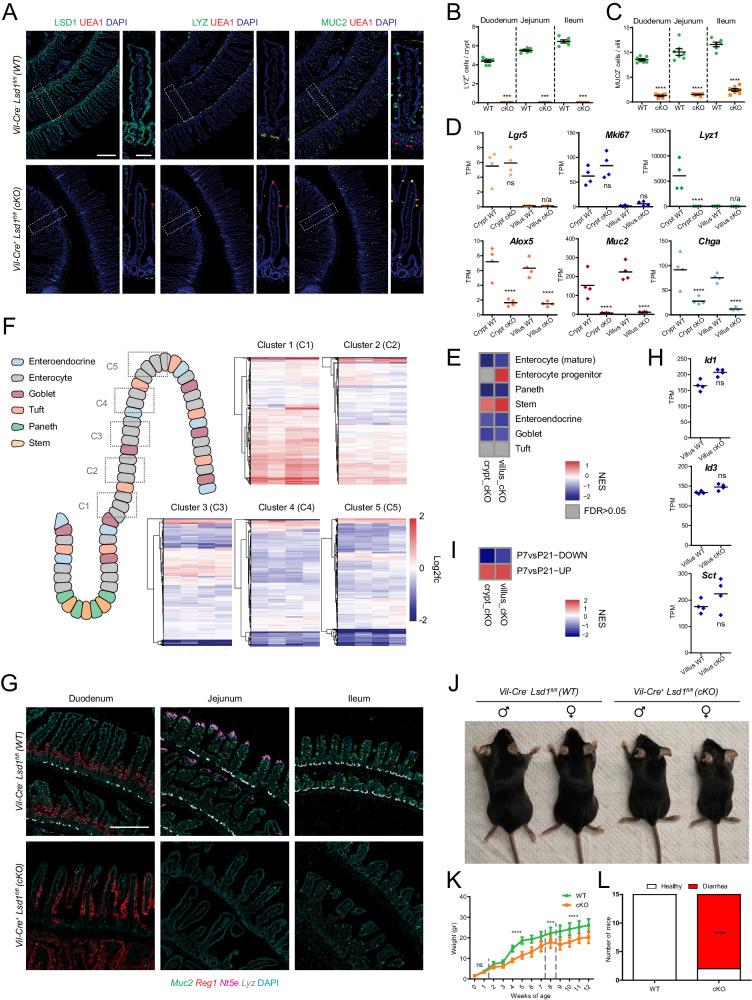
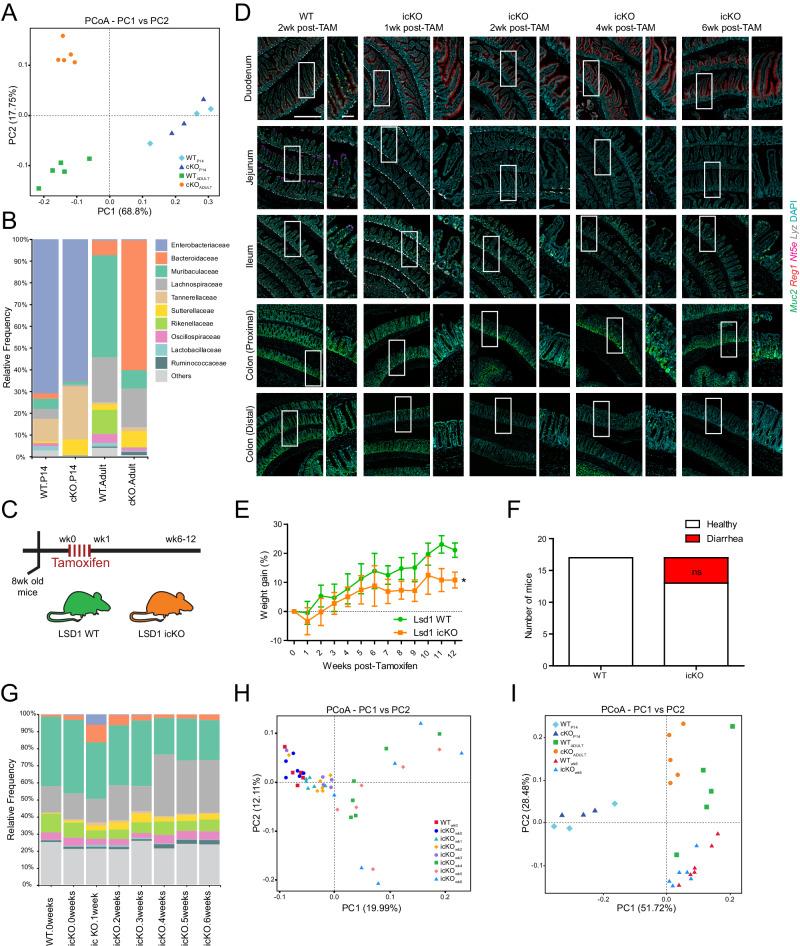
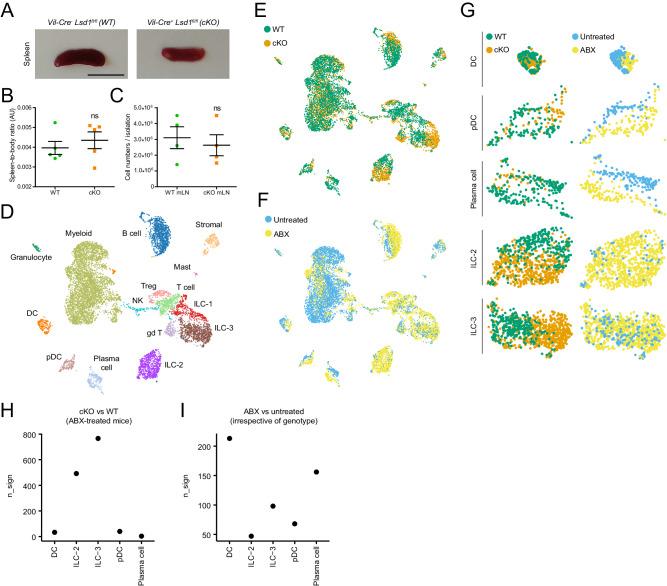
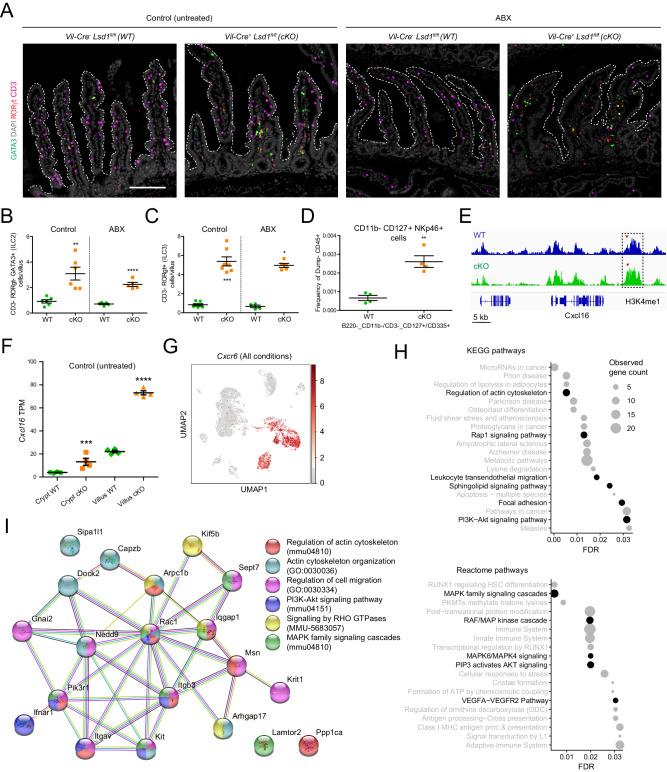
Postnatal development of the gastrointestinal tract involves the establishment of the commensal microbiota, the acquisition of immune tolerance via a balanced immune cell composition, and maturation of the intestinal epithelium. While studies have uncovered an interplay between the first two, less is known about the role of the maturing epithelium. Here we show that intestinal-epithelial intrinsic expression of lysine-specific demethylase 1A (LSD1) is necessary for the postnatal maturation of intestinal epithelium and maintenance of this developed state during adulthood. Using microbiota-depleted mice, we find plasma cells, innate lymphoid cells (ILCs), and a specific myeloid population to depend on LSD1-controlled epithelial maturation. We propose that LSD1 controls the expression of epithelial-derived chemokines, such as Cxcl16, and that this is a mode of action for this epithelial-immune cell interplay in local ILC2s but not ILC3s. Together, our findings suggest that the maturing epithelium plays a dominant role in regulating the local immune cell composition, thereby contributing to gut homeostasis.
肠道的出生后发育涉及共生微生物菌群的建立、通过平衡的免疫细胞组成获得免疫耐受,以及肠上皮的成熟。虽然研究已经揭示了前两者之间的相互作用,但对于成熟上皮的作用知之甚少。在这里,我们表明,肠上皮固有表达赖氨酸特异性去甲基化酶 1A(LSD1)对于肠道上皮的出生后成熟以及成年期维持这种发育状态是必需的。使用微生物群耗竭的小鼠,我们发现浆细胞、固有淋巴细胞(ILCs)和特定的髓样细胞群依赖于 LSD1 控制的上皮成熟。我们提出 LSD1 控制上皮衍生趋化因子(如 Cxcl16)的表达,这是上皮-免疫细胞相互作用在局部 ILC2 中而不是 ILC3 中的作用模式。总之,我们的发现表明,成熟的上皮在调节局部免疫细胞组成方面起着主导作用,从而有助于肠道稳态。



 Zotero 插件