
小细胞外囊泡在胆管癌中的临床意义
Clinical significance of small extracellular vesicles in cholangiocarcinoma.
作者信息
Wang Jianjun, Shi Ruizi, Yin Yuan, Luo Hua, Cao Yuan, Lyu Yun, Luo Huiwen, Zeng Xintao, Wang Decai
机构信息
Department of Hepatobiliary Surgery, Mianyang Central Hospital, School of Medicine, University of Electronic Science and Technology of China, Mianyang, China.
National Health Commission (NHC) Key Laboratory of Nuclear Technology Medical Transformation, Mianyang Central Hospital, School of Medicine, University of Electronic Science and Technology of China, Mianyang, China.
出版信息
Front Oncol. 2024 Apr 11;14:1334592. doi: 10.3389/fonc.2024.1334592. eCollection 2024.
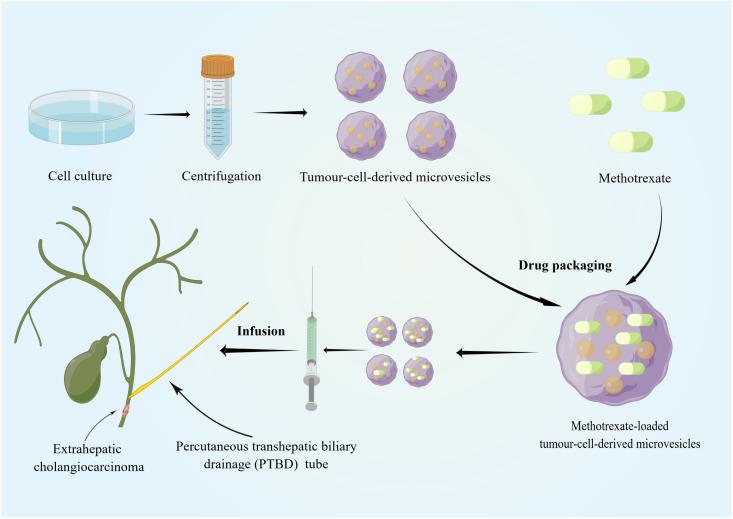
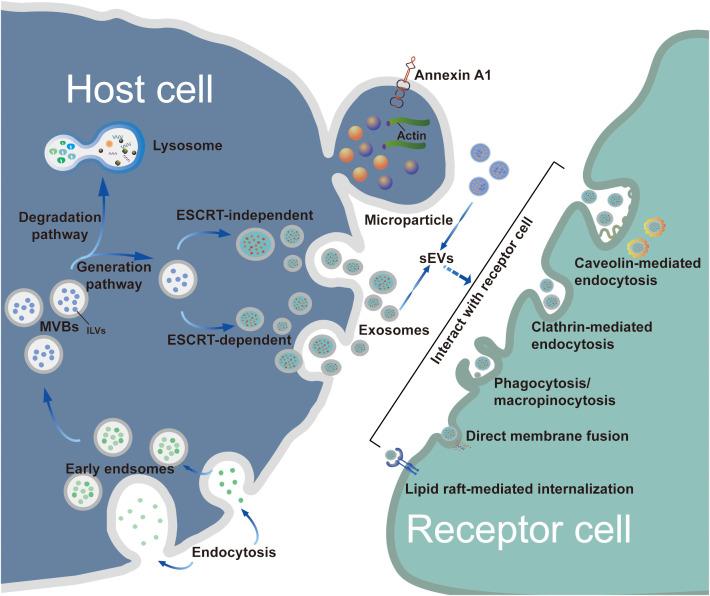
Cholangiocarcinoma is an aggressive and heterogeneous malignancy originating from the bile duct epithelium. It is associated with poor prognosis and high mortality. The global incidence of cholangiocarcinoma is rising, and there is an urgent need for effective early diagnosis and treatment strategies to reduce the burden of this devastating tumor. Small extracellular vesicles, including exosomes and microparticles, are nanoscale vesicles formed by membranes that are released both normally and pathologically from cells, mediating the intercellular transfer of substances and information. Recent studies have demonstrated the involvement of small extracellular vesicles in numerous biological processes, as well as the proliferation, invasion, and metastasis of tumor cells. The present review summarizes the tumorigenic roles of small extracellular vesicles in the cholangiocarcinoma microenvironment. Owing to their unique composition, accessibility, and stability in biological fluids, small extracellular vesicles have emerged as ideal biomarkers for use in liquid biopsies for diagnosing and outcome prediction of cholangiocarcinoma. Specific tissue tropism, theoretical biocompatibility, low clearance, and strong biological barrier penetration of small extracellular vesicles make them suitable drug carriers for cancer therapy. Furthermore, the potential value of small extracellular vesicle-based therapies for cholangiocarcinoma is also reviewed.
胆管癌是一种起源于胆管上皮的侵袭性异质性恶性肿瘤。它与预后不良和高死亡率相关。全球胆管癌发病率正在上升,迫切需要有效的早期诊断和治疗策略来减轻这种毁灭性肿瘤的负担。小细胞外囊泡,包括外泌体和微泡,是由细胞膜形成的纳米级囊泡,在正常和病理情况下均可从细胞中释放,介导细胞间物质和信息的传递。最近的研究表明,小细胞外囊泡参与了许多生物学过程,以及肿瘤细胞的增殖、侵袭和转移。本综述总结了小细胞外囊泡在胆管癌微环境中的致瘤作用。由于其独特的组成、可及性以及在生物体液中的稳定性,小细胞外囊泡已成为用于胆管癌诊断和预后预测的液体活检的理想生物标志物。小细胞外囊泡具有特定的组织嗜性、理论上的生物相容性、低清除率以及强大的生物屏障穿透能力,使其成为癌症治疗的合适药物载体。此外,还综述了基于小细胞外囊泡的疗法对胆管癌的潜在价值。
 Zotero 插件