
抗生素增强生物膜感染的热根除效果。
Antibiotic Augmentation of Thermal Eradication of Biofilm Infections.
作者信息
Aljaafari Haydar A S, Abdulwahhab Nadia I, Nuxoll Eric
机构信息
Department of Chemical and Biochemical Engineering, University of Iowa, Iowa City, IA 52242, USA.
Department of Chemical Engineering, University of Technology, Baghdad 10066, Iraq.
出版信息
Pathogens. 2024 Apr 16;13(4):327. doi: 10.3390/pathogens13040327.
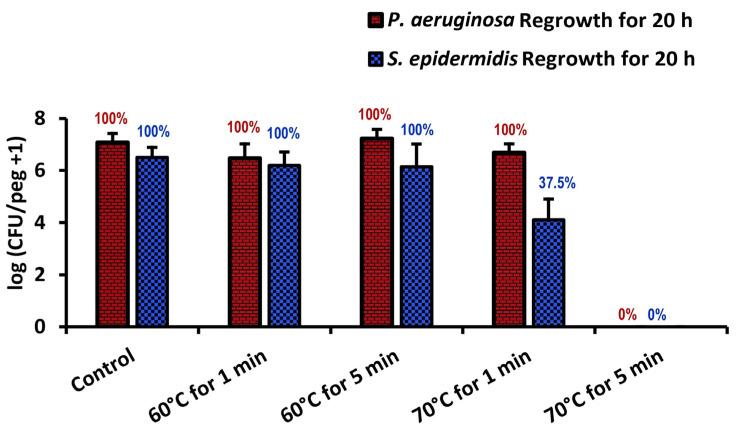
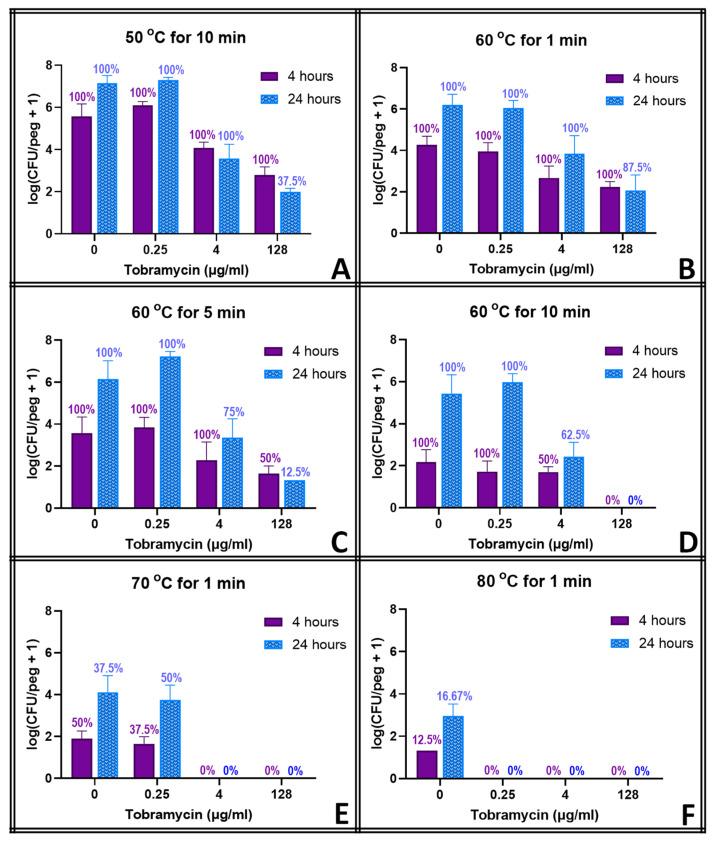
is a major contributor to bacterial infections on medical implants, currently treated by surgical removal of the device and the surrounding infected tissue at considerable morbidity and expense. In situ hyperthermia is being investigated as a non-invasive means of mitigating these bacterial biofilm infections, but minimizing damage to the surrounding tissue requires augmenting the thermal shock with other approaches such as antibiotics and discerning the minimum shock required to eliminate the biofilm. biofilms were systematically shocked at a variety of temperatures (50-80 °C) and durations (1-10 min) to characterize their thermal susceptibility and compare it to other common nosocomial pathogens such as and . Biofilms were also exposed to three classes of antibiotics (ciprofloxacin, tobramycin and erythromycin) separately at concentrations ranging from 0 to 128 μg mL to evaluate their impact on the efficacy of thermal shock and the subsequent potential regrowth of the biofilm. biofilms were shown to be more thermally susceptible to hyperthermia than other common bacterial pathogens. All three antibiotics substantially decreased the duration and/or temperature needed to eliminate the biofilms, though this augmentation did not meet the criteria of synergism immediately following thermal shock. Subsequent reincubation, however, revealed strong synergism on a longer timescale.
是医疗植入物上细菌感染的主要促成因素,目前通过手术移除装置及周围感染组织来治疗,这会带来相当高的发病率和费用。原位热疗正在作为减轻这些细菌生物膜感染的一种非侵入性手段进行研究,但要将对周围组织的损伤降至最低,需要用抗生素等其他方法增强热休克,并确定消除生物膜所需的最小休克强度。对生物膜在各种温度(50 - 80°C)和持续时间(1 - 10分钟)下进行系统的热休克处理,以表征其热敏感性,并将其与其他常见的医院病原体如和进行比较。生物膜还分别暴露于浓度范围为0至128μg/mL的三类抗生素(环丙沙星、妥布霉素和红霉素)中,以评估它们对热休克效果及生物膜后续潜在再生长的影响。结果表明,生物膜比其他常见细菌病原体对热疗更敏感。所有三种抗生素都显著降低了消除生物膜所需的持续时间和/或温度,尽管这种增强在热休克后立即未达到协同作用的标准。然而,随后的再培养显示在更长的时间尺度上有很强的协同作用。




 Zotero 插件