
探索儿童青光眼的基因图谱。
Exploring the Genetic Landscape of Childhood Glaucoma.
作者信息
Pan Yang, Iwata Takeshi
机构信息
National Institute of Sensory Organs, NHO Tokyo Medical Center, Tokyo 152-8902, Japan.
出版信息
Children (Basel). 2024 Apr 9;11(4):454. doi: 10.3390/children11040454.
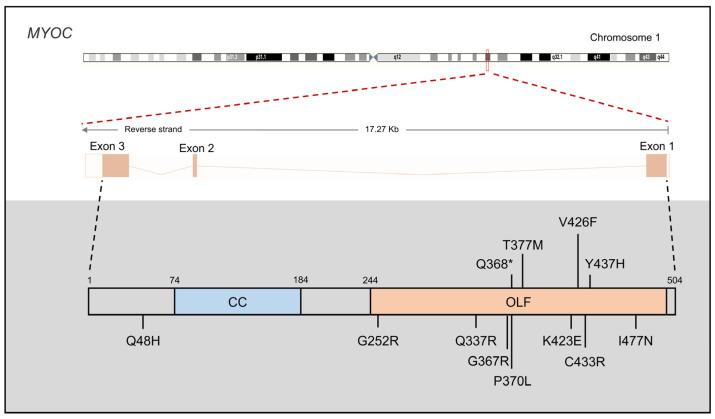
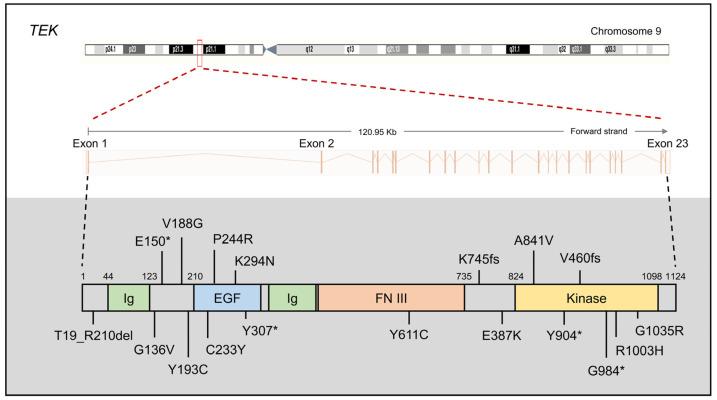
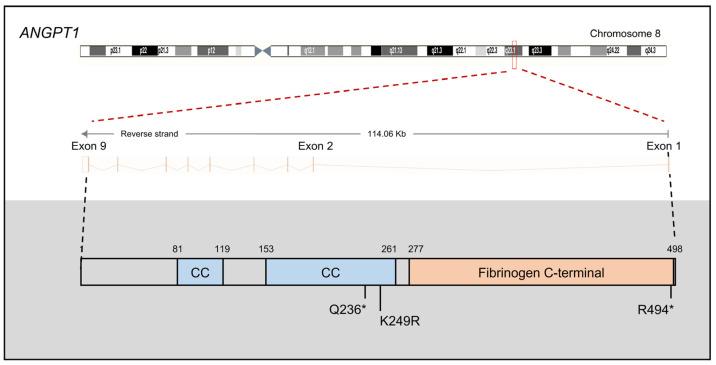
Childhood glaucoma, a significant cause of global blindness, represents a heterogeneous group of disorders categorized into primary or secondary forms. Primary childhood glaucoma stands as the most prevalent subtype, comprising primary congenital glaucoma (PCG) and juvenile open-angle glaucoma (JOAG). Presently, multiple genes are implicated in inherited forms of primary childhood glaucoma. This comprehensive review delves into genetic investigations into primary childhood glaucoma, with a focus on identifying causative genes, understanding their inheritance patterns, exploring essential biological pathways in disease pathogenesis, and utilizing animal models to study these mechanisms. Specifically, attention is directed towards genes such as (cytochrome P450 family 1 subfamily B member 1), (latent transforming growth factor beta binding protein 2), (TEK receptor tyrosine kinase), (angiopoietin 1), and (forkhead box C1), all associated with PCG; and (myocilin), associated with JOAG. Through exploring these genetic factors, this review aims to deepen our understanding of the intricate pathogenesis of primary childhood glaucoma, thereby facilitating the development of enhanced diagnostic and therapeutic strategies.
儿童青光眼是全球失明的一个重要原因,是一组异质性疾病,分为原发性或继发性。原发性儿童青光眼是最常见的亚型,包括原发性先天性青光眼(PCG)和青少年开角型青光眼(JOAG)。目前,多个基因与原发性儿童青光眼的遗传形式有关。这篇综述深入探讨了原发性儿童青光眼的基因研究,重点是确定致病基因、了解其遗传模式、探索疾病发病机制中的关键生物学途径以及利用动物模型研究这些机制。具体而言,关注的基因包括与PCG相关的(细胞色素P450家族1亚家族B成员1)、(潜伏转化生长因子β结合蛋白2)、(TEK受体酪氨酸激酶)、(血管生成素1)和(叉头框C1);以及与JOAG相关的(肌纤蛋白)。通过探索这些遗传因素,本综述旨在加深我们对原发性儿童青光眼复杂发病机制的理解,从而促进改进诊断和治疗策略的发展。


 Zotero 插件