
哮喘气道中TLSP产生、功能及释放的多因素成因与后果
Multifactorial Causes and Consequences of TLSP Production, Function, and Release in the Asthmatic Airway.
作者信息
Brister Danica L, Omer Hafsa, Whetstone Christiane E, Ranjbar Maral, Gauvreau Gail M
机构信息
Division of Respirology, Department of Medicine, McMaster University, Hamilton, ON L8N 3Z5, Canada.
出版信息
Biomolecules. 2024 Mar 26;14(4):401. doi: 10.3390/biom14040401.
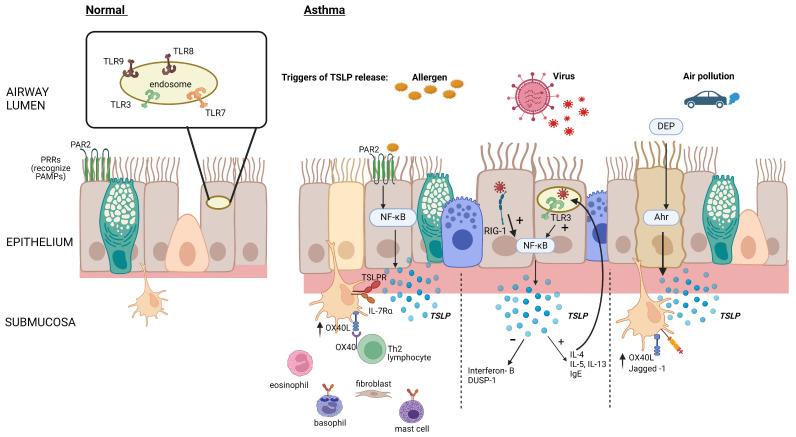
Disruption of the airway epithelium triggers a defensive immune response that begins with the production and release of alarmin cytokines. These epithelial-derived alarmin cytokines, including thymic stromal lymphopoietin (TSLP), are produced in response to aeroallergens, viruses, and toxic inhalants. An alarmin response disproportionate to the inhaled trigger can exacerbate airway diseases such as asthma. Allergens inhaled into previously sensitized airways are known to drive a T2 inflammatory response through the polarization of T cells by dendritic cells mediated by TSLP. Harmful compounds found within air pollution, microbes, and viruses are also triggers causing airway epithelial cell release of TSLP in asthmatic airways. The release of TSLP leads to the development of inflammation which, when unchecked, can result in asthma exacerbations. Genetic and inheritable factors can contribute to the variable expression of TSLP and the risk and severity of asthma. This paper will review the various triggers and consequences of TSLP release in asthmatic airways.
气道上皮的破坏会引发防御性免疫反应,该反应始于警报素细胞因子的产生和释放。这些上皮来源的警报素细胞因子,包括胸腺基质淋巴细胞生成素(TSLP),是对空气变应原、病毒和有毒吸入物作出的反应而产生的。与吸入触发因素不成比例的警报素反应会加剧哮喘等气道疾病。已知吸入到先前致敏气道中的变应原会通过树突状细胞介导的TSLP使T细胞极化,从而引发T2炎症反应。空气污染中发现的有害化合物、微生物和病毒也是引发因素,可导致哮喘气道中的气道上皮细胞释放TSLP。TSLP的释放会导致炎症的发展,如果不加以控制,可能会导致哮喘发作。遗传和可遗传因素会导致TSLP的可变表达以及哮喘的风险和严重程度。本文将综述哮喘气道中TSLP释放的各种触发因素和后果。

 Zotero 插件