
蛙皮源抗菌肽概述:对抗细菌诱导的肺部和眼表感染的多功能潜在武器。
An Overview of Frog Skin-Derived Esc Peptides: Promising Multifunctional Weapons against -Induced Pulmonary and Ocular Surface Infections.
作者信息
Mangoni Maria Luisa, Loffredo Maria Rosa, Casciaro Bruno, Ferrera Loretta, Cappiello Floriana
机构信息
Laboratory Affiliated to Pasteur Italia-Fondazione Cenci Bolognetti, Department of Biochemical Sciences, Sapienza University of Rome, 00185 Rome, Italy.
UOC Genetica Medica, IRCCS Istituto Giannina Gaslini, 16147 Genoa, Italy.
出版信息
Int J Mol Sci. 2024 Apr 16;25(8):4400. doi: 10.3390/ijms25084400.
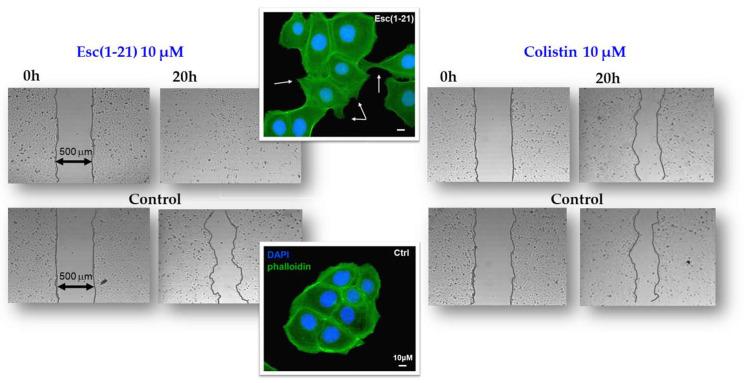
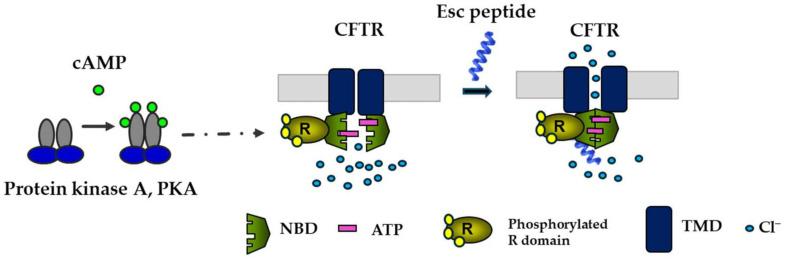
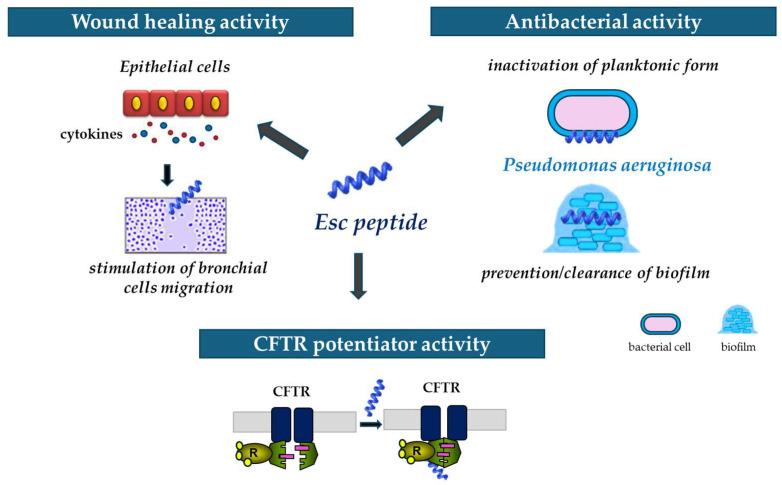
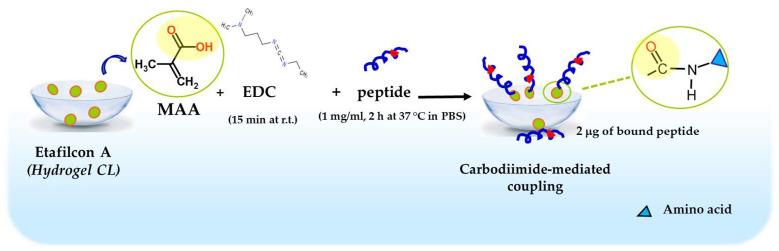
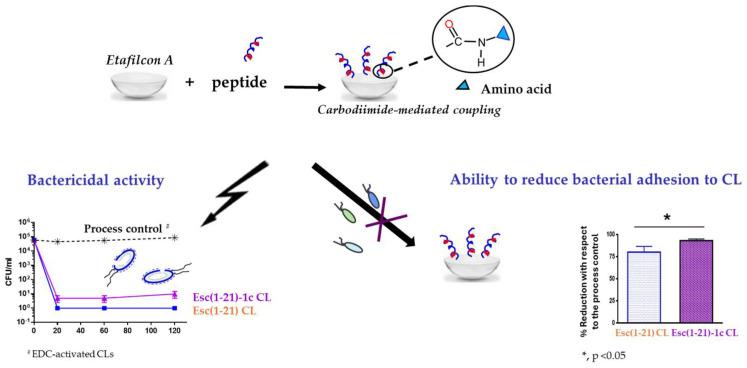
Antimicrobial resistance is a silent pandemic harming human health, and is the most common bacterium responsible for chronic pulmonary and eye infections. Antimicrobial peptides (AMPs) represent promising alternatives to conventional antibiotics. In this review, the in vitro/in vivo activities of the frog skin-derived AMP Esc(1-21) are shown. Esc(1-21) rapidly kills both the planktonic and sessile forms of and stimulates migration of epithelial cells, likely favoring repair of damaged tissue. However, to undertake preclinical studies, some drawbacks of AMPs (cytotoxicity, poor biostability, and limited delivery to the target site) must be overcome. For this purpose, the stereochemistry of two amino acids of Esc(1-21) was changed to obtain the diastereomer Esc(1-21)-1c, which is more stable, less cytotoxic, and more efficient in treating -induced lung and cornea infections in mouse models. Incorporation of these peptides (Esc peptides) into nanoparticles or immobilization to a medical device (contact lens) was revealed to be an effective strategy to ameliorate and/or to prolong the peptides' antimicrobial efficacy. Overall, these data make Esc peptides encouraging candidates for novel multifunctional drugs to treat lung pathology especially in patients with cystic fibrosis and eye dysfunctions, characterized by both tissue injury and bacterial infection.
抗菌耐药性是一场危害人类健康的无声大流行,且是导致慢性肺部和眼部感染的最常见细菌。抗菌肽(AMPs)是传统抗生素的有前景的替代物。在本综述中,展示了源自青蛙皮肤的抗菌肽Esc(1-21)的体外/体内活性。Esc(1-21)能迅速杀死浮游和固着形式的[细菌名称未给出],并刺激上皮细胞迁移,可能有利于受损组织的修复。然而,要进行临床前研究,必须克服抗菌肽的一些缺点(细胞毒性、生物稳定性差以及向靶位点的递送受限)。为此,改变了Esc(1-21)两个氨基酸的立体化学结构以获得非对映异构体Esc(1-21)-1c,其在小鼠模型中治疗[细菌名称未给出]诱导的肺部和角膜感染时更稳定、细胞毒性更小且更有效。将这些肽(Esc肽)掺入纳米颗粒或固定到医疗设备(隐形眼镜)上被证明是改善和/或延长肽的抗菌功效的有效策略。总体而言,这些数据使Esc肽成为治疗肺部疾病尤其是囊性纤维化患者和眼部功能障碍(其特征为组织损伤和细菌感染)的新型多功能药物的令人鼓舞的候选物。





 Zotero 插件