
尿路上皮癌靶向治疗的预测性和预后生物标志物及肿瘤抗原
Predictive and Prognostic Biomarkers and Tumor Antigens for Targeted Therapy in Urothelial Carcinoma.
作者信息
Eturi Aditya, Bhasin Amman, Zarrabi Kevin K, Tester William J
机构信息
Department of Medical Oncology, Sidney Kimmel Cancer Center, Thomas Jefferson University, Philadelphia, PA 19107, USA.
Department of Internal Medicine, Thomas Jefferson University, Philadelphia, PA 19107, USA.
出版信息
Molecules. 2024 Apr 22;29(8):1896. doi: 10.3390/molecules29081896.
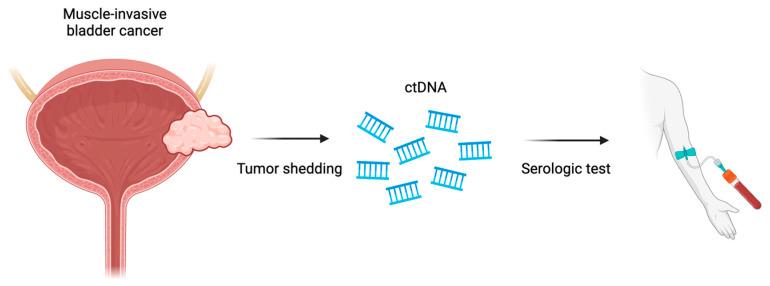
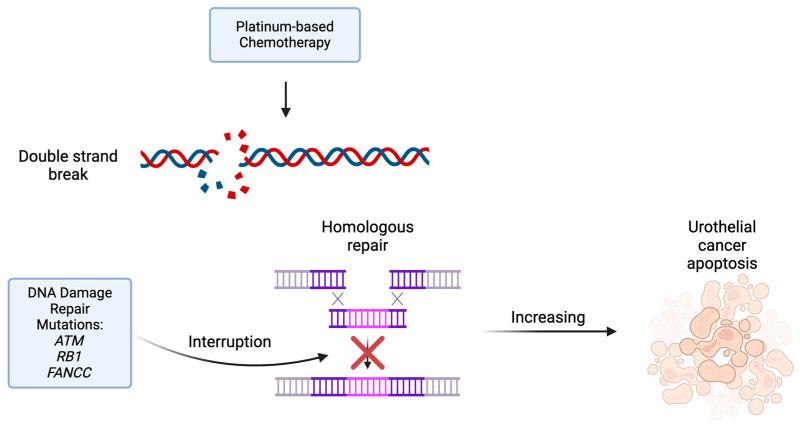
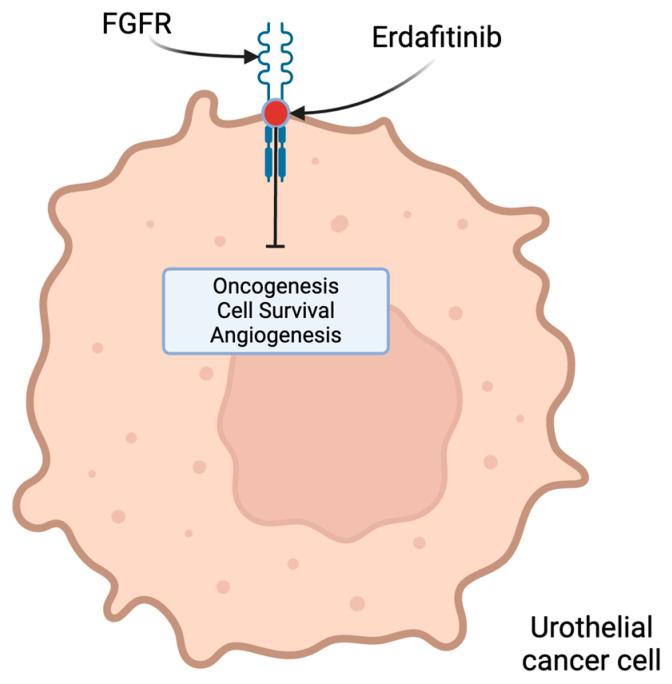
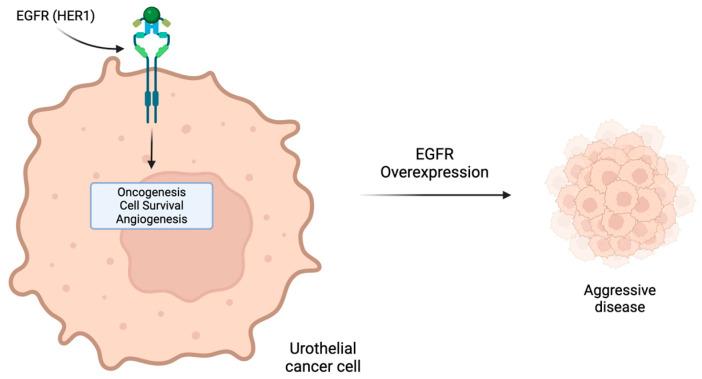
Urothelial carcinoma (UC) is the fourth most prevalent cancer amongst males worldwide. While patients with non-muscle-invasive disease have a favorable prognosis, 25% of UC patients present with locally advanced disease which is associated with a 10-15% 5-year survival rate and poor overall prognosis. Muscle-invasive bladder cancer (MIBC) is associated with about 50% 5 year survival when treated by radical cystectomy or trimodality therapy; stage IV disease is associated with 10-15% 5 year survival. Current therapeutic modalities for MIBC include neoadjuvant chemotherapy, surgery and/or chemoradiation, although patients with relapsed or refractory disease have a poor prognosis. However, the rapid success of immuno-oncology in various hematologic and solid malignancies offers new targets with tremendous therapeutic potential in UC. Historically, there were no predictive biomarkers to guide the clinical management and treatment of UC, and biomarker development was an unmet need. However, recent and ongoing clinical trials have identified several promising tumor biomarkers that have the potential to serve as predictive or prognostic tools in UC. This review provides a comprehensive summary of emerging biomarkers and molecular tumor targets including programmed death ligand 1 (PD-L1), epidermal growth factor receptor (EGFR), human epidermal growth factor receptor 2 (HER2), fibroblast growth factor receptor (FGFR), DNA damage response and repair (DDR) mutations, poly (ADP-ribose) polymerase (PARP) expression and circulating tumor DNA (ctDNA), as well as their clinical utility in UC. We also evaluate recent advancements in precision oncology in UC, while illustrating limiting factors and challenges related to the clinical application of these biomarkers in clinical practice.
尿路上皮癌(UC)是全球男性中第四大常见癌症。非肌层浸润性疾病患者预后良好,然而,25%的UC患者表现为局部晚期疾病,其5年生存率为10%-15%,总体预后较差。肌层浸润性膀胱癌(MIBC)采用根治性膀胱切除术或三联疗法治疗时,5年生存率约为50%;IV期疾病的5年生存率为10%-15%。MIBC目前的治疗方式包括新辅助化疗、手术和/或放化疗,尽管复发或难治性疾病患者预后较差。然而,免疫肿瘤学在各种血液系统和实体恶性肿瘤中的迅速成功为UC提供了具有巨大治疗潜力的新靶点。历史上,没有预测性生物标志物来指导UC的临床管理和治疗,生物标志物的开发是一项未满足的需求。然而,最近和正在进行的临床试验已经确定了几种有前景的肿瘤生物标志物,它们有可能作为UC的预测或预后工具。本综述全面总结了新兴的生物标志物和分子肿瘤靶点,包括程序性死亡配体1(PD-L1)、表皮生长因子受体(EGFR)、人表皮生长因子受体2(HER2)、成纤维细胞生长因子受体(FGFR)、DNA损伤反应和修复(DDR)突变、聚(ADP-核糖)聚合酶(PARP)表达和循环肿瘤DNA(ctDNA),以及它们在UC中的临床应用。我们还评估了UC精准肿瘤学的最新进展,同时阐述了这些生物标志物在临床实践中临床应用的限制因素和挑战。
 Zotero 插件