
中国雏鹅中1型鹅星状病毒毒株的分离、鉴定及致病性
Isolation, Identification, and Pathogenicity of a Goose Astrovirus Genotype 1 Strain in Goslings in China.
作者信息
Wei Feng, He Dalin, Wu Bingrong, Diao Youxiang, Tang Yi
机构信息
College of Animal Science and Technology, Shandong Agricultural University, 61 Daizong Street, Tai'an 271018, China.
Shandong Provincial Key Laboratory of Animal Biotechnology and Disease Control and Prevention, Tai'an 271018, China.
出版信息
Viruses. 2024 Mar 30;16(4):541. doi: 10.3390/v16040541.
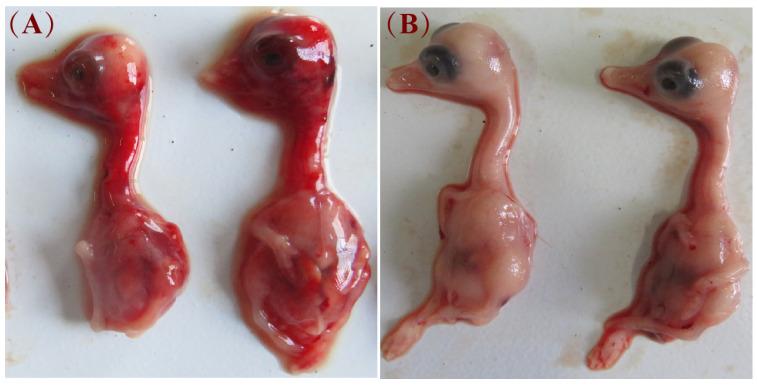
Goose astrovirus genotype 1 (GAstV-1) has emerged in goose farms in some provinces of China in recent years and is considered to be one of the pathogens of gout in goslings in China. However, few studies have been conducted on the dynamic distribution, tissue tropism, and pathogenesis of GAstV-1 in goslings. In 2022, an epidemiological investigation of goose astrovirus (GAstV) in goslings was conducted in seven provinces of China. During the investigation, a GAstV-1 designated as GAstV-JSXZ was identified in the kidney of an 8-day-old gosling and was successfully isolated from a goose embryo. The full genome sequence of GAstV-JSXZ was determined using the next-generation sequencing technique. The complete genome of GAstV-JSXZ was 7299-nt-long. Interestingly, the phylogenetic analysis revealed that Chinese GAstV-1 has formed two distinct subgroups based on the ORF 2 genomes, designated GAstV-1 1a and GAstV-1 1b. The GAstV-JSXZ shared the highest identity with GAstV-1 1a strain FLX and TZ03 in nucleotides (ORF1a: 98.3-98.4%; ORF1b: 92.3-99.1%; ORF2: 95.8-98.8%) and amino acid sequences (ORF1a: 99.4-99.5%; ORF1b: 98.2-98.8%; ORF2: 97.0-99.4%). To evaluate the pathogenicity of GAstV-1, 1-day-old goslings were inoculated with the virus by oral and subcutaneous injection routes, respectively. The results revealed that the virus causes extensive pathological organ damage, especially in the kidney, liver, and thymus. Virus-specific genomic RNA could be detected in the cloacal swabs and tissues of infected goslings throughout the experiment. The viral copy numbers examined in the kidney and intestine were the highest, followed by the liver and spleen. These results are likely to provide a new understanding of the pathogenicity of GAstV-1 in geese.
鹅星状病毒1型(GAstV-1)近年来在中国一些省份的鹅场中出现,被认为是中国雏鹅痛风的病原体之一。然而,关于GAstV-1在雏鹅中的动态分布、组织嗜性和发病机制的研究很少。2022年,在中国七个省份对雏鹅中的鹅星状病毒(GAstV)进行了流行病学调查。在调查过程中,从一只8日龄雏鹅的肾脏中鉴定出一株名为GAstV-JSXZ的GAstV-1,并成功从鹅胚中分离出来。使用下一代测序技术确定了GAstV-JSXZ的全基因组序列。GAstV-JSXZ的完整基因组长度为7299个核苷酸。有趣的是,系统发育分析表明,中国的GAstV-1基于ORF 2基因组形成了两个不同的亚组,分别命名为GAstV-1 1a和GAstV-1 1b。GAstV-JSXZ与GAstV-1 1a菌株FLX和TZ03在核苷酸(ORF1a:98.3-98.4%;ORF1b:92.3-99.1%;ORF2:95.8-98.8%)和氨基酸序列(ORF1a:99.4-99.5%;ORF1b:98.2-98.8%;ORF2:97.0-99.4%)上具有最高的同一性。为了评估GAstV-1的致病性,分别通过口服和皮下注射途径将病毒接种到1日龄雏鹅中。结果表明,该病毒会导致广泛的病理性器官损伤,尤其是在肾脏、肝脏和胸腺中。在整个实验过程中,在感染雏鹅的泄殖腔拭子和组织中可以检测到病毒特异性基因组RNA。在肾脏和肠道中检测到的病毒拷贝数最高,其次是肝脏和脾脏。这些结果可能为GAstV-1对鹅的致病性提供新的认识。



 Zotero 插件