
加拿大成年人中与年龄和虚弱相关的口腔微生物特征。
Oral microbial signatures associated with age and frailty in Canadian adults.
作者信息
DeClercq Vanessa, Wright Robyn J, Nearing Jacob T, Langille Morgan G I
机构信息
Department of Pharmacology, Dalhousie University, Halifax, Nova Scotia, Canada.
Department of Community Health and Epidemiology, Dalhousie University, Halifax, Nova Scotia, Canada.
出版信息
Sci Rep. 2024 Apr 27;14(1):9685. doi: 10.1038/s41598-024-60409-8.
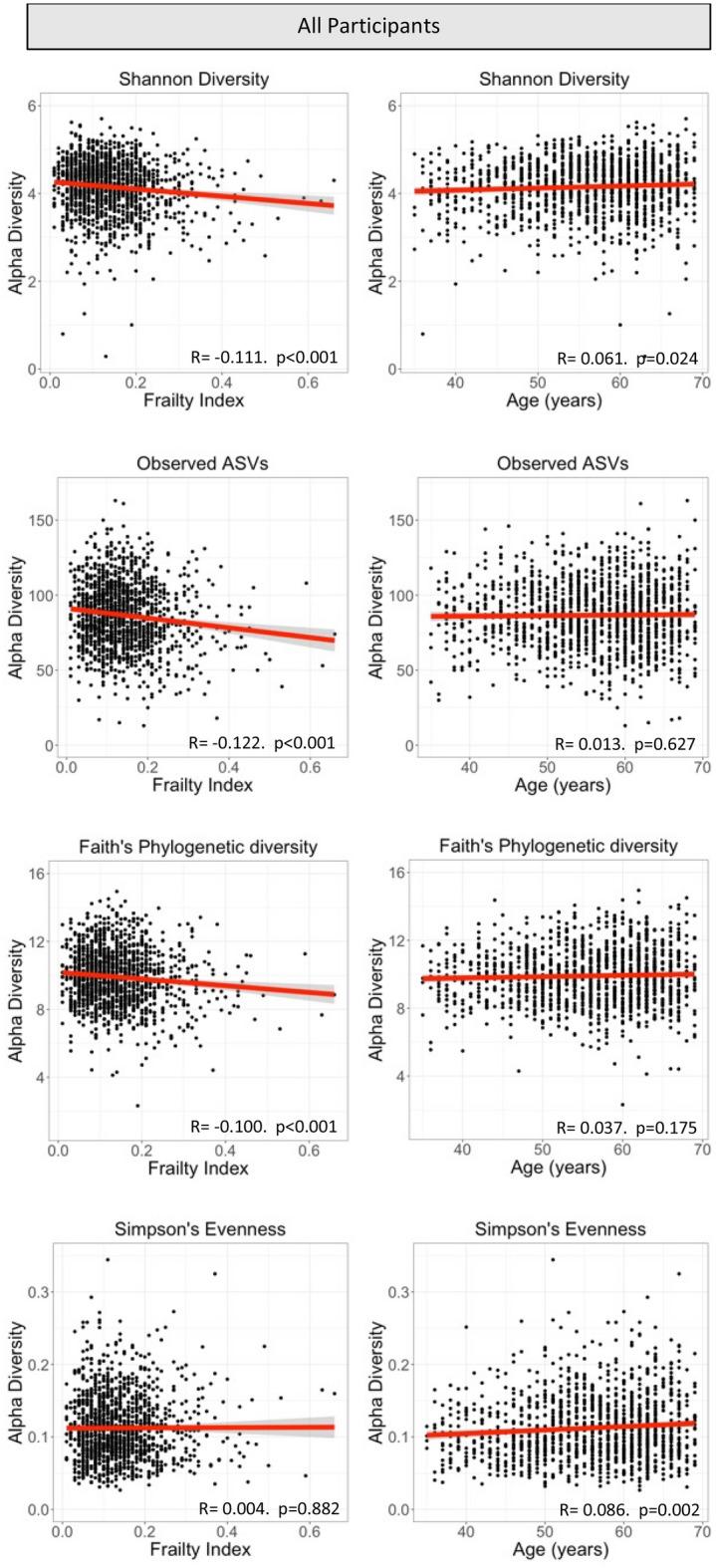
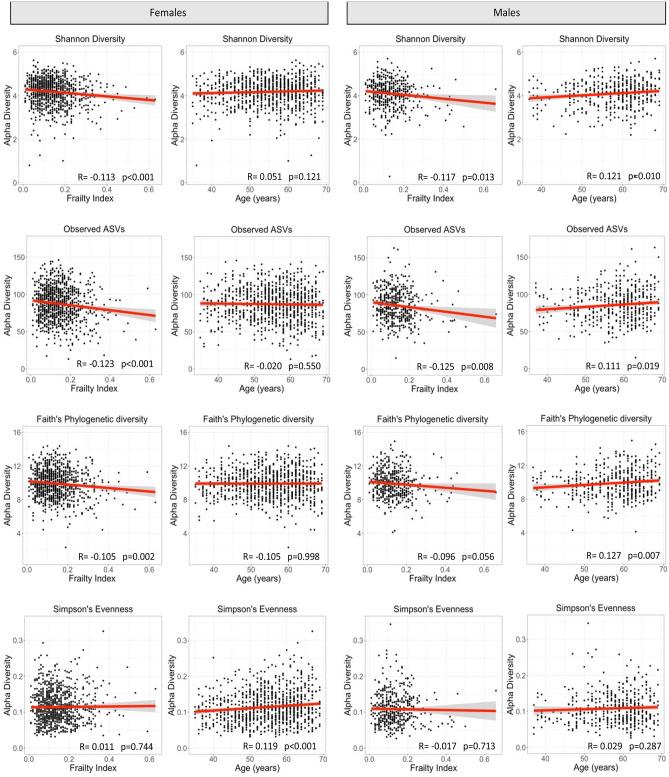
This study aimed to assess the association between the oral microbiome, age, and frailty. Data and saliva samples were obtained from male and female participants aged 35-70 years (n = 1357). Saliva samples were analysed by 16S rRNA gene sequencing and differences in microbial diversity and community compositions were examined in relation to chronological age and the frailty index (FI). Most alpha diversity measures (Richness, Shannon Diversity, Faith's Phylogenetic Diversity) showed an inverse association with frailty, whereas a positive association was observed with age and Shannon Diversity and Evenness. A further sex-stratified analysis revealed differences in measures of microbial diversity and composition. Multiple genera were detected as significantly differentially abundant with increasing frailty and age by at least two methods. With age, the relative abundance of Veillonella was reduced in both males and females, whereas increases in Corynebacterium appeared specific to males and Aggregatibacter, Fusobacterium, Neisseria, Stomatobaculum, and Porphyromonas specific to females. Beta diversity was significantly associated with multiple mental health components of the FI. This study shows age and frailty are differentially associated with measures of microbial diversity and composition, suggesting the oral microbiome may be a useful indicator of increased risk of frailty or a potential target for improving health in ageing adults.
本研究旨在评估口腔微生物群、年龄与衰弱之间的关联。从35至70岁的男性和女性参与者(n = 1357)中获取数据和唾液样本。通过16S rRNA基因测序分析唾液样本,并研究微生物多样性和群落组成与实足年龄和衰弱指数(FI)的差异。大多数α多样性指标(丰富度、香农多样性、费思系统发育多样性)与衰弱呈负相关,而与年龄、香农多样性和均匀度呈正相关。进一步的性别分层分析揭示了微生物多样性和组成指标的差异。通过至少两种方法检测到多个属随着衰弱和年龄增加而显著差异丰富。随着年龄增长,男性和女性的韦荣球菌相对丰度均降低,而棒状杆菌的增加似乎特定于男性,而聚集杆菌、梭杆菌、奈瑟菌、口腔杆菌和卟啉单胞菌的增加特定于女性。β多样性与FI的多个心理健康成分显著相关。本研究表明,年龄和衰弱与微生物多样性和组成指标存在差异关联,提示口腔微生物群可能是衰弱风险增加的有用指标或改善老年人健康的潜在靶点。

 Zotero 插件