
小脑经颅直流电刺激对训练有素的运动员等长卧推表现的影响。
The impact of cerebellar transcranial direct current stimulation on isometric bench press performance in trained athletes.
作者信息
Kenville Rouven, Clauß Martina, Berkow Stefan, Ragert Patrick, Maudrich Tom
机构信息
Department of Movement Neuroscience, Faculty of Sports Science, Leipzig University, Leipzig, 04109, Germany.
Department of Neurology, Max Planck Institute for Human Cognitive and Brain Sciences, Leipzig, 04103, Germany.
出版信息
Heliyon. 2024 Apr 18;10(9):e29951. doi: 10.1016/j.heliyon.2024.e29951. eCollection 2024 May 15.
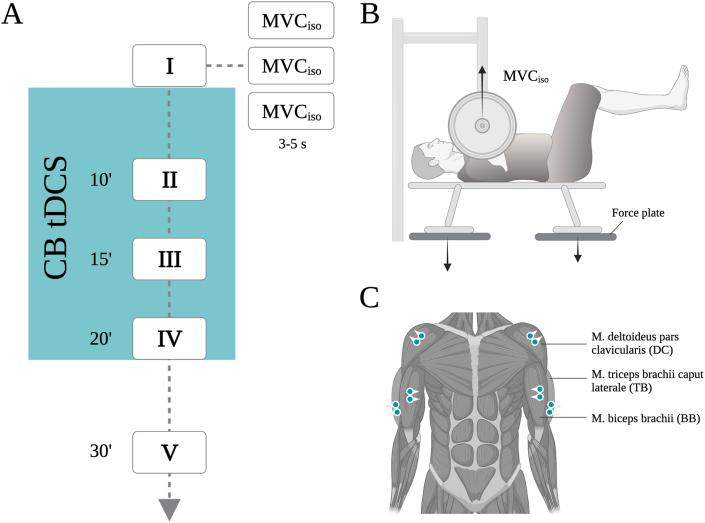
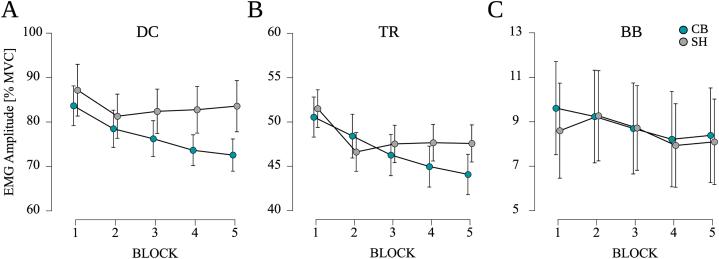
Athletic development centers on optimizing performance, including technical skills and fundamental motor abilities such as strength and speed. Parameters such as maximum contraction force and rate of force development, influence athletic success, although performance gains become harder to achieve as athletic abilities increase. Non-invasive transcranial direct current stimulation of the cerebellum (CB-tDCS) has been used successfully to increase force production in novices, although the potential effects in athletes remain unexplored. The present study examined the effects of CB-tDCS on maximum isometric voluntary contraction force (MVC) and isometric rate of force development (RFD) during a bench press task in well-trained athletes. 21 healthy, male, strength-trained athletes participated in a randomized, sham-controlled, double-blinded crossover design. Each participant completed the isometric bench press (iBP) task on two separate days, with at least 5 days between sessions, while receiving either CB-tDCS or sham stimulation. Electromyography (EMG) recordings of three muscles involved in iBP were acquired bilaterally to uncover differences in neuromuscular activation and agonist-antagonist co-contraction between conditions. Contrary to our hypothesis, no significant differences in MVC and RFD were observed between CB-tDCS and sham conditions. Furthermore, no tDCS-induced differences in neuromuscular activation or agonist-antagonist co-contraction were revealed. Here, we argue that the effects of CB-tDCS on force production appear to depend on the individual's training status. Future research should study individual differences in tDCS responses between athletes and novices, as well as the potential of high-definition tDCS for precise brain region targeting to potentially enhance motor performance in athletic populations.
运动发展的核心是优化表现,包括技术技能以及力量和速度等基本运动能力。诸如最大收缩力和力量发展速率等参数会影响运动成绩,不过随着运动能力的提高,成绩提升会变得愈发困难。小脑的非侵入性经颅直流电刺激(CB-tDCS)已成功用于提高新手的力量产生,尽管其对运动员的潜在影响仍未得到探索。本研究考察了CB-tDCS对训练有素的运动员在卧推任务期间最大等长自愿收缩力(MVC)和等长力量发展速率(RFD)的影响。21名健康的男性力量训练运动员参与了一项随机、假刺激对照、双盲交叉设计。每位参与者在两个不同的日子完成等长卧推(iBP)任务,两次训练之间至少间隔5天,同时接受CB-tDCS或假刺激。双侧采集iBP中涉及的三块肌肉的肌电图(EMG)记录,以揭示不同条件下神经肌肉激活和主动肌-拮抗肌共同收缩的差异。与我们的假设相反,在CB-tDCS组和假刺激组之间未观察到MVC和RFD的显著差异。此外,未发现tDCS诱导的神经肌肉激活或主动肌-拮抗肌共同收缩的差异。在此,我们认为CB-tDCS对力量产生的影响似乎取决于个体的训练状态。未来的研究应探讨运动员和新手在tDCS反应方面的个体差异,以及高清tDCS精确靶向脑区以潜在提高运动员运动表现的潜力。


 Zotero 插件