
MexTAg协作杂交系:宿主基因影响石棉相关疾病的潜伏期,但肿瘤发生后影响较小。
The MexTAg collaborative cross: host genetics affects asbestos related disease latency, but has little influence once tumours develop.
作者信息
Fisher Scott A, Patrick Kimberley, Hoang Tracy, Marcq Elly, Behrouzfar Kiarash, Young Sylvia, Miller Timothy J, Robinson Bruce W S, Bueno Raphael, Nowak Anna K, Lesterhuis W Joost, Morahan Grant, Lake Richard A
机构信息
National Centre for Asbestos Related Diseases (NCARD), Perth, WA, Australia.
School of Biomedical Sciences, The University of Western Australia, Perth, WA, Australia.
出版信息
Front Toxicol. 2024 Apr 17;6:1373003. doi: 10.3389/ftox.2024.1373003. eCollection 2024.
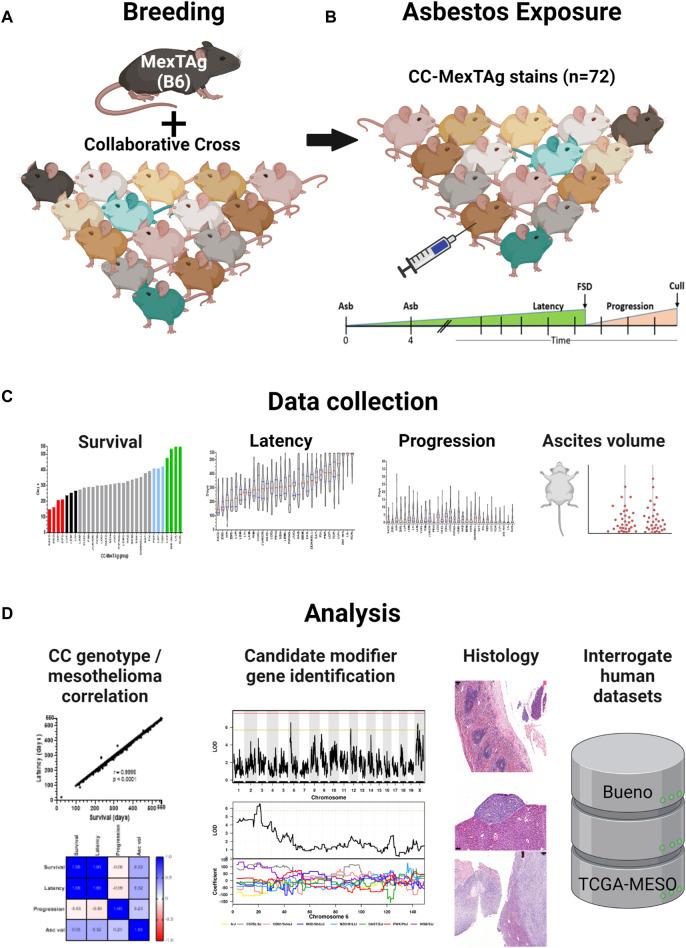
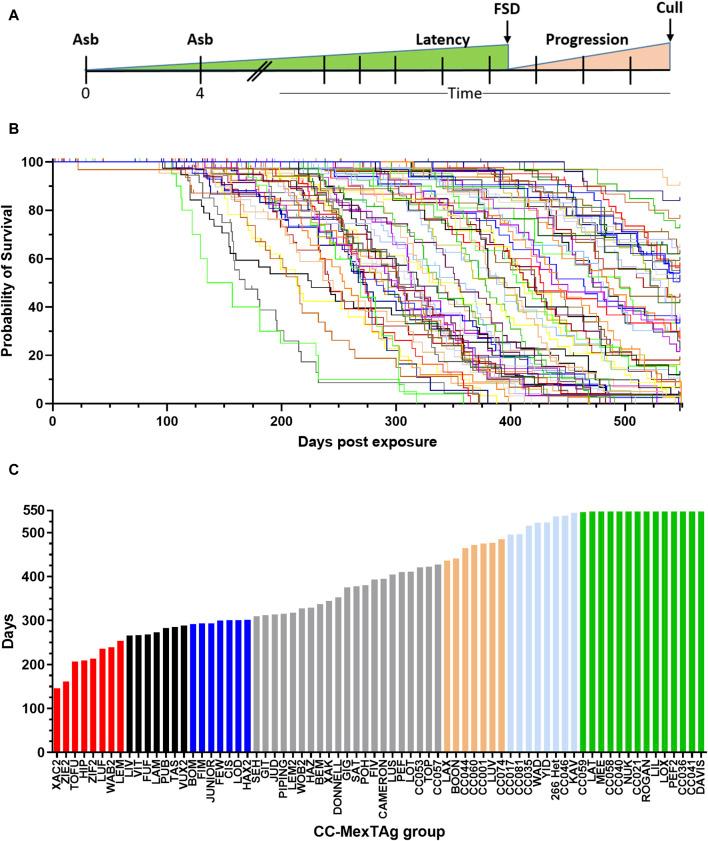
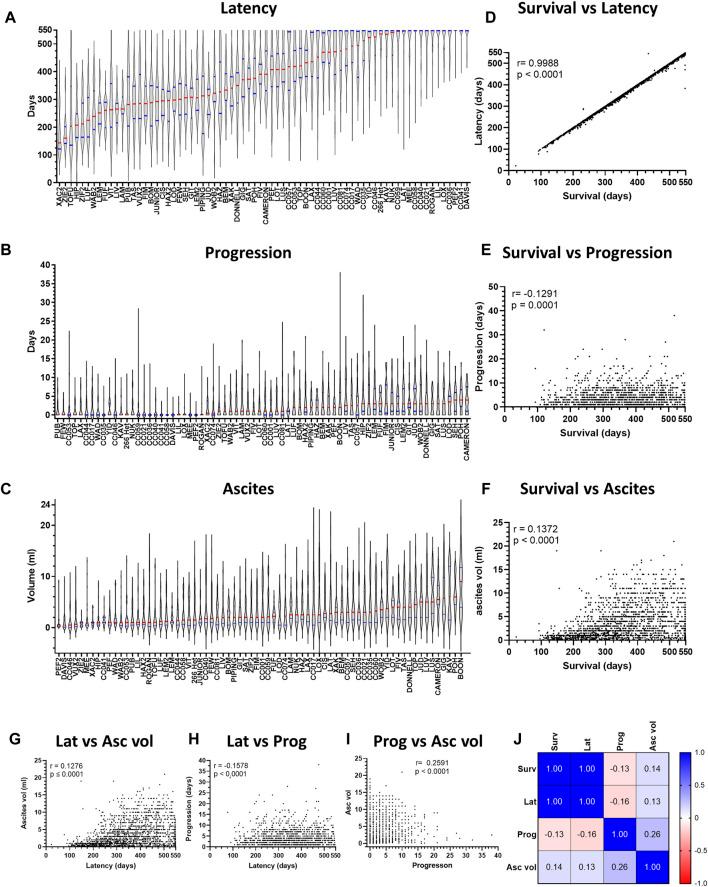
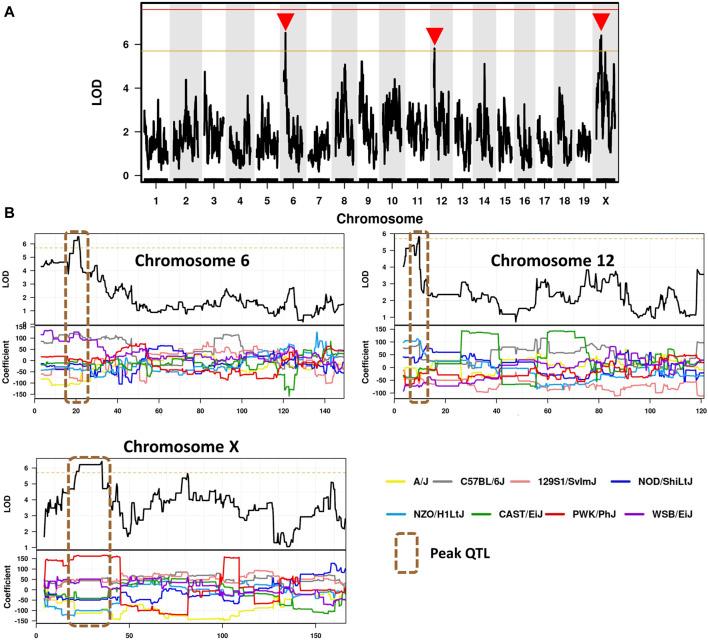
This study combines two innovative mouse models in a major gene discovery project to assess the influence of host genetics on asbestos related disease (ARD). Conventional genetics studies provided evidence that some susceptibility to mesothelioma is genetic. However, the identification of host modifier genes, the roles they may play, and whether they contribute to disease susceptibility remain unknown. Here we report a study designed to rapidly identify genes associated with mesothelioma susceptibility by combining the Collaborative Cross (CC) resource with the well-characterised MexTAg mesothelioma mouse model. The CC is a powerful mouse resource that harnesses over 90% of common genetic variation in the mouse species, allowing rapid identification of genes mediating complex traits. MexTAg mice rapidly, uniformly, and predictably develop mesothelioma, but only after asbestos exposure. To assess the influence of host genetics on ARD, we crossed 72 genetically distinct CC mouse strains with MexTAg mice and exposed the resulting CC-MexTAg (CCMT) progeny to asbestos and monitored them for traits including overall survival, the time to ARD onset (latency), the time between ARD onset and euthanasia (disease progression) and ascites volume. We identified phenotype-specific modifier genes associated with these traits and we validated the role of human orthologues in asbestos-induced carcinogenesis using human mesothelioma datasets. We generated 72 genetically distinct CCMT strains and exposed their progeny (2,562 in total) to asbestos. Reflecting the genetic diversity of the CC, there was considerable variation in overall survival and disease latency. Surprisingly, however, there was no variation in disease progression, demonstrating that host genetic factors do have a significant influence during disease latency but have a limited role once disease is established. Quantitative trait loci (QTL) affecting ARD survival/latency were identified on chromosomes 6, 12 and X. Of the 97-protein coding candidate modifier genes that spanned these QTL, eight genes ( and ) were found to significantly affect outcome in both CCMT and human mesothelioma datasets. Host genetic factors affect susceptibility to development of asbestos associated disease. However, following mesothelioma establishment, genetic variation in molecular or immunological mechanisms did not affect disease progression. Identification of multiple candidate modifier genes and their human homologues with known associations in other advanced stage or metastatic cancers highlights the complexity of ARD and may provide a pathway to identify novel therapeutic targets.
在一项重大基因发现项目中,本研究结合了两种创新型小鼠模型,以评估宿主基因对石棉相关疾病(ARD)的影响。传统遗传学研究表明,间皮瘤的某些易感性具有遗传性。然而,宿主修饰基因的鉴定、它们可能发挥的作用以及是否会导致疾病易感性仍不清楚。在此,我们报告一项研究,该研究旨在通过将协作杂交(CC)资源与特征明确的MexTAg间皮瘤小鼠模型相结合,快速鉴定与间皮瘤易感性相关的基因。CC是一种强大的小鼠资源,利用了小鼠物种中超过90%的常见遗传变异,能够快速鉴定介导复杂性状的基因。MexTAg小鼠在接触石棉后会迅速、均匀且可预测地发生间皮瘤。为了评估宿主基因对ARD的影响,我们将72个基因不同的CC小鼠品系与MexTAg小鼠杂交,并将产生的CC-MexTAg(CCMT)后代暴露于石棉中,监测它们的各项特征,包括总体存活率、ARD发病时间(潜伏期)、ARD发病至安乐死的时间(疾病进展)和腹水体积。我们鉴定了与这些特征相关的表型特异性修饰基因,并利用人间皮瘤数据集验证了人类同源基因在石棉诱导的致癌作用中的作用。我们产生了72个基因不同的CCMT品系,并将它们的后代(总共2562只)暴露于石棉中。反映CC的遗传多样性,总体存活率和疾病潜伏期存在相当大的差异。然而,令人惊讶的是,疾病进展没有差异,这表明宿主遗传因素在疾病潜伏期确实有显著影响,但一旦疾病确立,其作用有限。在6号、12号和X染色体上鉴定出影响ARD存活/潜伏期的数量性状基因座(QTL)。在跨越这些QTL的97个蛋白质编码候选修饰基因中,发现有8个基因在CCMT和人间皮瘤数据集中均显著影响结果。宿主遗传因素影响石棉相关疾病发生的易感性。然而,在间皮瘤形成后,分子或免疫机制的遗传变异并不影响疾病进展。鉴定出多个候选修饰基因及其在其他晚期或转移性癌症中具有已知关联的人类同源基因,突出了ARD的复杂性,并可能为鉴定新的治疗靶点提供途径。


 Zotero 插件