
基于 NHANES 2009-2014 数据和孟德尔随机化分析探讨生物年龄与牙周炎的关系。
Association between biological aging and periodontitis using NHANES 2009-2014 and mendelian randomization.
机构信息
State Key Laboratory of Oral and Maxillofacial Reconstruction and Regeneration, Key Laboratory of Oral Biomedicine Ministry of Education, Hubei Key Laboratory of Stomatology, School and Hospital of Stomatology, Wuhan University, Wuhan, China.
Department of Periodontology, School and Hospital of Stomatology, Wuhan University, 237 Luoyu Road, Hongshan District, Wuhan, 430079, China.
出版信息
Sci Rep. 2024 May 2;14(1):10089. doi: 10.1038/s41598-024-61002-9.
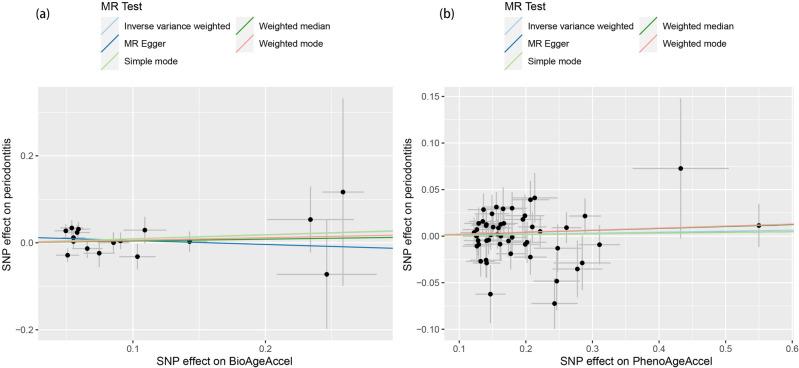
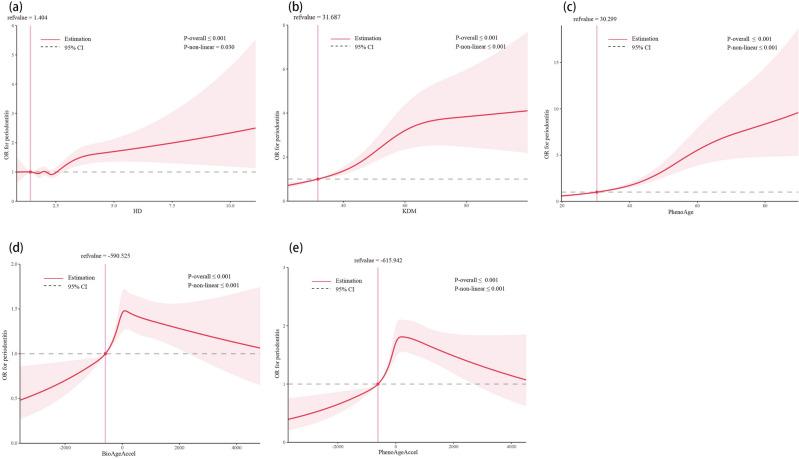
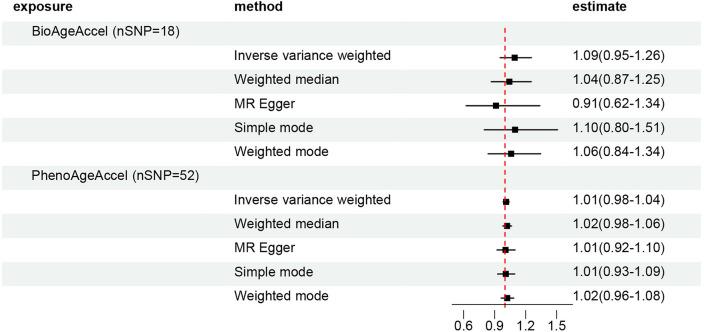
Aging is a recognized risk factor for periodontitis, while biological aging could provide more accurate insights into an individual's functional status. This study aimed to investigate the potential association between biological aging and periodontitis. Epidemiological data from 9803 participants in the 2009-2014 National Health and Nutrition Examination Survey were analyzed at a cross-sectional level to assess this link. Three biological ages [Klemera-Doubal method (KDM), PhenoAge, and homeostatic dysregulation (HD)] and two measures of accelerated biological aging (BioAgeAccel and PhenoAgeAccel) were set as primary exposure and were calculated. Logistic regression and restricted cubic spline regression were employed to examine the relationship between biological aging and periodontitis. Additionally, Mendelian randomization analysis was conducted to explore the causal connection between accelerated biological aging and periodontitis. After adjusting for age, gender, race, educational level, marital status, ratio of family income, and disease conditions, this study, found a significant association between subjects with older higher biological ages, accelerated biological aging, and periodontitis. Specifically, for a per year increase in the three biological ages (HD, KDM, and PhenoAge), the risk of periodontitis increases by 15%, 3%, and 4% respectively. Individuals who had positive BioAgeAccel or PhenoAgeAccel were 20% or 37% more likely to develop periodontitis compared with those who had negative BioAgeAccel or PhenoAgeAccel. Furthermore, a significant non-linear positive relationship was observed between the three biological ages, accelerated biological aging, and periodontitis. However, the Mendelian randomization analysis indicated no causal effect of accelerated biological aging on periodontitis. Our findings suggest that biological aging may contribute to the risk of periodontitis, highlighting the potential utility of preventive strategies targeting aging-related pathways in reducing periodontitis risk among older adults.
衰老是牙周炎的公认危险因素,而生物年龄可以更准确地反映个体的功能状态。本研究旨在探讨生物年龄与牙周炎之间的潜在关联。本研究在横断面水平上分析了 2009-2014 年全国健康与营养调查中 9803 名参与者的流行病学数据,以评估这种联系。将三种生物年龄(Klemera-Doubal 方法[KDM]、PhenoAge 和体内平衡失调[HD])和两种加速生物老化测量值(BioAgeAccel 和 PhenoAgeAccel)作为主要暴露因素进行设定。采用逻辑回归和限制立方样条回归来检验生物老化与牙周炎之间的关系。此外,还进行了孟德尔随机化分析,以探讨加速生物老化与牙周炎之间的因果关系。在调整年龄、性别、种族、教育程度、婚姻状况、家庭收入比和疾病状况后,本研究发现,生物年龄较大、加速生物老化的个体与牙周炎之间存在显著关联。具体而言,三种生物年龄(HD、KDM 和 PhenoAge)每增加一年,牙周炎的风险分别增加 15%、3%和 4%。与 BioAgeAccel 或 PhenoAgeAccel 阴性者相比,BioAgeAccel 或 PhenoAgeAccel 阳性者发生牙周炎的风险分别增加 20%或 37%。此外,还观察到三种生物年龄、加速生物老化与牙周炎之间存在显著的非线性正相关关系。然而,孟德尔随机化分析表明,加速生物老化对牙周炎没有因果影响。我们的研究结果表明,生物年龄可能会增加牙周炎的风险,这凸显了针对与衰老相关途径的预防策略在降低老年人牙周炎风险方面的潜在应用价值。

 Zotero 插件