
不可逆电穿孔促进小鼠胰腺癌模型中促炎肿瘤微环境和抗肿瘤免疫。
Irreversible electroporation promotes a pro-inflammatory tumor microenvironment and anti-tumor immunity in a mouse pancreatic cancer model.
机构信息
Medicine and Health, Virginia Polytechnic Institute and State University, Roanoke, VA, United States.
Department of Electrical and Computer Engineering, Virginia Polytechnic Institute and State University, Blacksburg, VA, United States.
出版信息
Front Immunol. 2024 Apr 22;15:1352821. doi: 10.3389/fimmu.2024.1352821. eCollection 2024.
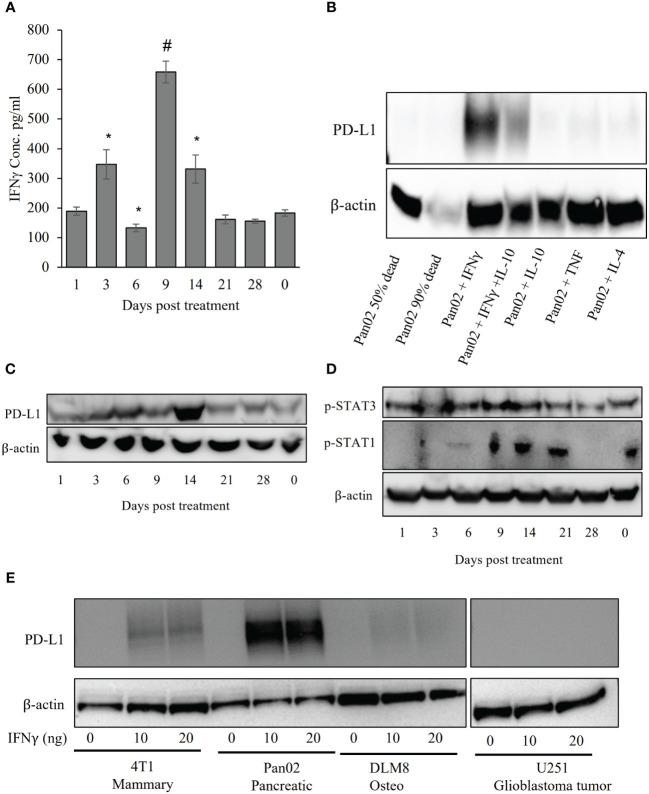
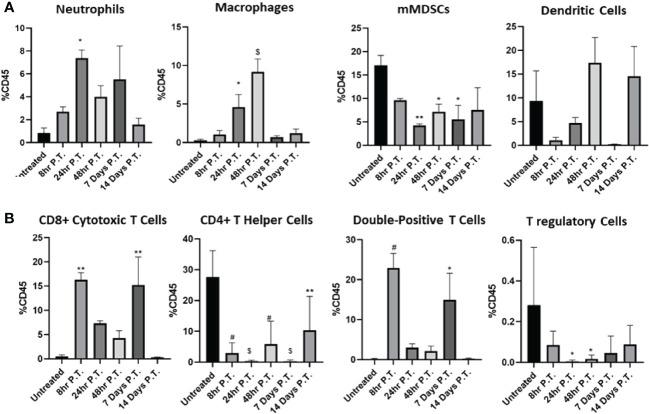
Pancreatic cancer is a significant cause of cancer-related mortality and often presents with limited treatment options. Pancreatic tumors are also notorious for their immunosuppressive microenvironment. Irreversible electroporation (IRE) is a non-thermal tumor ablation modality that employs high-voltage microsecond pulses to transiently permeabilize cell membranes, ultimately inducing cell death. However, the understanding of IRE's impact beyond the initiation of focal cell death in tumor tissue remains limited. In this study, we demonstrate that IRE triggers a unique mix of cell death pathways and orchestrates a shift in the local tumor microenvironment driven, in part, by reducing the myeloid-derived suppressor cell (MDSC) and regulatory T cell populations and increasing cytotoxic T lymphocytes and neutrophils. We further show that IRE drives induce cell cycle arrest at the G0/G1 phase and promote inflammatory cell death pathways consistent with pyroptosis and programmed necrosis . IRE-treated mice exhibited a substantial extension in progression-free survival. However, within a span of 14 days, the tumor immune cell populations reverted to their pre-treatment composition, which resulted in an attenuation of the systemic immune response targeting contralateral tumors and ultimately resulting in tumor regrowth. Mechanistically, we show that IRE augments IFN- γ signaling, resulting in the up-regulation of the PD-L1 checkpoint in pancreatic cancer cells. Together, these findings shed light on potential mechanisms of tumor regrowth following IRE treatment and offer insights into co-therapeutic targets to improve treatment strategies.
胰腺癌是癌症相关死亡的主要原因,通常治疗选择有限。胰腺肿瘤也因其免疫抑制微环境而臭名昭著。不可逆电穿孔 (IRE) 是一种非热肿瘤消融模式,它采用高电压微秒脉冲暂时使细胞膜穿孔,最终导致细胞死亡。然而,对于 IRE 在肿瘤组织中除了引发局灶性细胞死亡之外的影响,我们的理解仍然有限。在这项研究中,我们证明 IRE 触发了独特的细胞死亡途径混合,并通过减少髓源性抑制细胞 (MDSC) 和调节性 T 细胞群以及增加细胞毒性 T 淋巴细胞和中性粒细胞来协调局部肿瘤微环境的转变。我们进一步表明,IRE 驱动细胞周期停滞在 G0/G1 期,并促进与细胞焦亡和程序性坏死一致的炎症细胞死亡途径。IRE 治疗的小鼠表现出无进展生存期的显著延长。然而,在 14 天的时间内,肿瘤免疫细胞群恢复到治疗前的组成,这导致针对对侧肿瘤的全身免疫反应减弱,最终导致肿瘤复发。从机制上讲,我们表明 IRE 增强了 IFN-γ 信号,导致胰腺癌细胞中 PD-L1 检查点的上调。总之,这些发现揭示了 IRE 治疗后肿瘤复发的潜在机制,并为改善治疗策略提供了联合治疗靶点的见解。



 Zotero 插件