
自然疗法对瓦螨寄生水平和蜜蜂(Apis mellifera)群体整体健康的影响。
Effects of natural treatments on the varroa mite infestation levels and overall health of honey bee (Apis mellifera) colonies.
机构信息
Department of Food Safety, Nutrition and Veterinary Public Health, Istituto Superiore di Sanità, Rome, Italy.
Sapienza University of Rome, Rome, Italy.
出版信息
PLoS One. 2024 May 7;19(5):e0302846. doi: 10.1371/journal.pone.0302846. eCollection 2024.
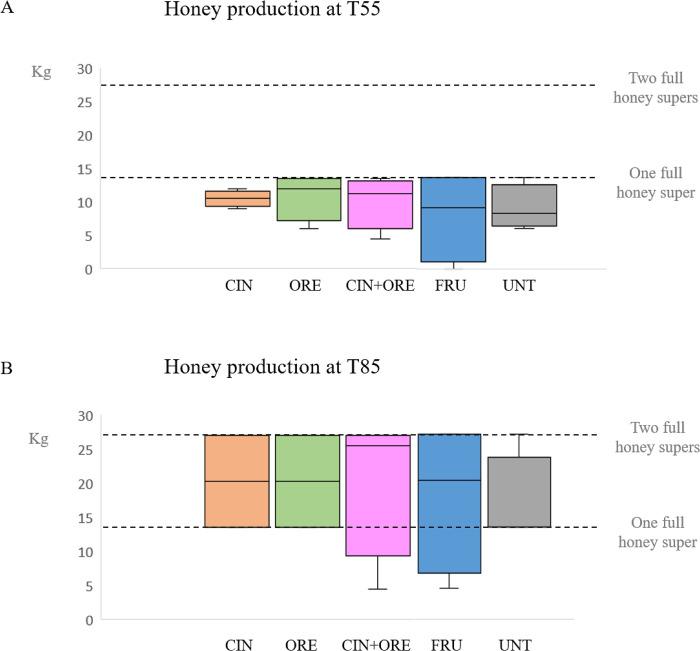
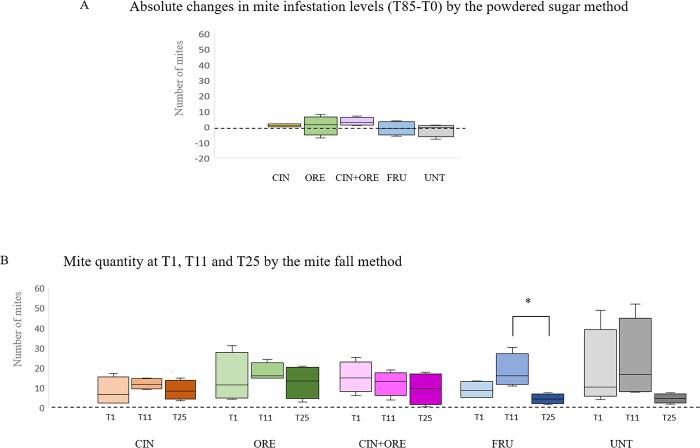
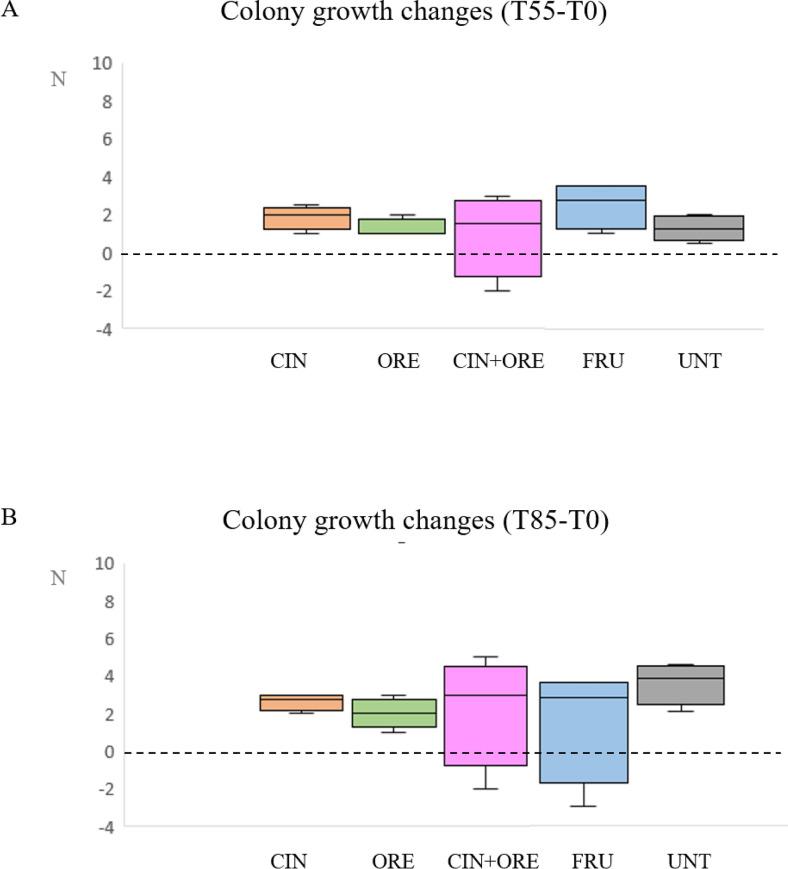
The survival of the honey bee (Apis mellifera), which has a crucial role in pollination and ecosystem maintenance, is threatened by many pathogens, including parasites, bacteria, fungi and viruses. The ectoparasite Varroa destructor is considered the major cause of the worldwide decline in honey bee colony health. Although several synthetic acaricides are available to control Varroa infestations, resistant mites and side effects on bees have been documented. The development of natural alternatives for mite control is therefore encouraged. The study aims at exploring the effects of cinnamon and oregano essential oils (EOs) and of a mixed fruit cocktail juice on mite infestation levels and bee colony health. A multi-method study including hive inspection, mite count, molecular detection of fungal, bacterial and viral pathogens, analysis of defensin-1, hymenoptaecin and vitellogenin immune gene expression, colony density and honey production data, was conducted in a 20-hive experimental apiary. The colonies were divided into five groups: four treatment groups and one control group. The treatment groups were fed on a sugar syrup supplemented with cinnamon EO, oregano EO, a 1:1 mixture of both EOs, or a juice cocktail. An unsupplemented syrup was, instead, used to feed the control group. While V. destructor affected all the colonies throughout the study, no differences in mite infestation levels, population density and honey yield were observed between treatment and control groups. An overexpression of vitellogenin was instead found in all EO-treated groups, even though a significant difference was only found in the group treated with the 1:1 EO mixture. Viral (DWV, CBPV and BQCV), fungal (Nosema ceranae) and bacterial (Melissococcus plutonius) pathogens from both symptomatic and asymptomatic colonies were detected.
蜜蜂(Apis mellifera)的生存受到许多病原体的威胁,包括寄生虫、细菌、真菌和病毒,它们在授粉和生态系统维护中起着至关重要的作用。外寄生虫瓦螨(Varroa destructor)被认为是全球蜜蜂种群健康下降的主要原因。尽管有几种合成杀螨剂可用于控制瓦螨的侵袭,但已记录到抗螨性和对蜜蜂的副作用。因此,鼓励开发天然的螨虫控制替代品。本研究旨在探索肉桂和牛至精油(EO)以及混合水果鸡尾酒汁对螨虫侵袭水平和蜜蜂种群健康的影响。一项多方法研究包括蜂箱检查、螨虫计数、真菌、细菌和病毒病原体的分子检测、防御素-1、 hymenoptaecin 和卵黄原蛋白免疫基因表达、种群密度和蜂蜜产量数据的分析,在一个有 20 个蜂箱的实验蜂场进行。将蜂群分为五组:四组处理组和一组对照组。处理组在添加肉桂 EO、牛至 EO、两者 1:1 混合物或果汁鸡尾酒的糖水糖浆中喂养。对照组则用未添加的糖浆喂养。虽然瓦螨影响了整个研究过程中的所有蜂群,但处理组和对照组之间的螨虫侵袭水平、种群密度和蜂蜜产量没有差异。然而,在所有用 EO 处理的组中都发现了卵黄原蛋白的过度表达,尽管只有在 1:1 EO 混合物处理的组中才发现了显著差异。从有症状和无症状的蜂群中检测到了病毒(DWV、CBPV 和 BQCV)、真菌(Nosema ceranae)和细菌(Melissococcus plutonius)病原体。


 Zotero 插件