
胆碱代谢重编程通过促进肿瘤相关巨噬细胞功能极化和内皮细胞增殖来介导非小细胞肺癌(NSCLC)中的免疫抑制微环境。
Choline metabolism reprogramming mediates an immunosuppressive microenvironment in non-small cell lung cancer (NSCLC) by promoting tumor-associated macrophage functional polarization and endothelial cell proliferation.
机构信息
Medical Oncology Department, State Key Laboratory of Oncology in South China, Sun Yat-Sen University Cancer Center, Collaborative Innovation Center for Cancer Medicine, No. 651 Dongfeng East Road, Guangzhou, 510060, Guangdong, People's Republic of China.
Department of Oncology, Nanfang Hospital, Southern Medical University, No. 1023-1063, Shatai Southern Road, Baiyun District, Guangzhou, 510060, Guangdong, People's Republic of China.
出版信息
J Transl Med. 2024 May 10;22(1):442. doi: 10.1186/s12967-024-05242-3.
INTRODUCTION
Lung cancer is a prevalent malignancy globally, and immunotherapy has revolutionized its treatment. However, resistance to immunotherapy remains a challenge. Abnormal cholinesterase (ChE) activity and choline metabolism are associated with tumor oncogenesis, progression, and poor prognosis in multiple cancers. Yet, the precise mechanism underlying the relationship between ChE, choline metabolism and tumor immune microenvironment in lung cancer, and the response and resistance of immunotherapy still unclear.
METHODS
Firstly, 277 advanced non-small cell lung cancer (NSCLC) patients receiving first-line immunotherapy in Sun Yat-sen University Cancer Center were enrolled in the study. Pretreatment and the alteration of ChE after 2 courses of immunotherapy and survival outcomes were collected. Kaplan-Meier survival and cox regression analysis were performed, and nomogram was conducted to identify the prognostic and predicted values. Secondly, choline metabolism-related genes were screened using Cox regression, and a prognostic model was constructed. Functional enrichment analysis and immune microenvironment analysis were also conducted. Lastly, to gain further insights into potential mechanisms, single-cell analysis was performed.
RESULTS
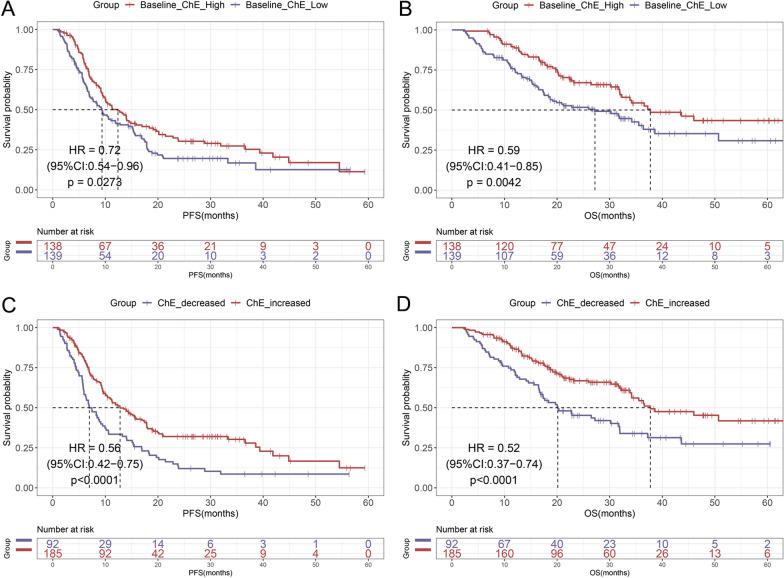
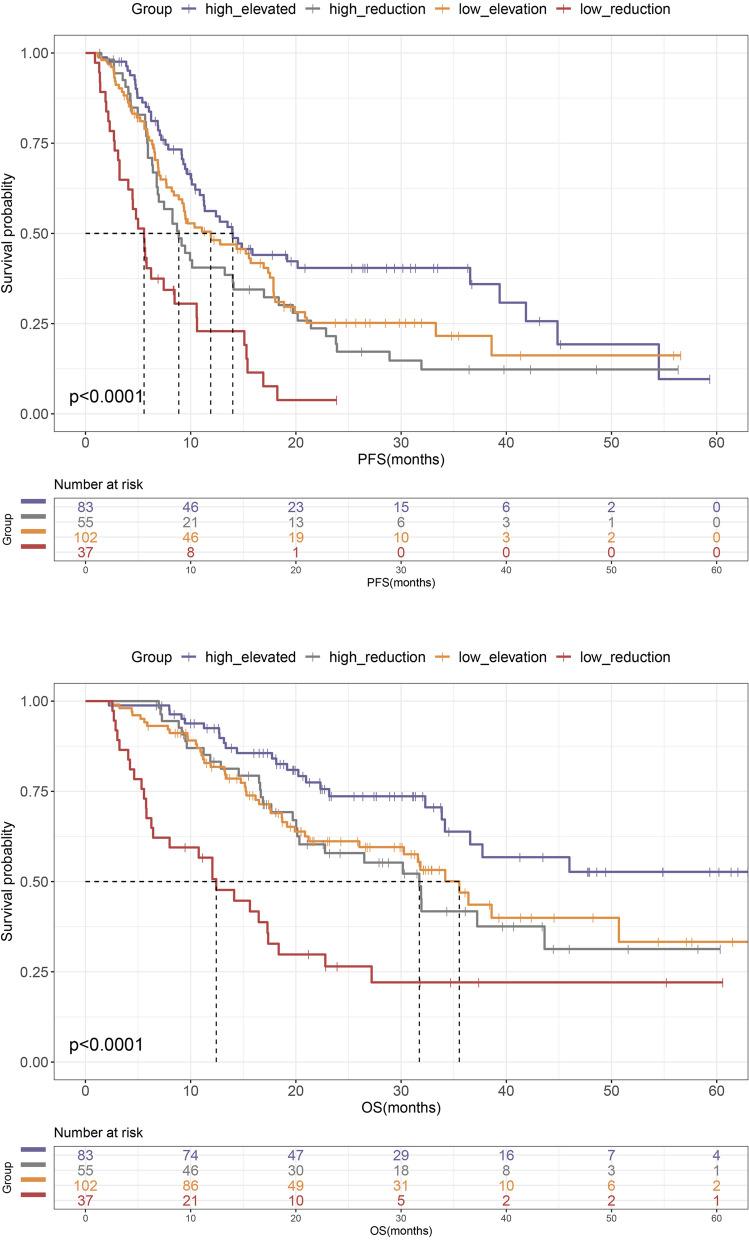
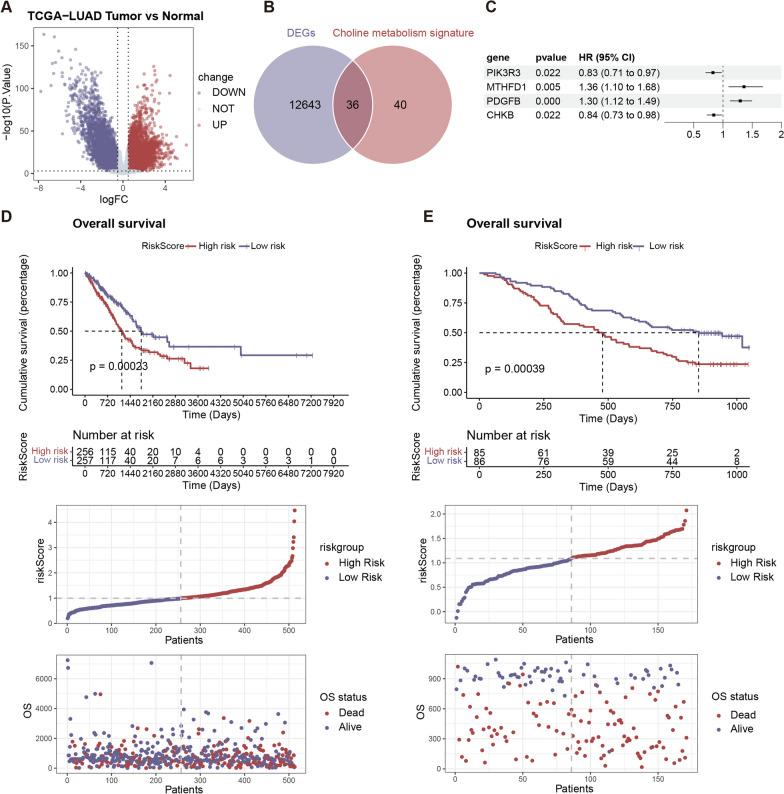
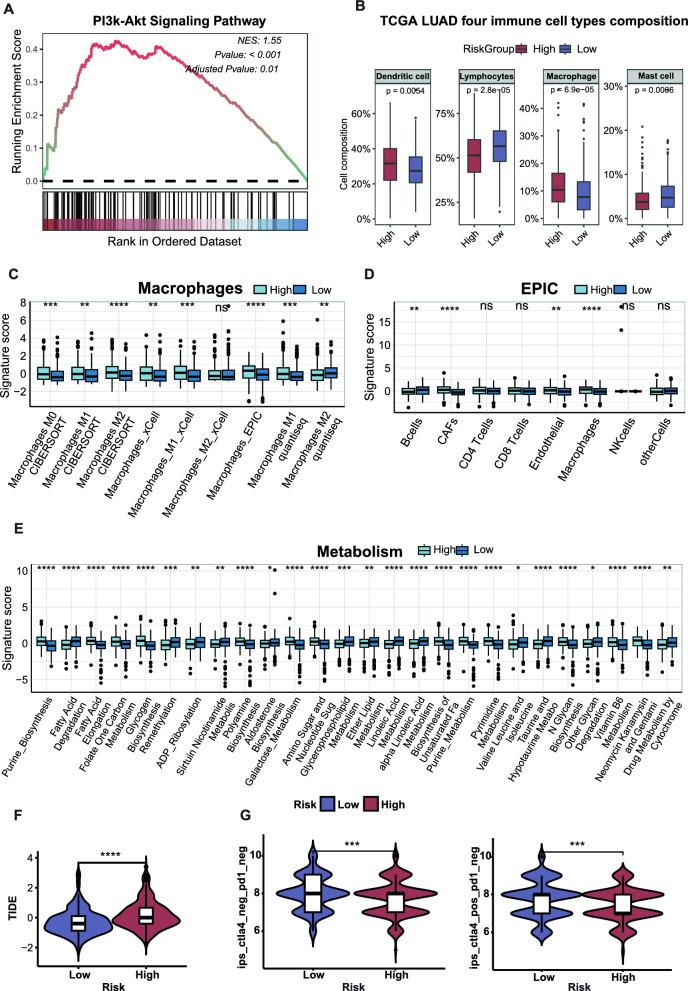
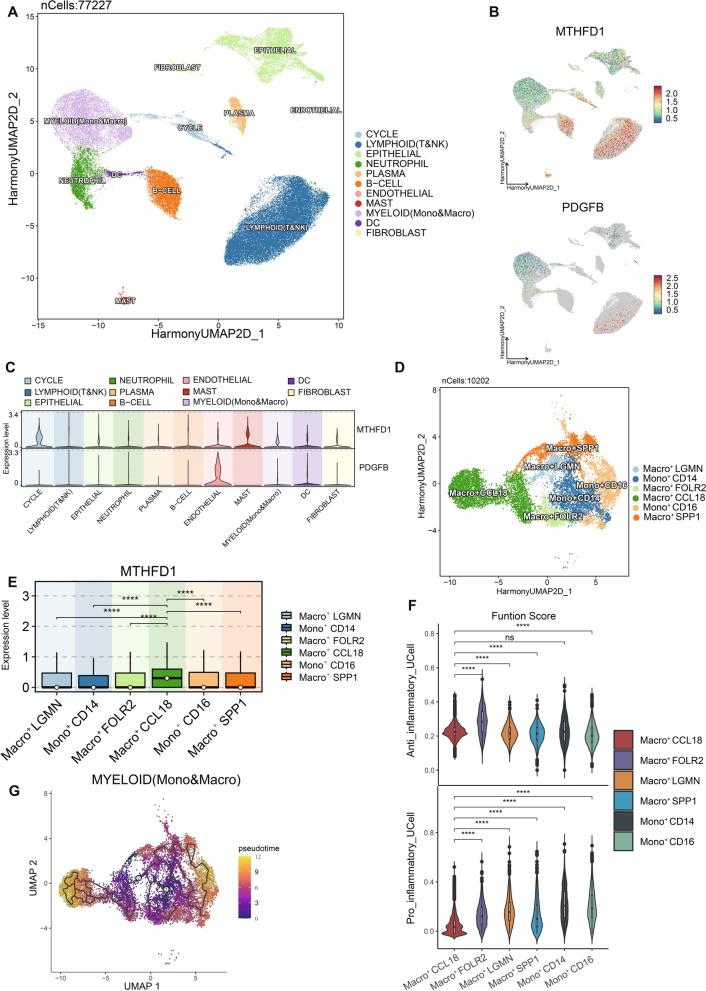
Firstly, baseline high level ChE and the elevation of ChE after immunotherapy were significantly associated with better survival outcomes for advanced NSCLC. Constructed nomogram based on the significant variables from the multivariate Cox analysis performed well in discrimination and calibration. Secondly, 4 choline metabolism-related genes (MTHFD1, PDGFB, PIK3R3, CHKB) were screened and developed a risk signature that was found to be related to a poorer prognosis. Further analysis revealed that the choline metabolism-related genes signature was associated with immunosuppressive tumor microenvironment, immune escape and metabolic reprogramming. scRNA-seq showed that MTHFD1 was specifically distributed in tumor-associated macrophages (TAMs), mediating the differentiation and immunosuppressive functions of macrophages, which may potentially impact endothelial cell proliferation and tumor angiogenesis.
CONCLUSION
Our study highlights the discovery of ChE as a prognostic marker in advanced NSCLC, suggesting its potential for identifying patients who may benefit from immunotherapy. Additionally, we developed a prognostic signature based on choline metabolism-related genes, revealing the correlation with the immunosuppressive microenvironment and uncovering the role of MTHFD1 in macrophage differentiation and endothelial cell proliferation, providing insights into the intricate workings of choline metabolism in NSCLC pathogenesis.
简介
肺癌是一种全球性的常见恶性肿瘤,免疫疗法已经彻底改变了其治疗方法。然而,对免疫疗法的抵抗仍然是一个挑战。异常的胆碱酯酶(ChE)活性和胆碱代谢与多种癌症的肿瘤发生、进展和不良预后有关。然而,ChE、胆碱代谢与肺癌肿瘤免疫微环境之间关系的具体机制,以及免疫治疗的反应和耐药性仍不清楚。
方法
首先,纳入中山大学肿瘤防治中心接受一线免疫治疗的 277 例晚期非小细胞肺癌(NSCLC)患者,收集其治疗前和治疗 2 个疗程后的 ChE 变化及生存结局。进行 Kaplan-Meier 生存分析和 Cox 回归分析,并构建列线图以确定其预后和预测价值。其次,采用 Cox 回归筛选胆碱代谢相关基因,并构建预后模型,进行功能富集分析和免疫微环境分析。最后,进行单细胞分析以进一步探讨潜在机制。
结果
首先,基线高水平的 ChE 和免疫治疗后 ChE 的升高与晚期 NSCLC 的生存结局显著相关。基于多变量 Cox 分析中显著变量构建的列线图在区分和校准方面表现良好。其次,筛选出 4 个胆碱代谢相关基因(MTHFD1、PDGFB、PIK3R3、CHKB),并建立了一个与预后不良相关的风险特征。进一步分析表明,胆碱代谢相关基因特征与免疫抑制性肿瘤微环境、免疫逃逸和代谢重编程有关。单细胞 RNA-seq 显示 MTHFD1 特异性分布在肿瘤相关巨噬细胞(TAMs)中,调节巨噬细胞的分化和免疫抑制功能,这可能潜在地影响内皮细胞增殖和肿瘤血管生成。
结论
本研究强调了 ChE 作为晚期 NSCLC 预后标志物的发现,提示其可能有助于识别可能从免疫治疗中获益的患者。此外,我们基于胆碱代谢相关基因建立了一个预后模型,揭示了与免疫抑制微环境的相关性,并揭示了 MTHFD1 在巨噬细胞分化和内皮细胞增殖中的作用,为 NSCLC 发病机制中胆碱代谢的复杂作用提供了新的见解。


 Zotero 插件