
胰高血糖素样肽-1受体激动剂用于2型糖尿病患者不会增加胰腺癌风险:一项基于美国的队列研究
The Use of Glucagon-like Peptide-1 Receptor Agonists in Patients with Type 2 Diabetes Mellitus Does Not Increase the Risk of Pancreatic Cancer: A U.S.-Based Cohort Study.
作者信息
Ayoub Mark, Faris Carol, Juranovic Tajana, Chela Harleen, Daglilar Ebubekir
机构信息
Department of Internal Medicine, Charleston Area Medical Center, West Virginia University, Charleston, WV 25304, USA.
Department of General Surgery, Marshall University, Huntington, WV 25755, USA.
出版信息
Cancers (Basel). 2024 Apr 23;16(9):1625. doi: 10.3390/cancers16091625.
BACKGROUND
GLP-1 RAs are widely used for T2DM treatment due to their cardiorenal and metabolic benefits. This study examines the risk of pancreatic cancer with GLP-1 RA use in patients with T2DM.
METHODS
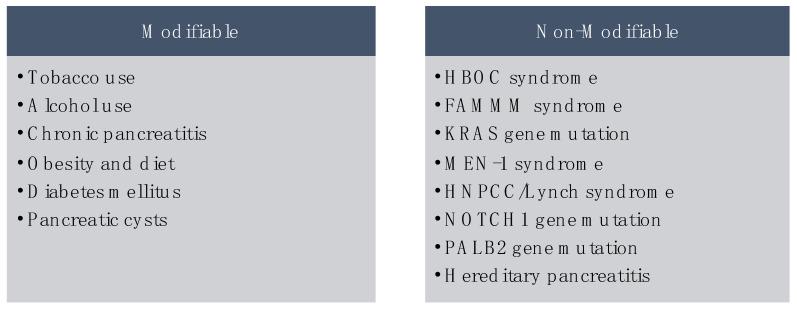
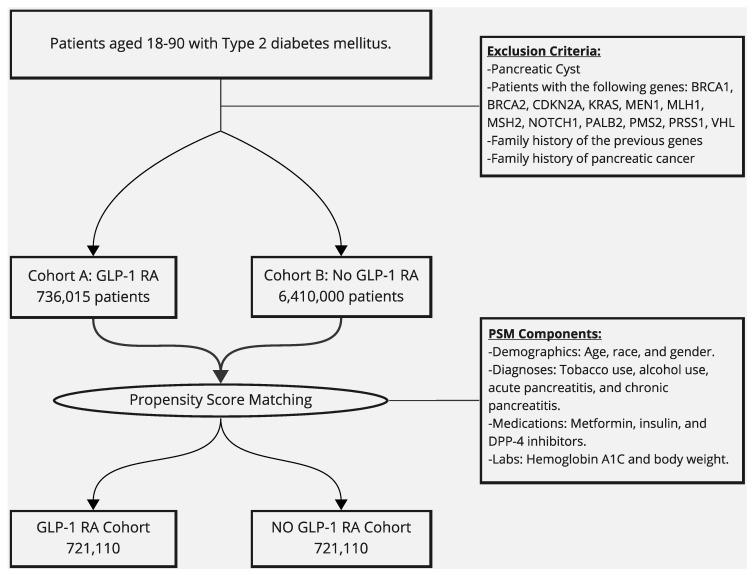
We analyzed TriNetX's deidentified research database using the U.S. Collaborative Network comprising 62 healthcare organizations across the U.S.A. Patients with T2DM were split into two cohorts: one receiving GLP-1 RAs, and one not receiving GLP-1 RAs. We excluded patients with known risk factors for pancreatic cancer, including pancreatic cysts, a personal or family history of BRCA1, BRCA2, CDKN2A, KRAS, MEN1, MLH1, MSH2, NOTCH1, PALB2, PMS2, and PRSS1S genes, family history of pancreatic cancer, and VHL syndrome. Using a 1:1 propensity score-matching model based on baseline characteristics and comorbidities, we created comparable cohorts. We then compared the rate of pancreatic cancer between the two cohorts at a 7-year interval.
RESULTS
Out of 7,146,015 identified patients with T2DM, 10.3% were on a GLP-1 RA and 89.7% were not. Post-PSM, 721,110 patients were in each group. Patients on GLP-1 RAs had a 0.1% risk compared to a 0.2% risk of pancreatic cancer in the 7-year timeframe.
CONCLUSION
The use of GLP-1 RAs in patients with type 2 diabetes mellitus (T2DM) does not appear to substantially elevate the risk of pancreatic cancer; in fact, it may potentially exert a protective effect.
背景
胰高血糖素样肽-1受体激动剂(GLP-1 RAs)因其对心脏、肾脏和代谢的益处而被广泛用于2型糖尿病(T2DM)的治疗。本研究探讨了T2DM患者使用GLP-1 RAs后患胰腺癌的风险。
方法
我们使用美国协作网络分析了TriNetX的去识别化研究数据库,该网络由美国62个医疗机构组成。T2DM患者被分为两个队列:一个接受GLP-1 RAs治疗,另一个未接受GLP-1 RAs治疗。我们排除了已知胰腺癌危险因素的患者,包括胰腺囊肿、BRCA1、BRCA2、CDKN2A、KRAS、MEN1、MLH1、MSH2、NOTCH1、PALB2、PMS2和PRSS1S基因的个人或家族史、胰腺癌家族史以及VHL综合征。使用基于基线特征和合并症的1:1倾向评分匹配模型,我们创建了可比队列。然后我们比较了两个队列在7年时间间隔内的胰腺癌发病率。
结果
在7,146,015名已识别的T2DM患者中,10.3%使用GLP-1 RAs,89.7%未使用。倾向评分匹配后,每组有721,110名患者。在7年时间范围内,使用GLP-1 RAs的患者患胰腺癌的风险为0.1%,而未使用的患者为0.2%。
结论
2型糖尿病(T2DM)患者使用GLP-1 RAs似乎不会显著增加患胰腺癌的风险;事实上,它可能具有潜在的保护作用。

 Zotero 插件