
磷脂改变在心脏骤停后线粒体和脑功能障碍中的作用。
The Role of Phospholipid Alterations in Mitochondrial and Brain Dysfunction after Cardiac Arrest.
机构信息
Laboratory for Critical Care Physiology, Feinstein Institutes for Medical Research, Northwell Health System, Manhasset, NY 11030, USA.
Donald and Barbara Zucker School of Medicine at Hofstra/Northwell, Hempstead, NY 11549, USA.
出版信息
Int J Mol Sci. 2024 Apr 24;25(9):4645. doi: 10.3390/ijms25094645.
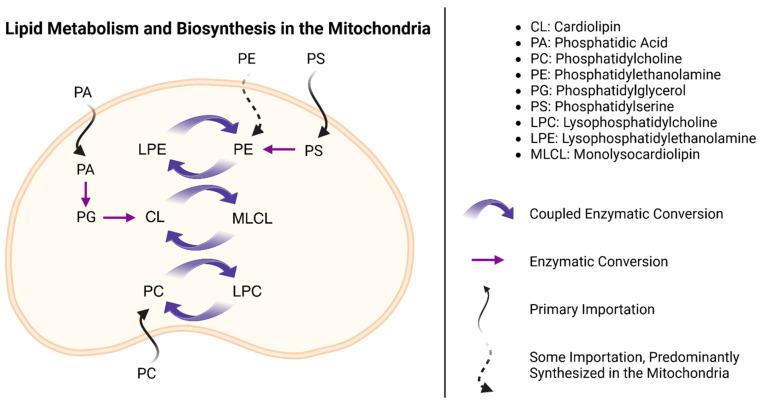
The human brain possesses three predominate phospholipids, phosphatidylcholine (PC), phosphatidylethanolamine (PE) and phosphatidylserine (PS), which account for approximately 35-40%, 35-40%, and 20% of the brain's phospholipids, respectively. Mitochondrial membranes are relatively diverse, containing the aforementioned PC, PE, and PS, as well as phosphatidylinositol (PI) and phosphatidic acid (PA); however, cardiolipin (CL) and phosphatidylglycerol (PG) are exclusively present in mitochondrial membranes. These phospholipid interactions play an essential role in mitochondrial fusion and fission dynamics, leading to the maintenance of mitochondrial structural and signaling pathways. The essential nature of these phospholipids is demonstrated through the inability of mitochondria to tolerate alteration in these specific phospholipids, with changes leading to mitochondrial damage resulting in neural degeneration. This review will emphasize how the structure of phospholipids relates to their physiologic function, how their metabolism facilitates signaling, and the role of organ- and mitochondria-specific phospholipid compositions. Finally, we will discuss the effects of global ischemia and reperfusion on organ- and mitochondria-specific phospholipids alongside the novel therapeutics that may protect against injury.
人脑拥有三种主要的磷脂,分别是磷脂酰胆碱(PC)、磷脂酰乙醇胺(PE)和磷脂酰丝氨酸(PS),它们分别占大脑磷脂的约 35-40%、35-40%和 20%。线粒体膜相对多样化,包含上述 PC、PE 和 PS,以及磷脂酰肌醇(PI)和磷脂酸(PA);然而,心磷脂(CL)和磷脂酰甘油(PG)仅存在于线粒体膜中。这些磷脂的相互作用对于线粒体融合和裂变动力学至关重要,从而维持线粒体的结构和信号通路。这些磷脂的重要性体现在线粒体无法耐受这些特定磷脂的改变上,因为这些改变会导致线粒体损伤,从而导致神经退化。本综述将强调磷脂的结构如何与其生理功能相关,它们的代谢如何促进信号传递,以及器官和线粒体特异性磷脂组成的作用。最后,我们将讨论全身缺血再灌注对器官和线粒体特异性磷脂的影响,以及可能预防损伤的新型治疗方法。

 Zotero 插件