
应激诱导的真核生物翻译调控机制
Stress-induced Eukaryotic Translational Regulatory Mechanisms.
作者信息
Mir Dilawar Ahmad, Ma Zhengxin, Horrocks Jordan, Rogers Aric N
机构信息
Kathryn W. Davis Center for Regenerative Biology and Aging, Mount Desert Island Biological Laboratory, Bar Harbor, ME.
出版信息
ArXiv. 2024 May 2:arXiv:2405.01664v1.
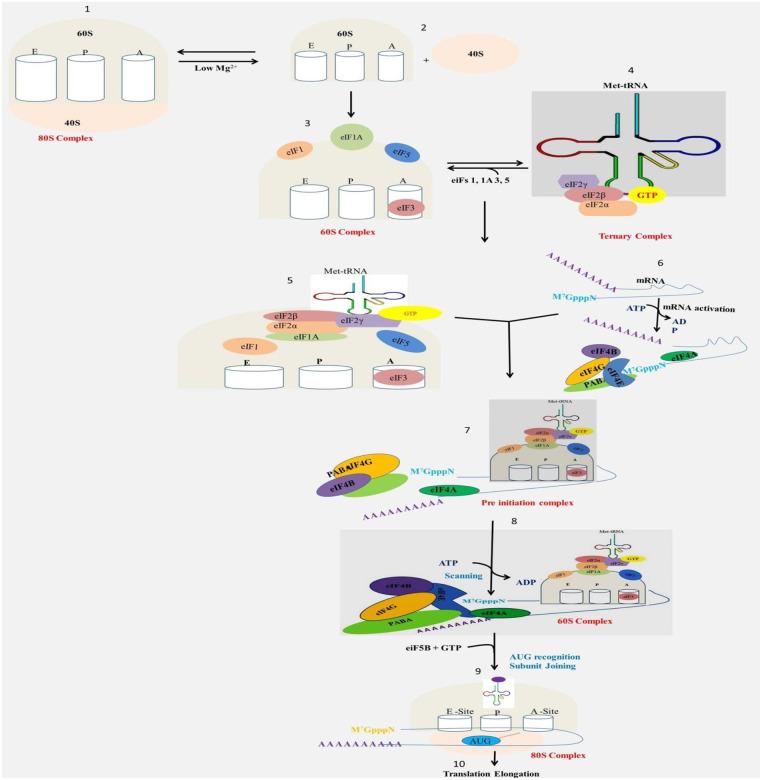
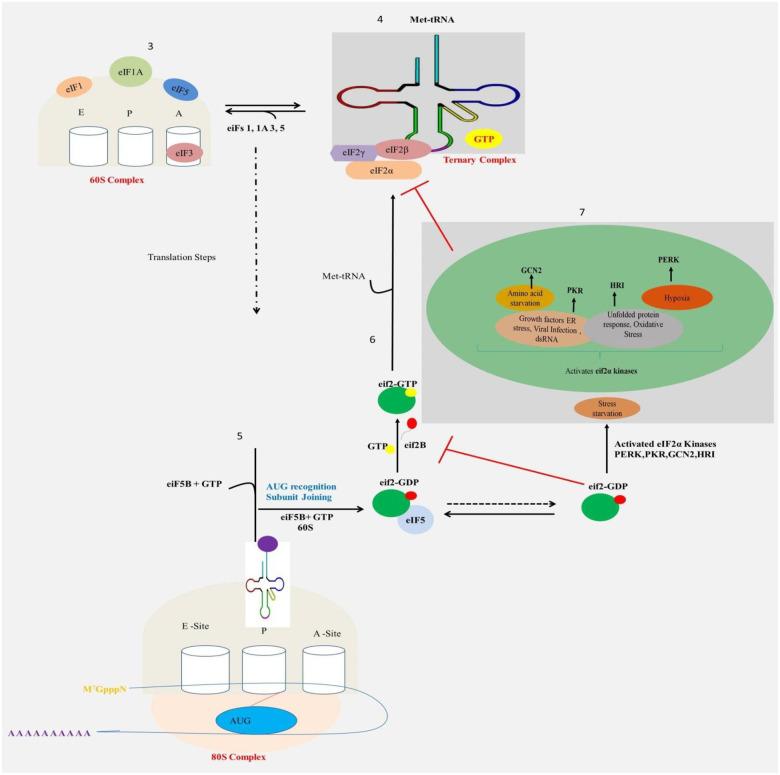
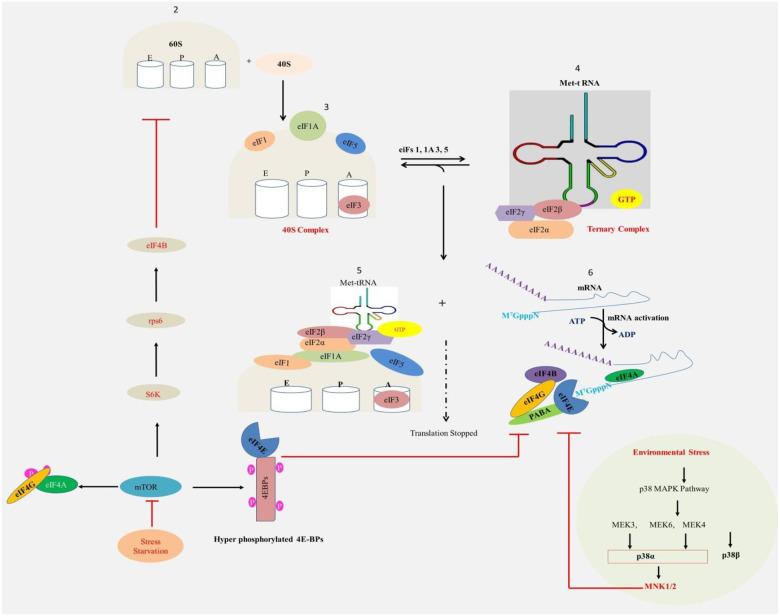
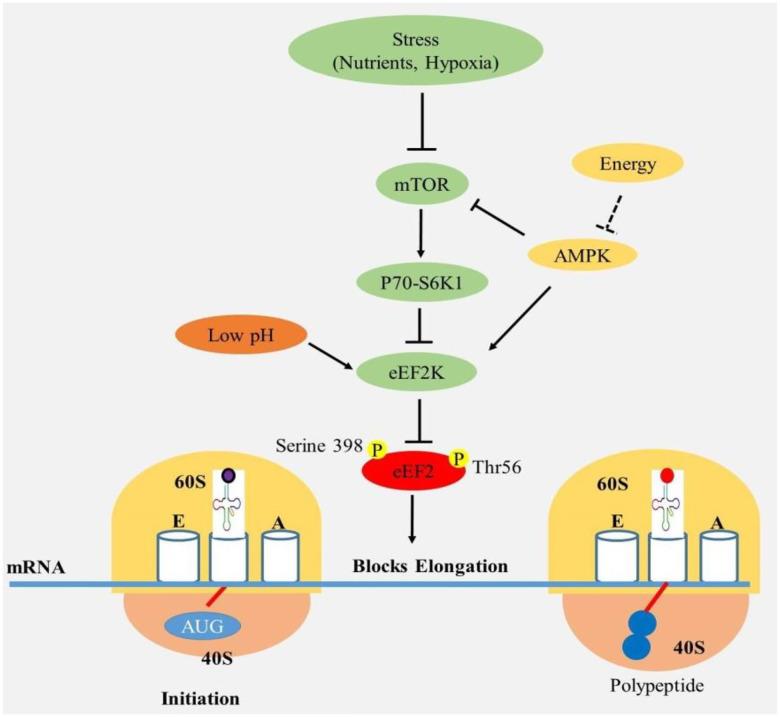
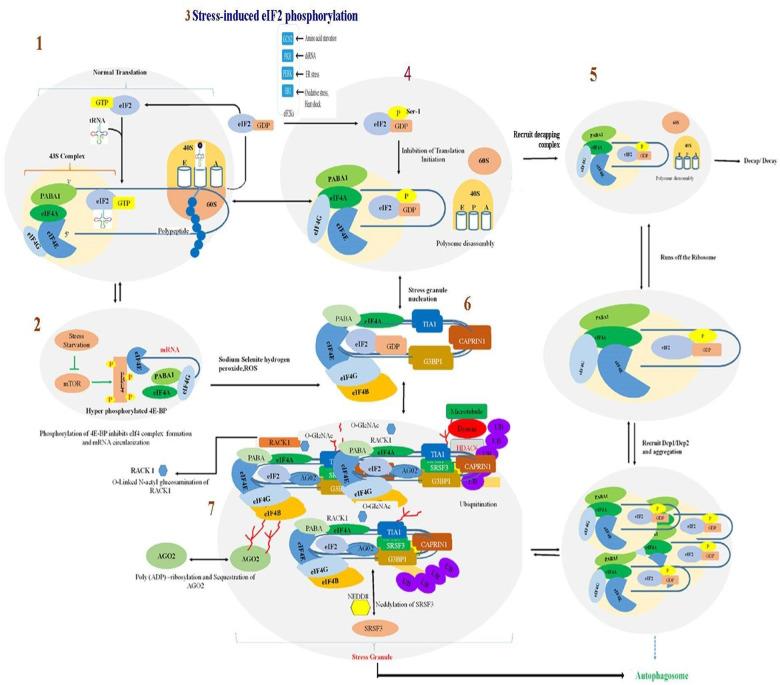
The eukaryotic protein synthesis process entails intricate stages governed by diverse mechanisms to tightly regulate translation. Translational regulation during stress is pivotal for maintaining cellular homeostasis, ensuring the accurate expression of essential proteins crucial for survival. This selective translational control mechanism is integral to cellular adaptation and resilience under adverse conditions. This review manuscript explores various mechanisms involved in selective translational regulation, focusing on mRNA-specific and global regulatory processes. Key aspects of translational control include translation initiation, which is often a rate-limiting step, and involves the formation of the eIF4F complex and recruitment of mRNA to ribosomes. Regulation of translation initiation factors, such as eIF4E, eIF4E2, and eIF2, through phosphorylation and interactions with binding proteins, modulates translation efficiency under stress conditions. This review also highlights the control of translation initiation through factors like the eIF4F complex and the ternary complex and also underscores the importance of eIF2α phosphorylation in stress granule formation and cellular stress responses. Additionally, the impact of amino acid deprivation, mTOR signaling, and ribosome biogenesis on translation regulation and cellular adaptation to stress is also discussed. Understanding the intricate mechanisms of translational regulation during stress provides insights into cellular adaptation mechanisms and potential therapeutic targets for various diseases, offering valuable avenues for addressing conditions associated with dysregulated protein synthesis.
真核生物的蛋白质合成过程涉及由多种机制控制的复杂阶段,以严格调节翻译。应激期间的翻译调控对于维持细胞内稳态至关重要,可确保对生存至关重要的必需蛋白质的准确表达。这种选择性翻译控制机制是细胞在不利条件下适应和恢复力的重要组成部分。这篇综述文章探讨了选择性翻译调控中涉及的各种机制,重点关注mRNA特异性和全局调控过程。翻译控制的关键方面包括翻译起始,这通常是一个限速步骤,涉及eIF4F复合物的形成以及mRNA与核糖体的募集。通过磷酸化以及与结合蛋白的相互作用来调节翻译起始因子,如eIF4E、eIF4E2和eIF2,可在应激条件下调节翻译效率。本综述还强调了通过eIF4F复合物和三元复合物等因子对翻译起始的控制,并强调了eIF2α磷酸化在应激颗粒形成和细胞应激反应中的重要性。此外,还讨论了氨基酸剥夺、mTOR信号传导和核糖体生物发生对翻译调控和细胞应激适应的影响。了解应激期间翻译调控的复杂机制有助于深入了解细胞适应机制以及各种疾病的潜在治疗靶点,为解决与蛋白质合成失调相关的病症提供了有价值的途径。


 Zotero 插件