
全基因组关联研究和多基因风险评分预测台湾的银屑病及其共享表型。
Genome‑wide association study and polygenic risk scores predict psoriasis and its shared phenotypes in Taiwan.
机构信息
Department of Medical Research, China Medical University Hospital, China Medical University, Taichung 404327, Taiwan, R.O.C.
Million‑Person Precision Medicine Initiative, Department of Medical Research, China Medical University Hospital, Taichung 404327, Taiwan, R.O.C.
出版信息
Mol Med Rep. 2024 Jul;30(1). doi: 10.3892/mmr.2024.13239. Epub 2024 May 17.
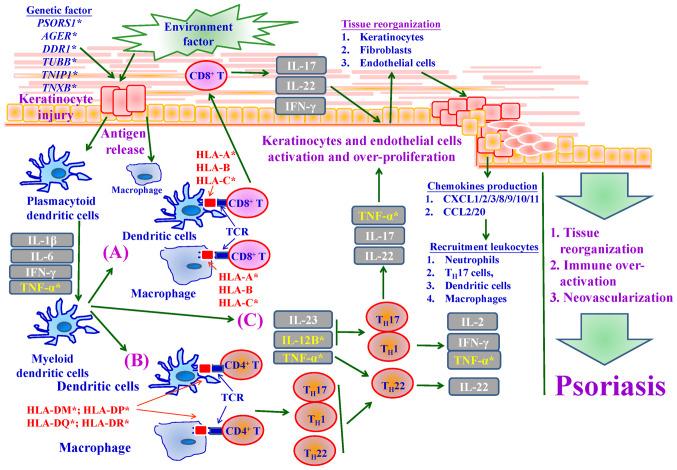
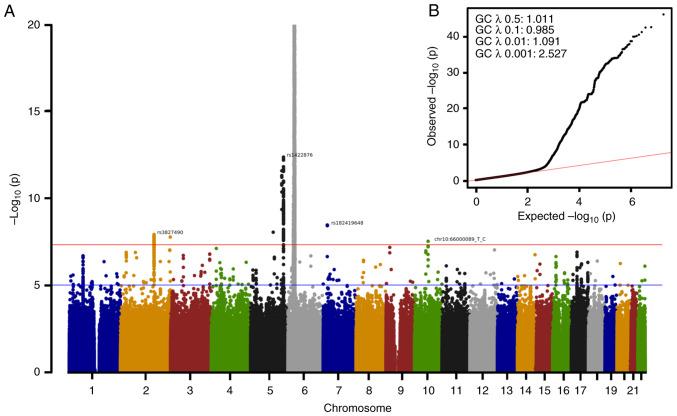
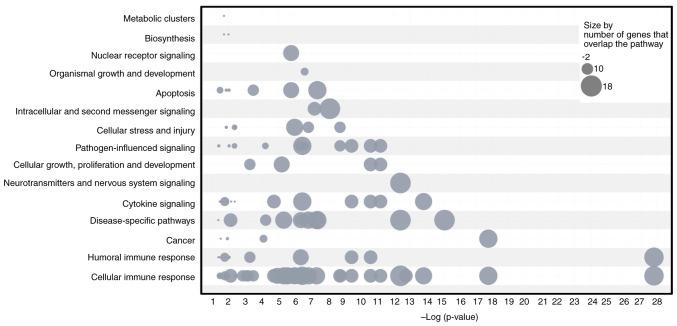
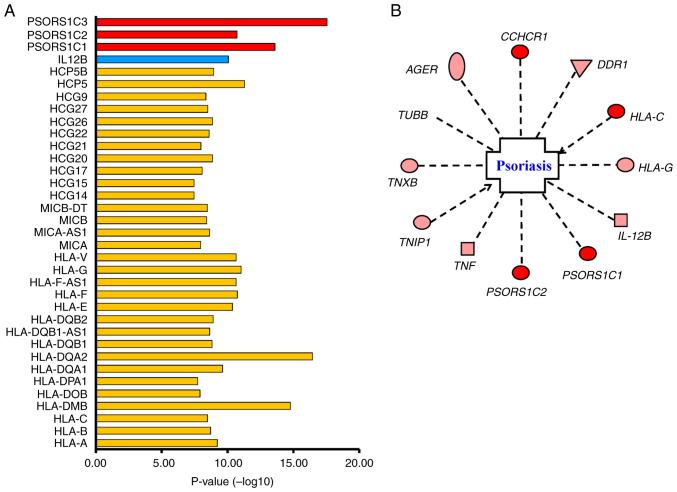
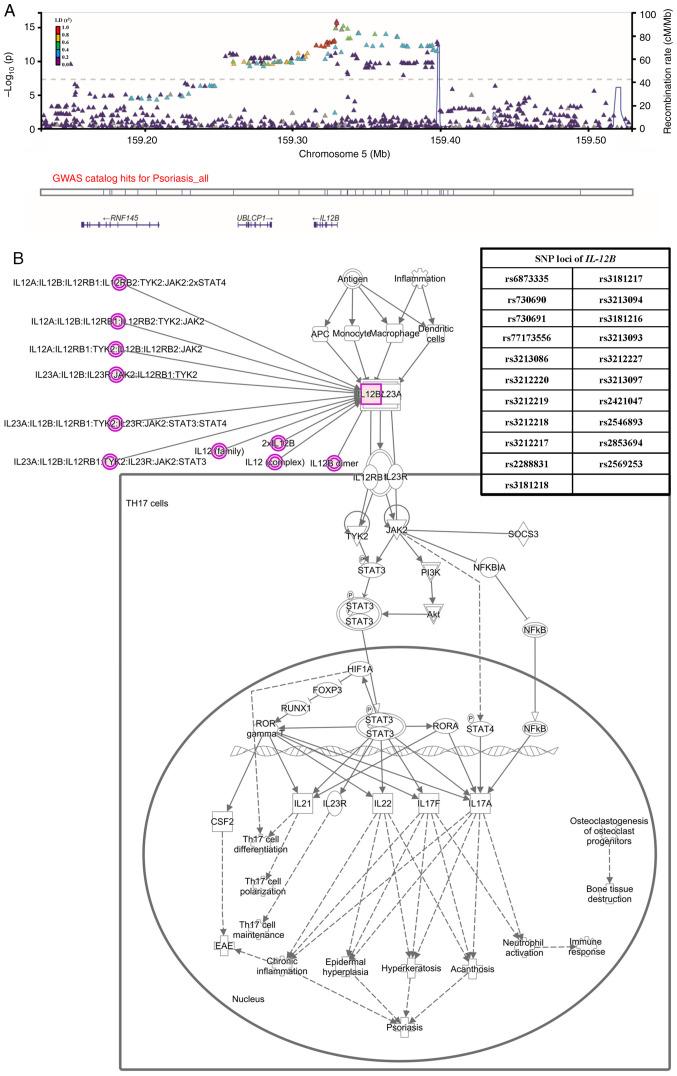
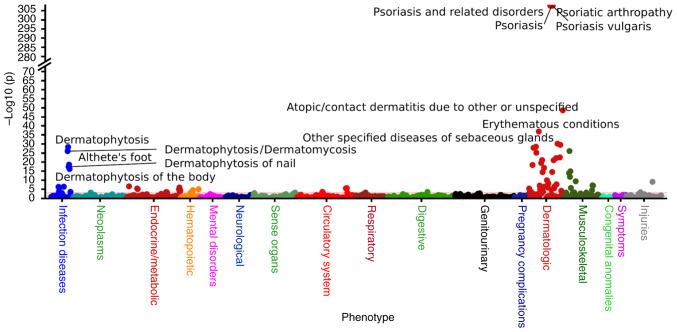
Psoriasis is a chronic inflammatory dermatological disease, and there is a lack of understanding of the genetic factors involved in psoriasis in Taiwan. To establish associations between genetic variations and psoriasis, a genome‑wide association study was performed in a cohort of 2,248 individuals with psoriasis and 67,440 individuals without psoriasis. Using the ingenuity pathway analysis software, biological networks were constructed. Human leukocyte antigen (HLA) diplotypes and haplotypes were analyzed using Attribute Bagging (HIBAG)‑R software and chi‑square analysis. The present study aimed to assess the potential risks associated with psoriasis using a polygenic risk score (PRS) analysis. The genetic association between single nucleotide polymorphisms (SNPs) in psoriasis and various human diseases was assessed by phenome‑wide association study. METAL software was used to analyze datasets from China Medical University Hospital (CMUH) and BioBank Japan (BBJ). The results of the present study revealed 8,585 SNPs with a significance threshold of P<5x10‑8, located within 153 genes strongly associated with the psoriasis phenotype, particularly on chromosomes 5 and 6. This specific genomic region has been identified by analyzing the biological networks associated with numerous pathways, including immune responses and inflammatory signaling. HLA genotype analysis indicated a strong association between and in a Taiwanese population. Based on our PRS analysis, the risk of psoriasis associated with the SNPs identified in the present study was quantified. These SNPs are associated with various dermatological, circulatory, endocrine, metabolic, musculoskeletal, hematopoietic and infectious diseases. The meta‑analysis results indicated successful replication of a study conducted on psoriasis in the BBJ. Several genetic loci are significantly associated with susceptibility to psoriasis in Taiwanese individuals. The present study contributes to our understanding of the genetic determinants that play a role in susceptibility to psoriasis. Furthermore, it provides valuable insights into the underlying etiology of psoriasis in the Taiwanese community.
银屑病是一种慢性炎症性皮肤病,对于台湾地区银屑病相关遗传因素的了解仍存在不足。为了建立遗传变异与银屑病之间的关联,对 2248 例银屑病患者和 67440 例非银屑病患者的队列进行了全基因组关联研究。使用 ingenuity 通路分析软件构建了生物网络。采用 Attribute Bagging(HIBAG)-R 软件和卡方分析分析人类白细胞抗原(HLA)单体型和单倍型。本研究旨在使用多基因风险评分(PRS)分析评估与银屑病相关的潜在风险。通过全表型关联研究评估银屑病中单核苷酸多态性(SNP)与各种人类疾病的遗传关联。使用 METAL 软件分析了中国医科大学医院(CMUH)和日本生物银行(BBJ)的数据集。本研究的结果揭示了 8585 个 SNP,其显著性阈值为 P<5x10⁻⁸,位于与银屑病表型强烈相关的 153 个基因内,特别是在染色体 5 和 6 上。通过分析与免疫反应和炎症信号等众多途径相关的生物网络,确定了这一特定基因组区域。HLA 基因型分析表明,在台湾人群中与 和 之间存在强烈关联。基于我们的 PRS 分析,量化了与本研究中鉴定的 SNPs 相关的银屑病风险。这些 SNP 与各种皮肤、循环、内分泌、代谢、肌肉骨骼、血液和感染性疾病相关。荟萃分析结果表明,BBJ 进行的银屑病研究成功得到了复制。几个遗传位点与台湾人易患银屑病显著相关。本研究有助于我们了解银屑病易感性的遗传决定因素,并为台湾社区银屑病的潜在病因提供了有价值的见解。


 Zotero 插件