
肝细胞癌中肿瘤异质性与免疫逃逸机制的关联及其临床意义。
The association between tumour heterogeneity and immune evasion mechanisms in hepatocellular carcinoma and its clinical implications.
机构信息
Department of Gastroenterology & Hepatology, Singapore General Hospital, Singapore, Singapore.
Duke-NUS Medical School, Singapore, Singapore.
出版信息
Br J Cancer. 2024 Aug;131(3):420-429. doi: 10.1038/s41416-024-02684-w. Epub 2024 May 17.
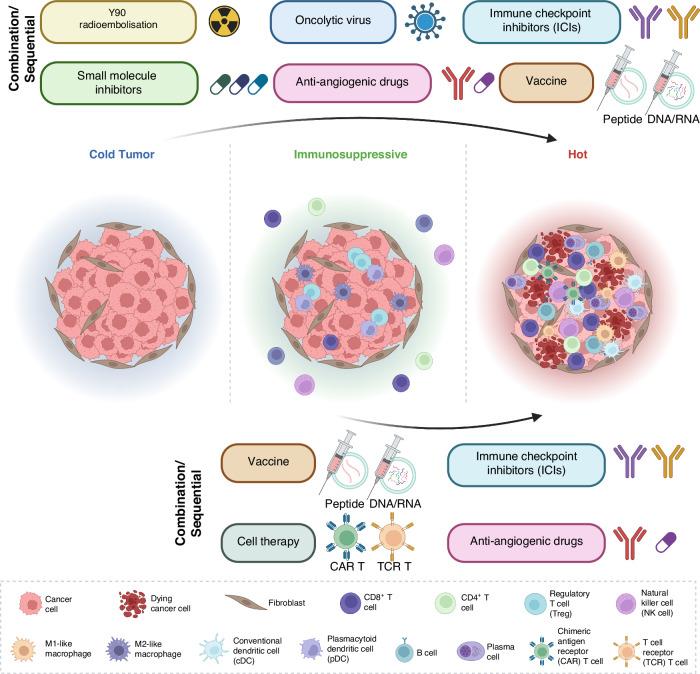
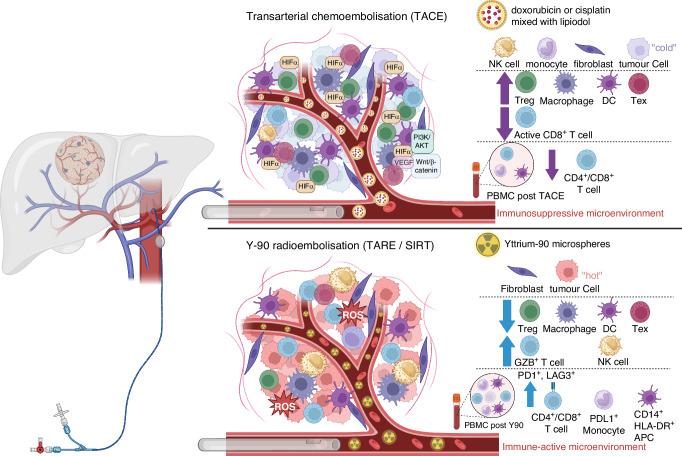
Hepatocellular carcinoma (HCC) is the third leading cause of cancer-related mortality worldwide. The emergence of combination therapy, atezolizumab (anti-PDL1, immune checkpoint inhibitor) and bevacizumab (anti-VEGF) has revolutionised the management of HCC. Despite this breakthrough, the best overall response rate with first-line systemic therapy is only about 30%, owing to intra-tumoural heterogeneity, complex tumour microenvironment and the lack of predictive biomarkers. Many groups have attempted to classify HCC based on the immune microenvironment and have consistently observed better outcomes in immunologically "hot" HCC. We summarised possible mechanisms of tumour immune evasion based on the latest literature and the rationale for combination/sequential therapy to improve treatment response. Lastly, we proposed future strategies and therapies to overcome HCC immune evasion to further improve treatment outcomes of HCC.
肝细胞癌(HCC)是全球癌症相关死亡的第三大主要原因。联合治疗(抗 PD-L1 免疫检查点抑制剂阿替利珠单抗和抗 VEGF 贝伐珠单抗)的出现彻底改变了 HCC 的治疗管理方式。尽管取得了这一突破,但一线系统治疗的最佳总体反应率仅约为 30%,这归因于肿瘤内异质性、复杂的肿瘤微环境以及缺乏预测性生物标志物。许多研究小组试图根据免疫微环境对 HCC 进行分类,并一致观察到免疫“热”型 HCC 的预后更好。我们根据最新文献总结了肿瘤免疫逃逸的可能机制,并提出了联合/序贯治疗的原理,以提高治疗反应。最后,我们提出了克服 HCC 免疫逃逸的未来策略和疗法,以进一步提高 HCC 的治疗效果。
 Zotero 插件