
缺血性脑卒中炎症反应机制及干细胞治疗作用:当前证据与未来展望
Mechanism of inflammatory response and therapeutic effects of stem cells in ischemic stroke: current evidence and future perspectives.
作者信息
Wang Yubo, Yuan Tingli, Lyu Tianjie, Zhang Ling, Wang Meng, He Zhiying, Wang Yongjun, Li Zixiao
机构信息
Vascular Neurology, Department of Neurology, Beijing Tiantan Hospital, Capital Medical University, Beijing, China.
China National Clinical Research Center for Neurological Diseases, Beijing Tiantan Hospital, Capital Medical University, Beijing, China.
出版信息
Neural Regen Res. 2025 Jan 1;20(1):67-81. doi: 10.4103/1673-5374.393104. Epub 2024 Jan 8.
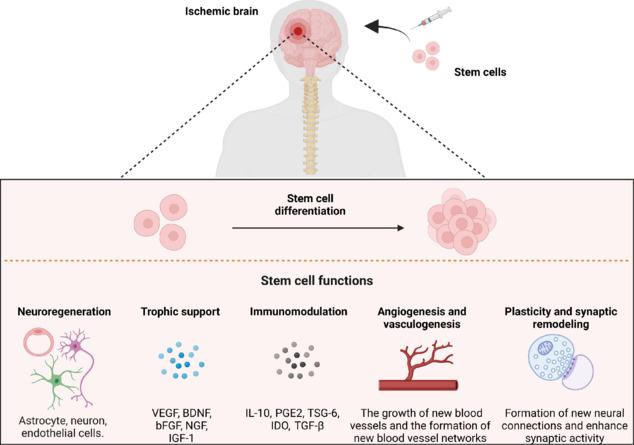
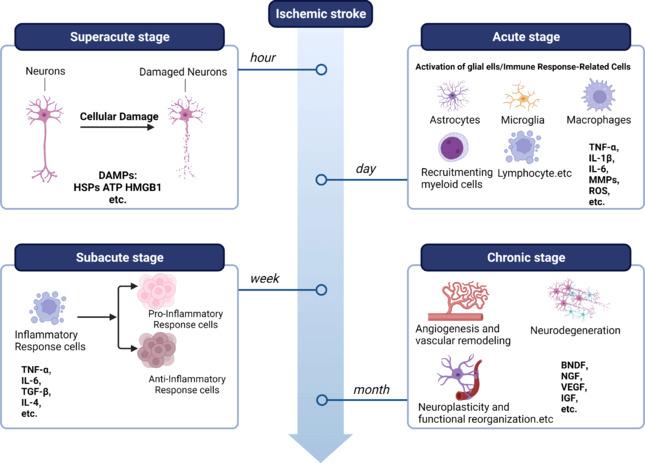
Ischemic stroke is a leading cause of death and disability worldwide, with an increasing trend and tendency for onset at a younger age. China, in particular, bears a high burden of stroke cases. In recent years, the inflammatory response after stroke has become a research hotspot: understanding the role of inflammatory response in tissue damage and repair following ischemic stroke is an important direction for its treatment. This review summarizes several major cells involved in the inflammatory response following ischemic stroke, including microglia, neutrophils, monocytes, lymphocytes, and astrocytes. Additionally, we have also highlighted the recent progress in various treatments for ischemic stroke, particularly in the field of stem cell therapy. Overall, understanding the complex interactions between inflammation and ischemic stroke can provide valuable insights for developing treatment strategies and improving patient outcomes. Stem cell therapy may potentially become an important component of ischemic stroke treatment.
缺血性中风是全球死亡和残疾的主要原因,且有发病年龄呈年轻化的上升趋势。特别是中国,中风病例负担沉重。近年来,中风后的炎症反应已成为研究热点:了解炎症反应在缺血性中风后组织损伤和修复中的作用是其治疗的一个重要方向。本综述总结了缺血性中风后炎症反应中涉及的几种主要细胞,包括小胶质细胞、中性粒细胞、单核细胞、淋巴细胞和星形胶质细胞。此外,我们还强调了缺血性中风各种治疗方法的最新进展,特别是在干细胞治疗领域。总体而言,了解炎症与缺血性中风之间的复杂相互作用可为制定治疗策略和改善患者预后提供有价值的见解。干细胞治疗可能会成为缺血性中风治疗的一个重要组成部分。

 Zotero 插件