
新型 3D 睾丸共培养模型中的生殖毒性作用机制筛选显示,低浓度邻苯二甲酸二丁酯暴露后会显著受损。
Mechanistic screening of reproductive toxicity in a novel 3D testicular co-culture model shows significant impairments following exposure to low-dibutyl phthalate concentrations.
机构信息
Science for Life Laboratory, Department of Environmental Science, Stockholm University, 11418, Stockholm, Sweden.
出版信息
Arch Toxicol. 2024 Aug;98(8):2695-2709. doi: 10.1007/s00204-024-03767-6. Epub 2024 May 20.
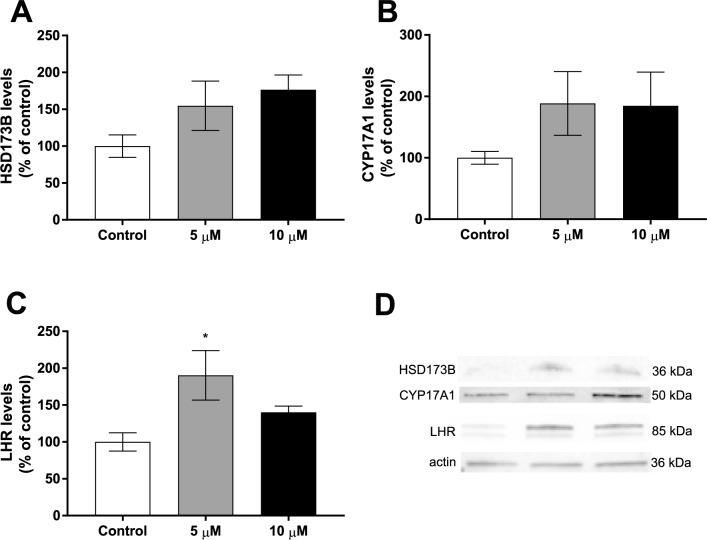
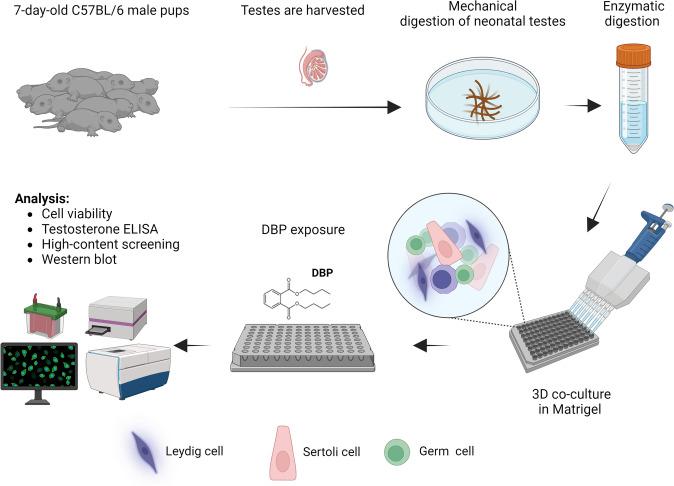
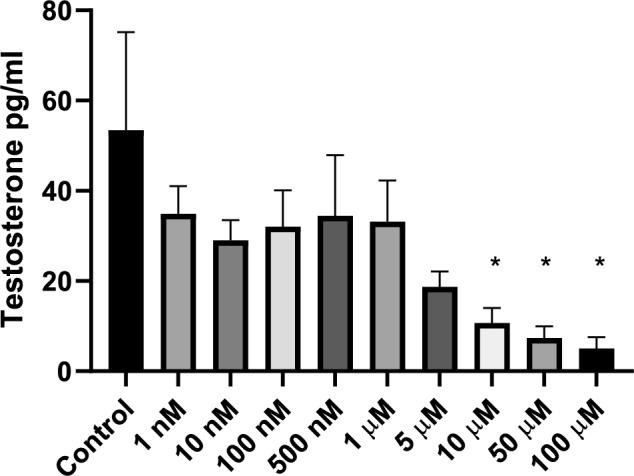
To improve the mechanistic screening of reproductive toxicants in chemical-risk assessment and drug development, we have developed a three-dimensional (3D) heterogenous testicular co-culture model from neonatal mice. Di-n-butyl phthalate (DBP), an environmental contaminant that can affect reproductive health negatively, was used as a model compound to illustrate the utility of the in vitro model. The cells were treated with DBP (1 nM to 100 µM) for 7 days. Automated high-content imaging confirmed the presence of cell-specific markers of Leydig cells (CYP11A1 +), Sertoli cells (SOX9 +), and germ cells (DAZL +). Steroidogenic activity of Leydig cells was demonstrated by analyzing testosterone levels in the culture medium. DBP induced a concentration-dependent reduction in testosterone levels and decreased the number of Leydig cells compared to vehicle control. The levels of steroidogenic regulator StAR and the steroidogenic enzyme CYP11A1 were decreased already at the lowest DBP concentration (1 nM), demonstrating upstream effects in the testosterone biosynthesis pathway. Furthermore, exposure to 10 nM DBP decreased the levels of the germ cell-specific RNA binding protein DAZL, central for the spermatogenesis. The 3D model also captured the development of the Sertoli cell junction proteins, N-cadherin and Zonula occludens protein 1 (ZO-1), critical for the blood-testis barrier. However, DBP exposure did not significantly alter the cadherin and ZO-1 levels. Altogether, this 3D in vitro system models testicular cellular signaling and function, making it a powerful tool for mechanistic screening of developmental testicular toxicity. This can open a new avenue for high throughput screening of chemically-induced reproductive toxicity during sensitive developmental phases.
为了在化学风险评估和药物开发中提高生殖毒性的机制筛选能力,我们从小鼠新生期睾丸中建立了一种三维(3D)异质睾丸共培养模型。邻苯二甲酸二丁酯(DBP)是一种环境污染物,可对生殖健康产生负面影响,被用作模型化合物来阐述该体外模型的实用性。细胞用 DBP(1 nM 至 100 μM)处理 7 天。自动化高内涵成像技术确认了睾丸间质细胞(CYP11A1+)、支持细胞(SOX9+)和生殖细胞(DAZL+)的细胞特异性标志物的存在。通过分析培养基中的睾酮水平来证明睾丸间质细胞的类固醇生成活性。与载体对照相比,DBP 诱导睾酮水平呈浓度依赖性降低,并减少了睾丸间质细胞的数量。类固醇生成调节剂 StAR 和类固醇生成酶 CYP11A1 的水平在最低浓度的 DBP(1 nM)下就降低了,表明在睾酮生物合成途径中有上游作用。此外,暴露于 10 nM DBP 会降低生殖细胞特异性 RNA 结合蛋白 DAZL 的水平,DAZL 对精子发生至关重要。3D 模型还捕获了支持细胞连接蛋白 N-钙黏蛋白和紧密连接蛋白 1(ZO-1)的发育,这对血睾屏障至关重要。然而,DBP 暴露并未显著改变钙黏蛋白和 ZO-1 的水平。总的来说,该 3D 体外系统模拟了睾丸细胞信号和功能,使其成为生殖毒性发育机制筛选的有力工具。这为在敏感发育阶段筛选化学诱导的生殖毒性开辟了新途径。



 Zotero 插件