
通过ROS响应性纳米颗粒递送铁死亡抑制剂前药以促进间充质干细胞介导的脊髓损伤修复。
ROS-responsive nanoparticle delivery of ferroptosis inhibitor prodrug to facilitate mesenchymal stem cell-mediated spinal cord injury repair.
作者信息
Hua Renshuai, Zhao Chenxi, Xu Zhengyu, Liu Derong, Shen Wenyuan, Yuan Wenlu, Li Yan, Ma Jun, Wang Zhishuo, Feng Shiqing
机构信息
Department of Orthopedics, International Science and Technology Cooperation Base of Spinal Cord Injury, Tianjin Key Laboratory of Spine and Spinal Cord Injury, Tianjin Medical University General Hospital, 154 Anshan Road, Heping District, Tianjin, 300052, China.
Department of Orthopaedics, Qilu Hospital of Shandong University, Shandong University Centre for Orthopaedics, Advanced Medical Research Institute, Cheeloo College of Medicine, Shandong University, Jinan, Shandong, 250012, China.
出版信息
Bioact Mater. 2024 May 12;38:438-454. doi: 10.1016/j.bioactmat.2024.05.015. eCollection 2024 Aug.
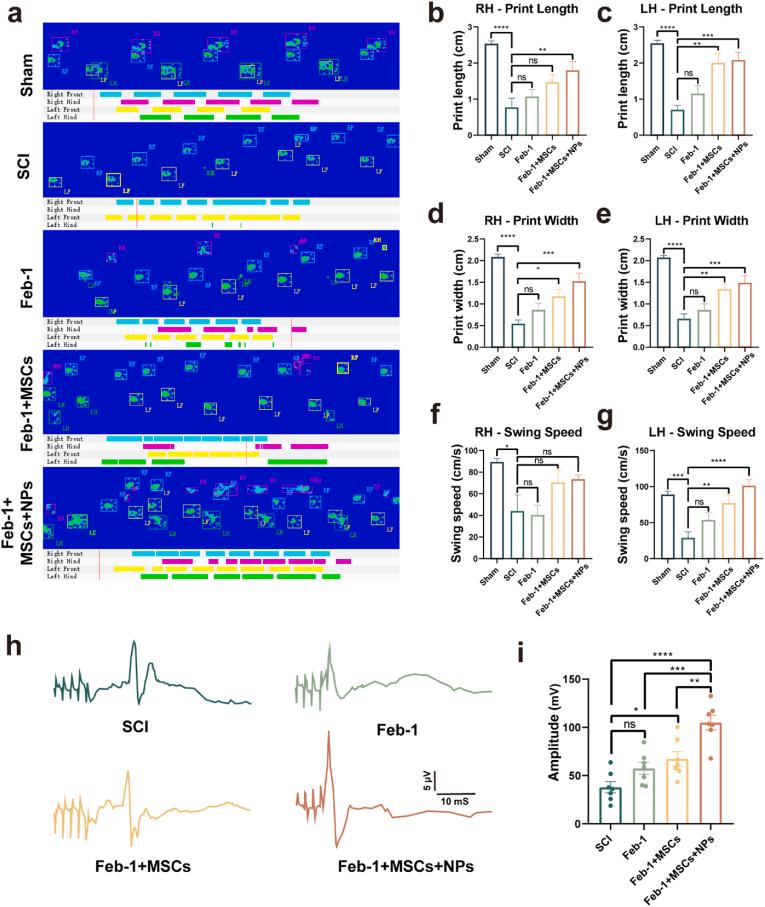
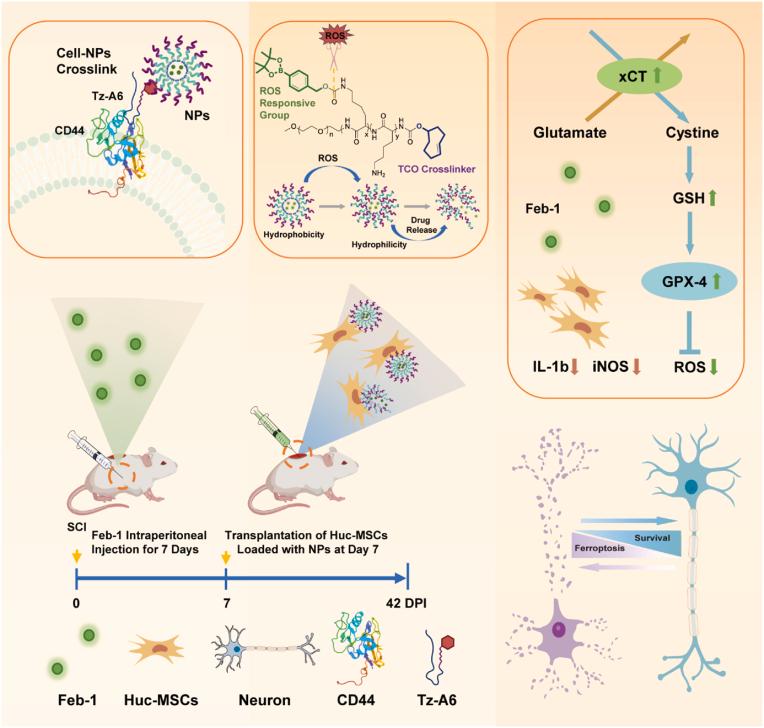
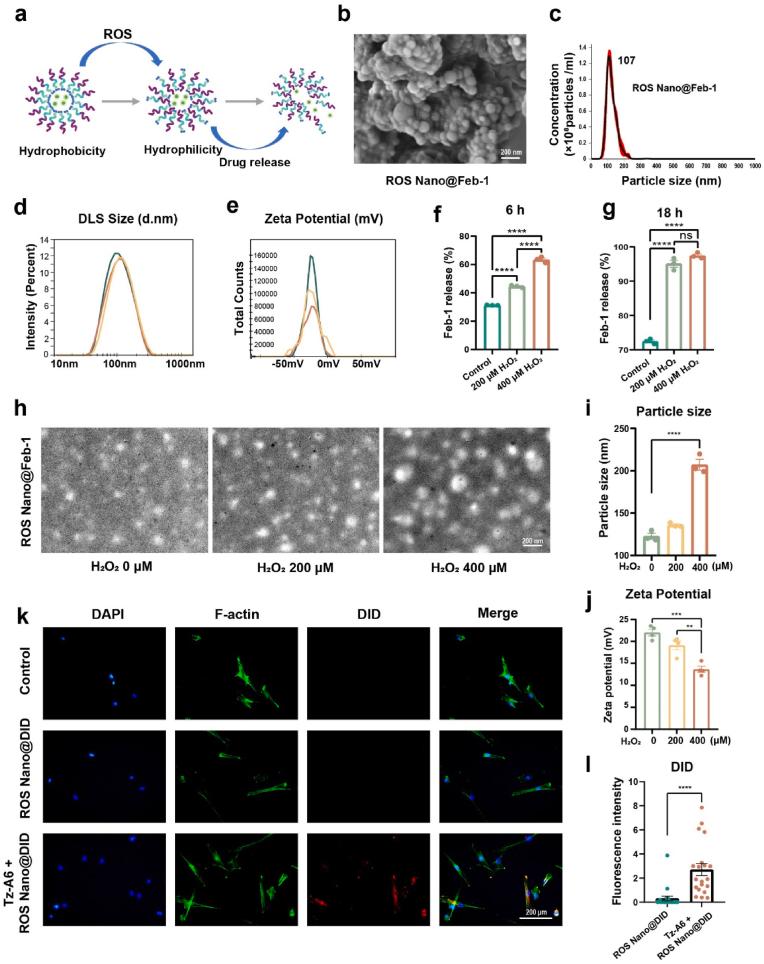
Spinal cord injury (SCI) is a traumatic condition that results in impaired motor and sensory function. Ferroptosis is one of the main causes of neural cell death and loss of neurological function in the spinal cord, and ferroptosis inhibitors are effective in reducing inflammation and repairing SCI. Although human umbilical cord mesenchymal stem cells (Huc-MSCs) can ameliorate inflammatory microenvironments and promote neural regeneration in SCI, their efficacy is greatly limited by the local microenvironment after SCI. Therefore, in this study, we constructed a drug-release nanoparticle system with synergistic Huc-MSCs and ferroptosis inhibitor, in which we anchored Huc-MSCs by a Tz-A6 peptide based on the CD44-targeting sequence, and combined with the reactive oxygen species (ROS)-responsive drug nanocarrier mPEG-b-Lys-BECI-TCO at the other end for SCI repair. Meanwhile, we also modified the classic ferroptosis inhibitor Ferrostatin-1 (Fer-1) and synthesized a new prodrug Feborastatin-1 (Feb-1). The results showed that this treatment regimen significantly inhibited the ferroptosis and inflammatory response after SCI, and promoted the recovery of neurological function in rats with SCI. This study developed a combination therapy for the treatment of SCI and also provides a new strategy for the construction of a drug-coordinated cell therapy system.
脊髓损伤(SCI)是一种导致运动和感觉功能受损的创伤性疾病。铁死亡是脊髓神经细胞死亡和神经功能丧失的主要原因之一,铁死亡抑制剂可有效减轻炎症并修复脊髓损伤。虽然人脐带间充质干细胞(Huc-MSCs)可改善SCI中的炎症微环境并促进神经再生,但其疗效在很大程度上受到SCI后局部微环境的限制。因此,在本研究中,我们构建了一种具有协同作用的Huc-MSCs和铁死亡抑制剂的药物释放纳米颗粒系统,其中我们基于CD44靶向序列通过Tz-A6肽锚定Huc-MSCs,并在另一端与活性氧(ROS)响应性药物纳米载体mPEG-b-Lys-BECI-TCO结合用于SCI修复。同时,我们还对经典的铁死亡抑制剂Ferrostatin-1(Fer-1)进行了修饰并合成了一种新的前药Feborastatin-1(Feb-1)。结果表明,该治疗方案显著抑制了SCI后的铁死亡和炎症反应,并促进了SCI大鼠神经功能的恢复。本研究开发了一种治疗SCI的联合疗法,也为构建药物协同细胞治疗系统提供了新策略。



 Zotero 插件