
对急性髓系白血病(AML)患者免疫相关长链非编码RNA(lncRNA)的综合分析揭示了潜在的治疗靶点和预后生物标志物。
Comprehensive analysis of immune-related lncRNAs in AML patients uncovers potential therapeutic targets and prognostic biomarkers.
作者信息
Zhang Meng, Zhang Li-Li, Yi Ling-Bo, Tu Xiao-Nian, Zhou Ying, Li Dai-Yang, Xue Han-Chun, Li Yu-Xia, Zheng Zhong-Zheng
机构信息
Shanghai Tissuebank Biotechnology Co., Ltd, Shanghai, China.
出版信息
Heliyon. 2024 May 7;10(9):e30616. doi: 10.1016/j.heliyon.2024.e30616. eCollection 2024 May 15.
PURPOSE
The objective of this study was to provide theoretically feasible strategies by understanding the relationship between the immune microenvironment and the diagnosis and prognosis of AML patients. To this end, we built a ceRNA network with lncRNAs as the core and analyzed the related lncRNAs in the immune microenvironment by bioinformatics analysis.
METHODS
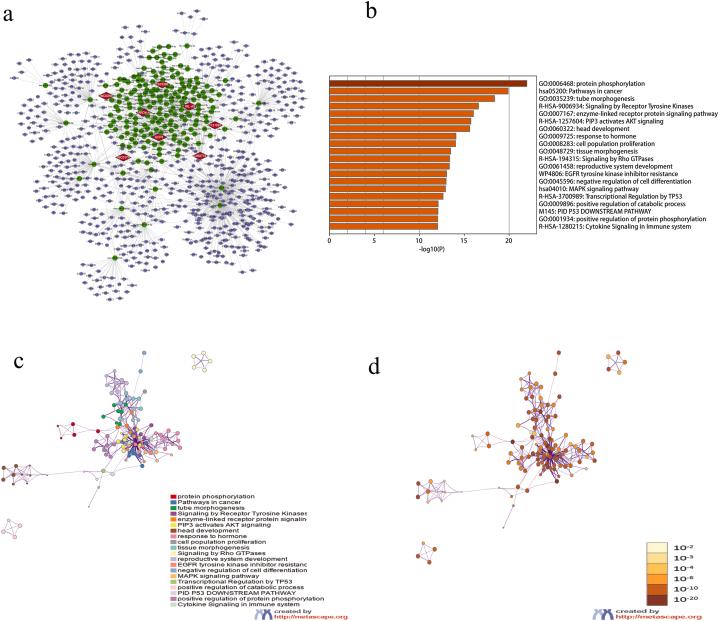
AML transcriptome expression data and immune-related gene sets were obtained from TCGA and ImmPort. Utilizing Pearson correlation analysis, differentially expressed immune-related lncRNAs were identified. Then, the LASSO-Cox regression analysis was performed to generate a risk signature consisting immune-related lncRNAs. Accuracy of signature in predicting patient survival was evaluated using univariate and multivariate analysis. Next, GO and KEGG gene enrichment and ssGSEA were carried out for pathway enrichment analysis of 183 differentially expressed genes, followed by drug sensitivity and immune infiltration analysis with pRRophetic and CIBERSORT, respectively. Cytoscape was used to construct the ceRNA network for these lncRNAs.
RESULTS
816 common lncRNAs were selected to acquire the components related to prognosis. The final risk signature established by multivariate Cox and stepwise regression analysis contained 12 lncRNAs engaged in tumor apoptotic and metastatic processes: LINC02595, HCP5, AC020934.2, AC008770.3, LINC01770, AC092718.4, AL589863.1, AC131097.4, AC012368.1, C1RL-AS1, STARD4-AS1, and AC243960.1. Based on this predictive model, high-risk patients exhibited lower overall survival rates than low-risk patients. Signature lncRNAs showed significant correlation with tumor-infiltrating immune cells. In addition, significant differences in PD-1/PD-L1 expression and bleomycin/paclitaxel sensitivity were observed between risk groups.
CONCLUSION
LncRNAs related to immune microenvironment were prospective prognostic and therapeutic options for AML.
目的
本研究的目的是通过了解免疫微环境与急性髓系白血病(AML)患者诊断及预后之间的关系,提供理论上可行的策略。为此,我们构建了以长链非编码RNA(lncRNA)为核心的竞争性内源RNA(ceRNA)网络,并通过生物信息学分析免疫微环境中的相关lncRNA。
方法
从癌症基因组图谱(TCGA)和免疫数据库(ImmPort)获取AML转录组表达数据和免疫相关基因集。利用Pearson相关性分析鉴定差异表达的免疫相关lncRNA。然后,进行LASSO-Cox回归分析以生成由免疫相关lncRNA组成的风险特征。使用单变量和多变量分析评估该特征预测患者生存的准确性。接下来,对183个差异表达基因进行基因本体(GO)和京都基因与基因组百科全书(KEGG)基因富集以及单样本基因集富集分析(ssGSEA),随后分别使用pRRophetic和CIBERSORT进行药物敏感性和免疫浸润分析。利用Cytoscape构建这些lncRNA的ceRNA网络。
结果
选择816个常见lncRNA以获取与预后相关的成分。通过多变量Cox和逐步回归分析建立的最终风险特征包含12个参与肿瘤凋亡和转移过程的lncRNA:LINC02595、HCP5、AC020934.2、AC008770.3、LINC01770、AC092718.4、AL589863.1、AC131097.4、AC012368.1、C1RL-AS1、STARD4-AS1和AC243960.1。基于此预测模型,高危患者的总生存率低于低危患者。特征lncRNA与肿瘤浸润免疫细胞显示出显著相关性。此外,在风险组之间观察到程序性死亡受体1(PD-1)/程序性死亡配体1(PD-L1)表达和博来霉素/紫杉醇敏感性的显著差异。
结论
与免疫微环境相关的lncRNA是AML潜在的预后和治疗选择。


 Zotero 插件