
勐腊病毒小基因组长达 23000nt,含有病毒 RNA 依赖的 RNA 聚合酶(RdRp)编码序列,其编码区位于 20859-22960nt。
Development of a Měnglà virus minigenome and comparison of its polymerase complexes with those of other filoviruses.
机构信息
State Laboratory of Virology, Wuhan Institute of Virology, Chinese Academy of Sciences, Wuhan, 430071, China; University of Chinese Academy of Sciences, Beijing, 100049, China.
State Laboratory of Virology, Wuhan Institute of Virology, Chinese Academy of Sciences, Wuhan, 430071, China.
出版信息
Virol Sin. 2024 Jun;39(3):459-468. doi: 10.1016/j.virs.2024.03.011. Epub 2024 May 21.
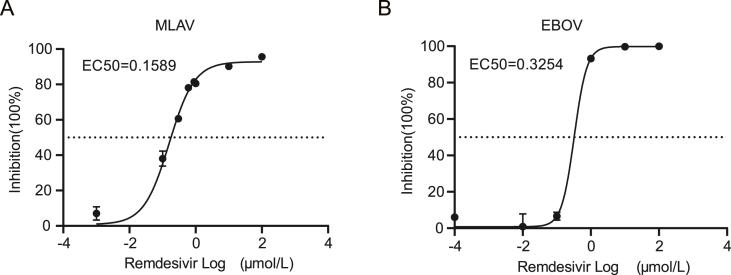
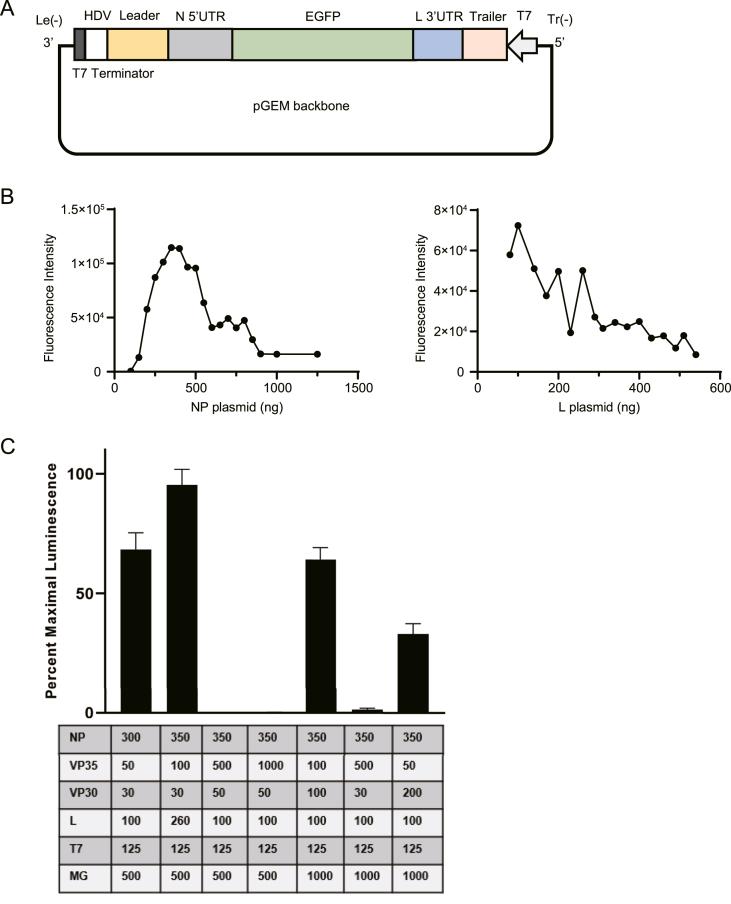
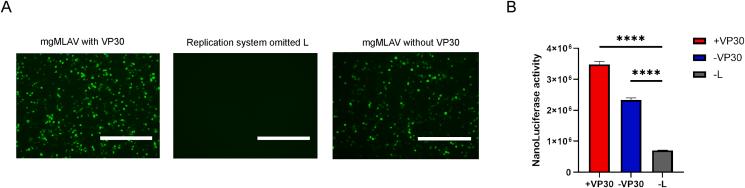
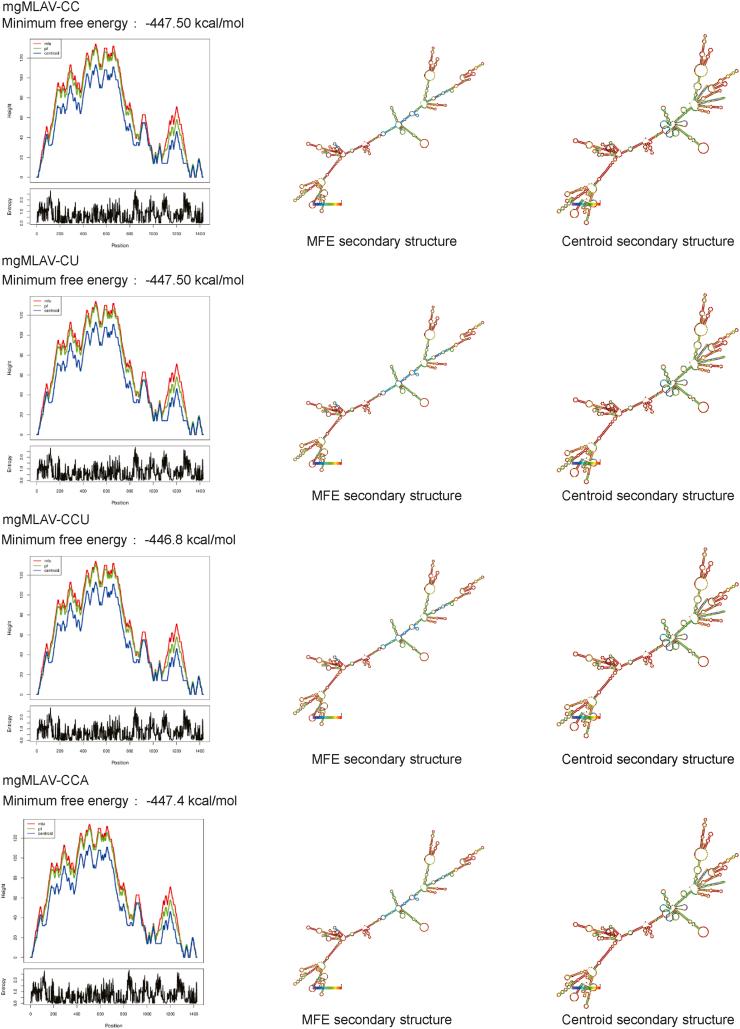
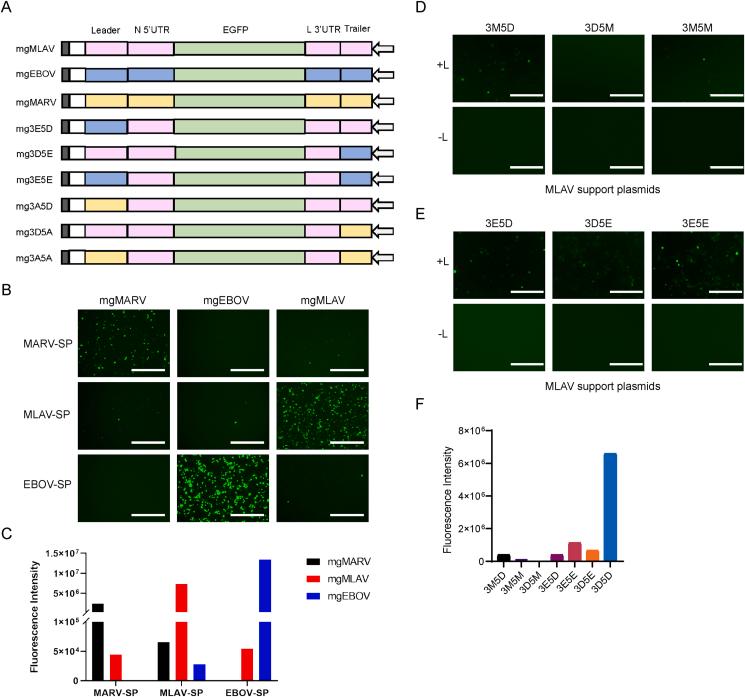
Ebola virus (EBOV) and Marburg virus (MARV), members of the Filoviridae family, are highly pathogenic and can cause hemorrhagic fevers, significantly impacting human society. Bats are considered reservoirs of these viruses because related filoviruses have been discovered in bats. However, due to the requirement for maximum containment laboratories when studying infectious viruses, the characterization of bat filoviruses often relies on pseudoviruses and minigenome systems. In this study, we used RACE technology to sequence the 3'-leader and 5'-trailer of Měnglà virus (MLAV) and constructed a minigenome. Similar to MARV, the transcription activities of the MLAV minigenome are independent of VP30. We further assessed the effects of polymorphisms at the 5' end on MLAV minigenome activity and identified certain mutations that decrease minigenome reporter efficiency, probably due to alterations in the RNA secondary structure. The reporter activity upon recombination of the 3'-leaders and 5'-trailers of MLAV, MARV, and EBOV with those of the homologous or heterologous minigenomes was compared and it was found that the polymerase complex and leader and trailer sequences exhibit intrinsic specificities. Additionally, we investigated whether the polymerase complex proteins from EBOV and MARV support MLAV minigenome RNA synthesis and found that the homologous system is more efficient than the heterologous system. Remdesivir efficiently inhibited MLAV as well as EBOV replication. In summary, this study provides new information on bat filoviruses and the minigenome will be a useful tool for high-throughput antiviral drug screening.
埃博拉病毒(EBOV)和马尔堡病毒(MARV)属于丝状病毒科,具有高度致病性,可引起出血热,对人类社会造成重大影响。蝙蝠被认为是这些病毒的宿主,因为在蝙蝠中发现了相关的丝状病毒。然而,由于在研究传染性病毒时需要最高水平的生物安全实验室,因此蝙蝠丝状病毒的特性通常依赖于假病毒和小基因系统。在这项研究中,我们使用 RACE 技术对猛犸象病毒(MLAV)的 3'-leader 和 5'-trailer 进行了测序,并构建了一个小基因系统。与 MARV 相似,MLAV 小基因系统的转录活性不依赖于 VP30。我们进一步评估了 5'端多态性对 MLAV 小基因系统活性的影响,并鉴定出某些突变会降低小基因报告效率,这可能是由于 RNA 二级结构的改变。我们比较了 MLAV、MARV 和 EBOV 的 3'-leader 和 5'-trailer 与同源或异源小基因系统的重组对小基因报告效率的影响,发现聚合酶复合物和 leader 和 trailer 序列表现出内在的特异性。此外,我们研究了 EBOV 和 MARV 的聚合酶复合物蛋白是否支持 MLAV 小基因 RNA 的合成,发现同源系统比异源系统更有效。瑞德西韦能有效地抑制 MLAV 以及 EBOV 的复制。总之,本研究提供了关于蝙蝠丝状病毒的新信息,小基因系统将成为高通量抗病毒药物筛选的有用工具。


 Zotero 插件