
比较叶兰属的叶绿体基因组学、系统发育关系和分子标记开发及其七个绿叶品种。
Comparative chloroplast genomics, phylogenetic relationships and molecular markers development of Aglaonema commutatum and seven green cultivars of Aglaonema.
机构信息
Guangdong Key Lab of Ornamental Plant Germplasm Innovation and Utilization, Environmental Horticulture Research Institute, Guangdong Academy of Agricultural Sciences, Guangzhou, China.
Research Institute of Living Environment, Guangdong Bailin Ecology and Technology Co., LTD, Dongguan, China.
出版信息
Sci Rep. 2024 May 23;14(1):11820. doi: 10.1038/s41598-024-62586-y.
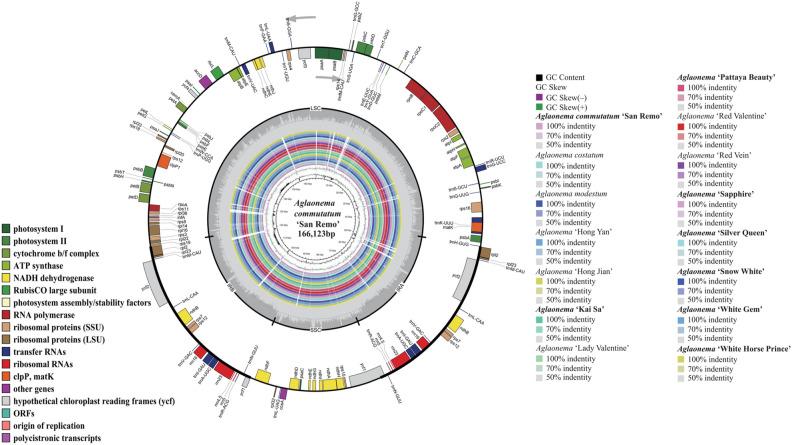
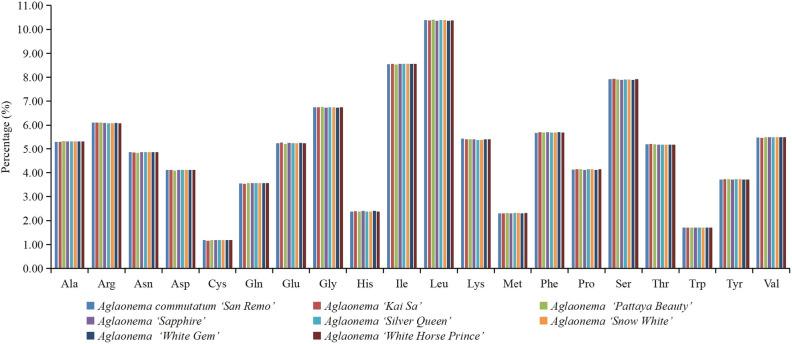
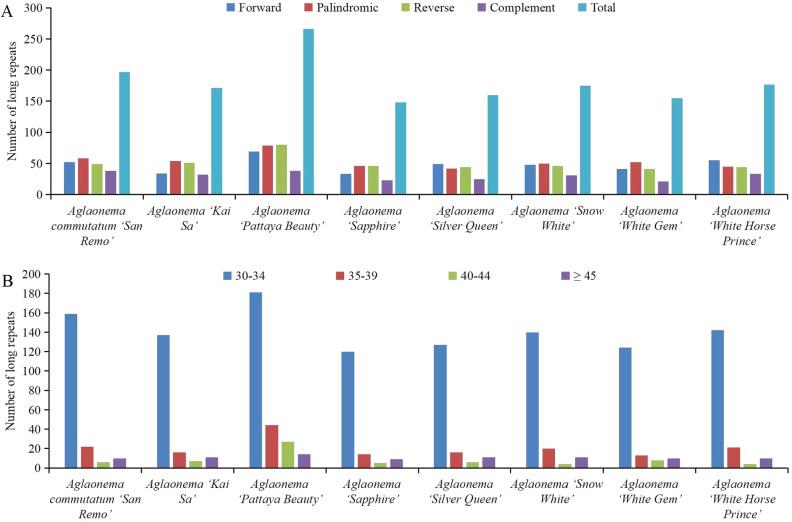
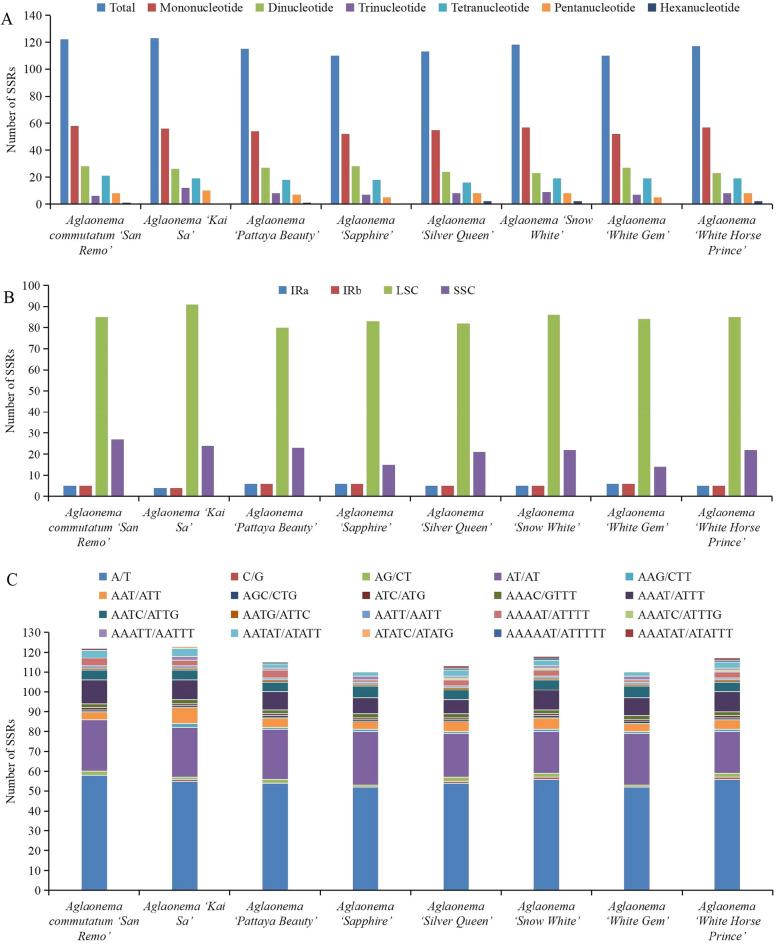
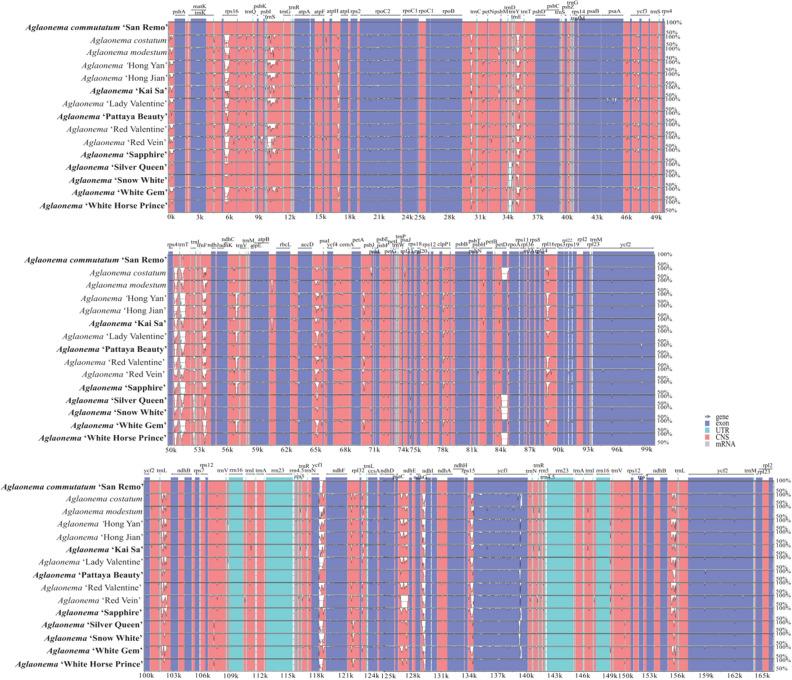
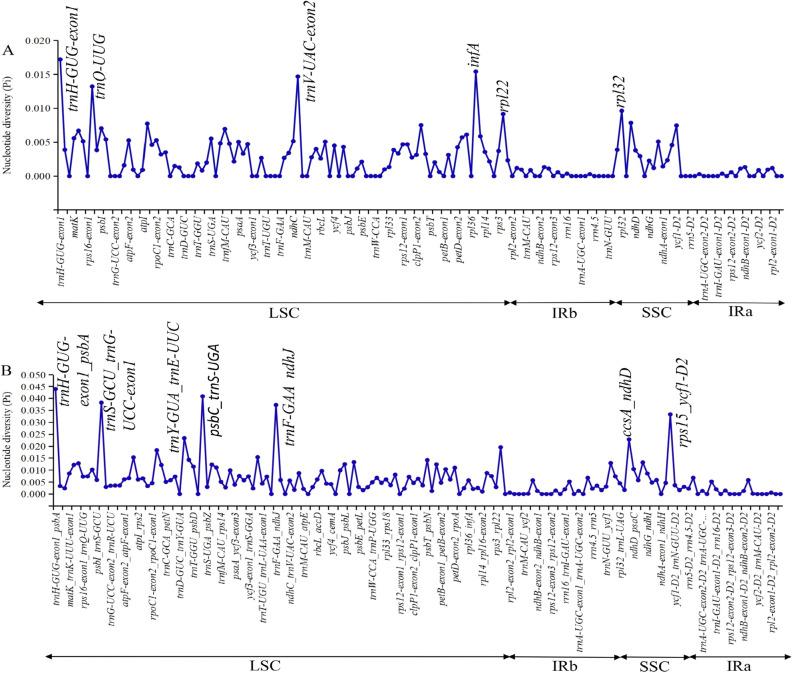
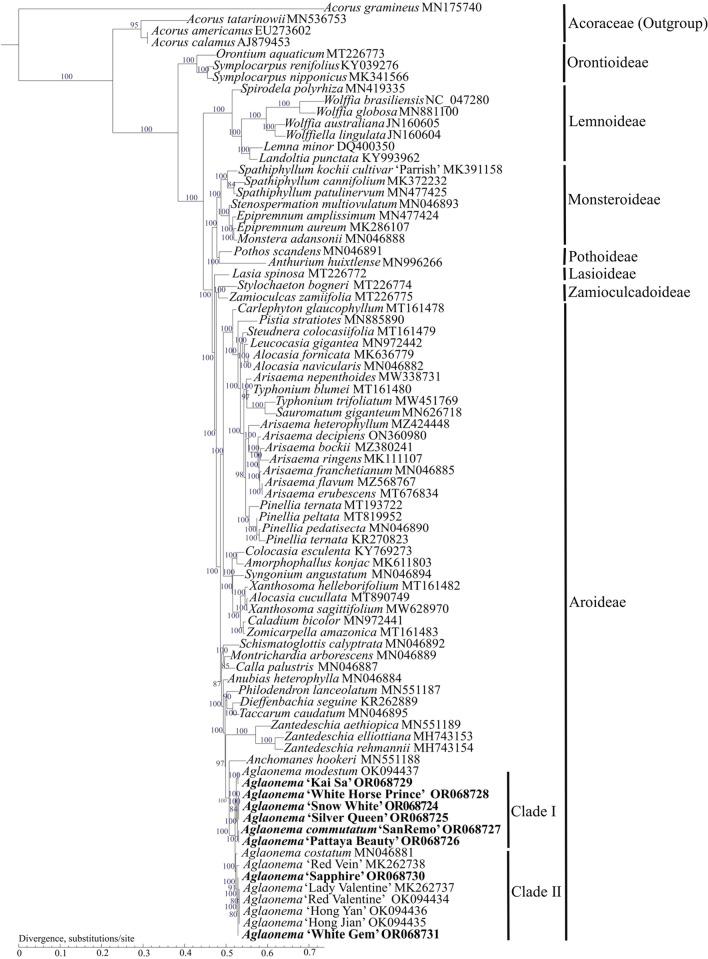
Aglaonema commutatum is a famous species in the Aglaonema genus, which has important ornamental and economic value. However, its chloroplast genome information and phylogenetic relationships among popular green cultivars of Aglaonema in southern China have not been reported. Herein, chloroplast genomes of one variety of A. commutatum and seven green cultivars of Aglaonema, namely, A. commutatum 'San Remo', 'Kai Sa', 'Pattaya Beauty', 'Sapphire', 'Silver Queen', 'Snow White', 'White Gem', and 'White Horse Prince', were sequenced and assembled for comparative analysis and phylogeny. These eight genomes possessed a typical quadripartite structure that consisted of a LSC region (90,799-91,486 bp), an SSC region (20,508-21,137 bp) and a pair of IR regions (26,661-26,750 bp). Each genome contained 112 different genes, comprising 79 protein-coding genes, 29 tRNA genes and 4 rRNA genes. The gene orders, GC contents, codon usage frequency, and IR/SC boundaries were highly conserved among these eight genomes. Long repeats, SSRs, SNPs and indels were analyzed among these eight genomes. Comparative analysis of 15 Aglaonema chloroplast genomes identified 7 highly variable regions, including trnH-GUG-exon1-psbA, trnS-GCU-trnG-UCC-exon1, trnY-GUA-trnE-UUC, psbC-trnS-UGA, trnF-GAA-ndhJ, ccsA-ndhD, and rps15-ycf1-D2. Reconstruction of the phylogenetic trees based on chloroplast genomes, strongly supported that Aglaonema was a sister to Anchomanes, and that the Aglaonema genus was classified into two sister clades including clade I and clade II, which corresponded to two sections, Aglaonema and Chamaecaulon, respectively. One variety and five cultivars, including A. commutatum 'San Remo', 'Kai Sa', 'Pattaya Beauty', 'Silver Queen', 'Snow White', and 'White Horse Prince', were classified into clade I; and the rest of the two cultivars, including 'Sapphire' and 'White Gem', were classified into clade II. Positive selection was observed in 34 protein-coding genes at the level of the amino acid sites among 77 chloroplast genomes of the Araceae family. Based on the highly variable regions and SSRs, 4 DNA markers were developed to differentiate the clade I and clade II in Aglaonema. In conclusion, this study provided chloroplast genomic resources for Aglaonema, which were useful for its classification and phylogeny.
银丝勒杜鹃是 Aglaonema 属中的一种著名物种,具有重要的观赏和经济价值。然而,其叶绿体基因组信息以及中国南方受欢迎的 Aglaonema 绿色栽培品种的系统发育关系尚未报道。在此,我们对 Aglaonema commutatum 的一个品种和 Aglaonema 的七种绿色栽培品种(即 Aglaonema commutatum 'San Remo'、'Kai Sa'、'Pattaya Beauty'、'Sapphire'、'Silver Queen'、'Snow White'、'White Gem'和'White Horse Prince')的叶绿体基因组进行了测序和组装,用于比较分析和系统发育研究。这八个基因组具有典型的四分体结构,由一个 LSC 区(90799-91486 bp)、一个 SSC 区(20508-21137 bp)和一对 IR 区(26661-26750 bp)组成。每个基因组包含 112 个不同的基因,包括 79 个蛋白编码基因、29 个 tRNA 基因和 4 个 rRNA 基因。这些基因在八个基因组中的排列、GC 含量、密码子使用频率和 IR/SSC 边界高度保守。在这八个基因组中分析了长重复序列、SSR、SNP 和插入缺失。对 15 个 Aglaonema 叶绿体基因组的比较分析确定了 7 个高度可变区,包括 trnH-GUG-exon1-psbA、trnS-GCU-trnG-UCC-exon1、trnY-GUA-trnE-UUC、psbC-trnS-UGA、trnF-GAA-ndhJ、ccsA-ndhD 和 rps15-ycf1-D2。基于叶绿体基因组重建的系统发育树强烈支持 Aglaonema 与 Anchomanes 是姐妹关系,并且 Aglaonema 属分为两个姐妹分支,包括分支 I 和分支 II,分别对应于两个节,Aglaonema 和 Chamaecaulon。一个品种和五个栽培品种,包括 Aglaonema commutatum 'San Remo'、'Kai Sa'、'Pattaya Beauty'、'Silver Queen'、'Snow White'和'White Horse Prince',被归类为分支 I;其余两个品种,包括'Sapphire'和'White Gem',被归类为分支 II。在 77 个天南星科叶绿体基因组的氨基酸水平上,观察到 34 个蛋白编码基因的正选择。基于高度可变区和 SSR,开发了 4 个 DNA 标记来区分 Aglaonema 中的分支 I 和分支 II。总之,本研究为 Aglaonema 提供了叶绿体基因组资源,这对其分类和系统发育研究具有重要意义。


 Zotero 插件