
SARS-CoV-2 变体中 T 细胞表位多样性的生物信息学分析:与美国人群中 COVID-19 临床严重程度的关联。
A bioinformatic analysis of T-cell epitope diversity in SARS-CoV-2 variants: association with COVID-19 clinical severity in the United States population.
机构信息
Department of Genetics, Louisiana State University Health Sciences Center, New Orleans, LA, United States.
School of Medicine, Louisiana State University Health Sciences Center, New Orleans, LA, United States.
出版信息
Front Immunol. 2024 May 9;15:1357731. doi: 10.3389/fimmu.2024.1357731. eCollection 2024.
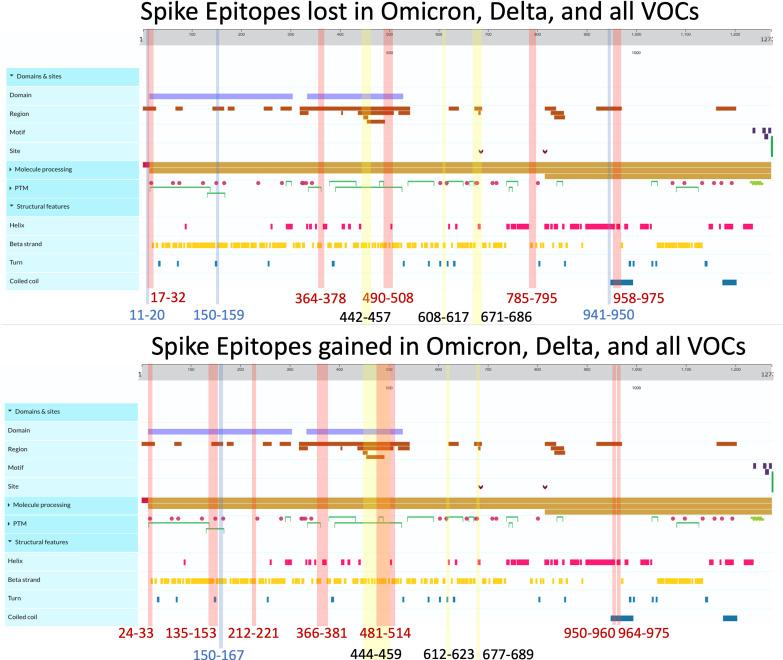
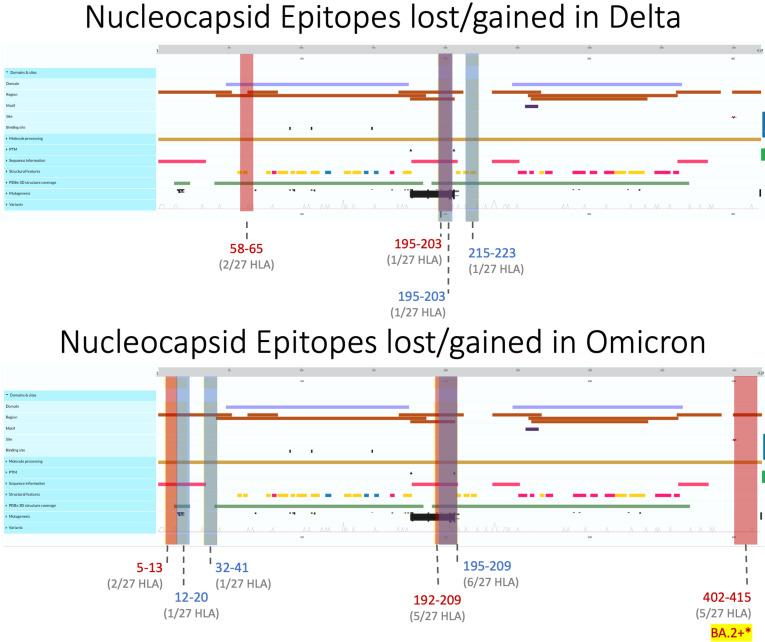
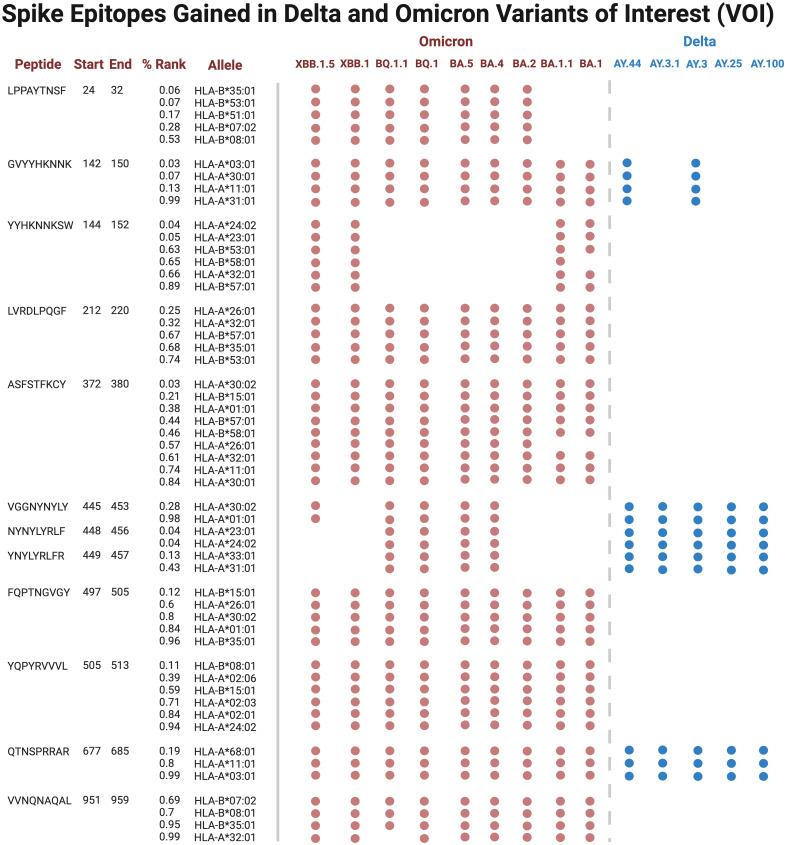
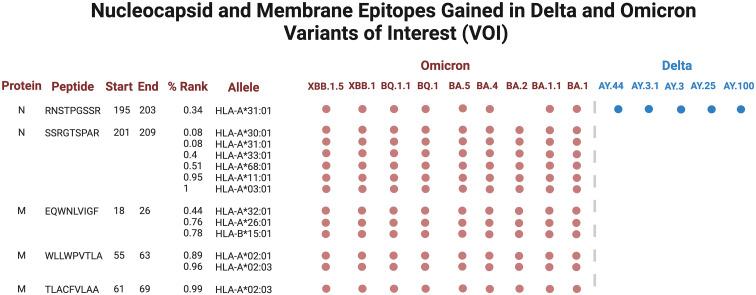
Long-term immunity against severe acute respiratory syndrome coronavirus 2 (SARS-CoV-2) requires the identification of T-cell epitopes affecting host immunogenicity. In this computational study, we explored the CD8 epitope diversity estimated in 27 of the most common HLA-A and HLA-B alleles, representing most of the United States population. Analysis of 16 SARS-CoV-2 variants [B.1, Alpha (B.1.1.7), five Delta (AY.100, AY.25, AY.3, AY.3.1, AY.44), and nine Omicron (BA.1, BA.1.1, BA.2, BA.4, BA.5, BQ.1, BQ.1.1, XBB.1, XBB.1.5)] in analyzed MHC class I alleles revealed that SARS-CoV-2 CD8 epitope conservation was estimated at 87.6%-96.5% in spike (S), 92.5%-99.6% in membrane (M), and 94.6%-99% in nucleocapsid (N). As the virus mutated, an increasing proportion of S epitopes experienced reduced predicted binding affinity: 70% of Omicron BQ.1-XBB.1.5 S epitopes experienced decreased predicted binding, as compared with ~3% and ~15% in the earlier strains Delta AY.100-AY.44 and Omicron BA.1-BA.5, respectively. Additionally, we identified several novel candidate HLA alleles that may be more susceptible to severe disease, notably , , and , and relatively protected from disease, such as , , , and Our findings support the hypothesis that viral genetic variation affecting CD8 T-cell epitope immunogenicity contributes to determining the clinical severity of acute COVID-19. Achieving long-term COVID-19 immunity will require an understanding of the relationship between T cells, SARS-CoV-2 variants, and host MHC class I genetics. This project is one of the first to explore the SARS-CoV-2 CD8 epitope diversity that putatively impacts much of the United States population.
长期的严重急性呼吸系统综合征冠状病毒 2 (SARS-CoV-2) 免疫力需要确定影响宿主免疫原性的 T 细胞表位。在这项计算研究中,我们探索了在代表美国大部分人口的 27 个最常见的 HLA-A 和 HLA-B 等位基因中估计的 CD8 表位多样性。对 16 种 SARS-CoV-2 变体[B.1、Alpha (B.1.1.7)、五种 Delta (AY.100、AY.25、AY.3、AY.3.1、AY.44) 和九种 Omicron (BA.1、BA.1.1、BA.2、BA.4、BA.5、BQ.1、BQ.1.1、XBB.1、XBB.1.5)]在分析的 MHC 类 I 等位基因中的分析表明,SARS-CoV-2 CD8 表位保守性在刺突 (S) 中估计为 87.6%-96.5%,在膜 (M) 中为 92.5%-99.6%,在核衣壳 (N) 中为 94.6%-99%。随着病毒的突变,越来越多的 S 表位经历了预测结合亲和力的降低:与早期株 Delta AY.100-AY.44 相比,Omicron BQ.1-XBB.1.5 的 S 表位中约有 70%经历了预测结合亲和力的降低,而约有 3%和 15%。此外,我们还鉴定了几个新的候选 HLA 等位基因,这些等位基因可能更容易患重病,特别是 , , 和 ,而相对不易患病,如 , , ,和 。我们的研究结果支持了这样一种假设,即影响 CD8 T 细胞表位免疫原性的病毒遗传变异有助于确定急性 COVID-19 的临床严重程度。实现长期的 COVID-19 免疫力将需要了解 T 细胞、SARS-CoV-2 变体和宿主 MHC 类 I 遗传学之间的关系。本项目是第一个探索可能影响美国大部分人口的 SARS-CoV-2 CD8 表位多样性的项目之一。


 Zotero 插件