
治疗肾细胞癌不同转移部位的选择:综述。
Therapeutic options for different metastatic sites arising from renal cell carcinoma: A review.
机构信息
Zhejiang Key Laboratory of Pathophysiology, Ningbo University, Ningbo, China.
Department of Urologic Surgery, Ningbo Yinzhou No. 2 Hospital, Ningbo, China.
出版信息
Medicine (Baltimore). 2024 May 24;103(21):e38268. doi: 10.1097/MD.0000000000038268.
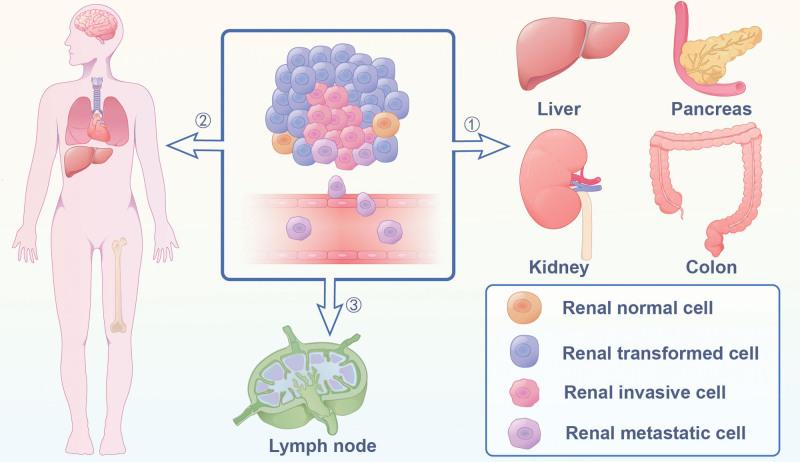
Renal cell carcinoma (RCC) stands among the top 10 malignant neoplasms with the highest fatality rates. It exhibits pronounced heterogeneity and robust metastatic behavior. Patients with RCC may present with solitary or multiple metastatic lesions at various anatomical sites, and their prognoses are contingent upon the site of metastasis. When deliberating the optimal therapeutic approach for a patient, thorough evaluation of significant risk factors such as the feasibility of complete resection, the presence of oligometastases, and the patient's functional and physical condition is imperative. Recognizing the nuanced differences in RCC metastasis to distinct organs proves advantageous in contemplating potential treatment modalities aimed at optimizing survival outcomes. Moreover, discerning the metastatic site holds promise for enhancing risk stratification in individuals with metastatic RCC. This review summarizes the recent data pertaining to the current status of different RCC metastatic sites and elucidates their role in informing clinical management strategies across diverse metastatic locales of RCC.
肾细胞癌 (RCC) 是死亡率最高的十大恶性肿瘤之一。它表现出明显的异质性和强大的转移行为。RCC 患者可能在不同解剖部位出现单发或多发转移病灶,其预后取决于转移部位。在为患者制定最佳治疗方案时,必须彻底评估重要的风险因素,如完全切除的可行性、寡转移的存在以及患者的功能和身体状况。认识到 RCC 转移到不同器官的细微差异有助于考虑旨在优化生存结果的潜在治疗方法。此外,辨别转移部位有望提高转移性 RCC 个体的风险分层。本综述总结了有关不同 RCC 转移部位现状的最新数据,并阐明了它们在告知 RCC 不同转移部位的临床管理策略中的作用。

 Zotero 插件