
纳米塑料与肌萎缩侧索硬化症中的神经退行性变
Nanoplastics and Neurodegeneration in ALS.
作者信息
Eisen Andrew, Pioro Erik P, Goutman Stephen A, Kiernan Matthew C
机构信息
Division of Neurology, Department of Medicine, University of British Columbia, Vancouver, BC V6S 1Z3, Canada.
Department of Neurology, University of Michigan, Ann Arbor, MI 48109, USA.
出版信息
Brain Sci. 2024 May 7;14(5):471. doi: 10.3390/brainsci14050471.
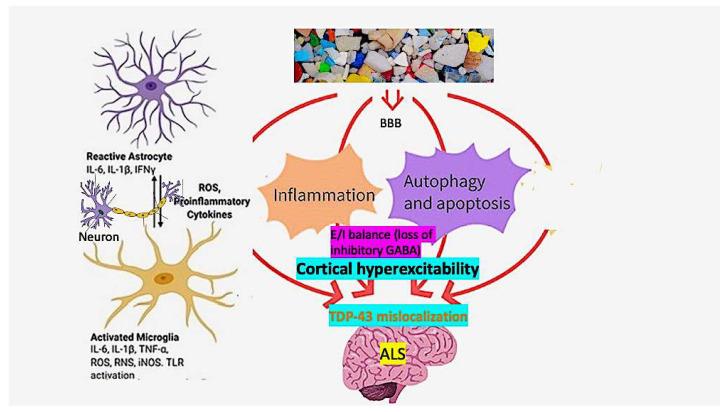
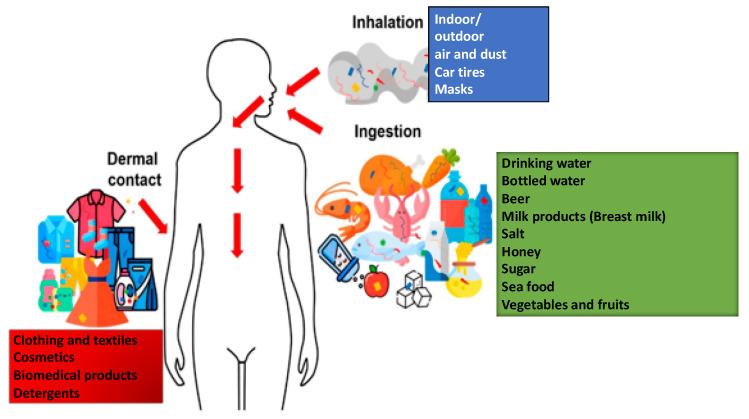
Plastic production, which exceeds one million tons per year, is of global concern. The constituent low-density polymers enable spread over large distances and micro/nano particles (MNPLs) induce organ toxicity via digestion, inhalation, and skin contact. Particles have been documented in all human tissues including breast milk. MNPLs, especially weathered particles, can breach the blood-brain barrier, inducing neurotoxicity. This has been documented in non-human species, and in human-induced pluripotent stem cell lines. Within the brain, MNPLs initiate an inflammatory response with pro-inflammatory cytokine production, oxidative stress with generation of reactive oxygen species, and mitochondrial dysfunction. Glutamate and GABA neurotransmitter dysfunction also ensues with alteration of excitatory/inhibitory balance in favor of reduced inhibition and resultant neuro-excitation. Inflammation and cortical hyperexcitability are key abnormalities involved in the pathogenic cascade of amyotrophic lateral sclerosis (ALS) and are intricately related to the mislocalization and aggregation of TDP-43, a hallmark of ALS. Water and many foods contain MNPLs and in humans, ingestion is the main form of exposure. Digestion of plastics within the gut can alter their properties, rendering them more toxic, and they cause gut microbiome dysbiosis and a dysfunctional gut-brain axis. This is recognized as a trigger and/or aggravating factor for ALS. ALS is associated with a long (years or decades) preclinical period and neonates and infants are exposed to MNPLs through breast milk, milk substitutes, and toys. This endangers a time of intense neurogenesis and establishment of neuronal circuitry, setting the stage for development of neurodegeneration in later life. MNPL neurotoxicity should be considered as a yet unrecognized risk factor for ALS and related diseases.
每年产量超过一百万吨的塑料生产已成为全球关注的问题。其所含的低密度聚合物能够远距离扩散,微/纳米颗粒(MNPLs)可通过消化、吸入和皮肤接触引发器官毒性。在包括母乳在内的所有人体组织中都已发现这些颗粒。MNPLs,尤其是老化颗粒,能够突破血脑屏障,诱发神经毒性。这一点已在非人类物种以及人类诱导多能干细胞系中得到证实。在大脑内部,MNPLs会引发炎症反应,产生促炎细胞因子,引发氧化应激并产生活性氧,还会导致线粒体功能障碍。谷氨酸和γ-氨基丁酸神经递质功能也会随之出现障碍,兴奋性/抑制性平衡发生改变,导致抑制作用减弱,进而引发神经兴奋。炎症和皮质过度兴奋是肌萎缩侧索硬化症(ALS)发病机制中的关键异常情况,与ALS的标志性特征TDP-43的错误定位和聚集密切相关。水和许多食物中都含有MNPLs,在人类中,摄入是主要的接触形式。肠道内塑料的消化会改变其性质,使其毒性更强,还会导致肠道微生物群失调以及肠脑轴功能障碍。这被认为是ALS的一个触发因素和/或加重因素。ALS与较长的(数年或数十年)临床前期相关,新生儿和婴儿会通过母乳、代乳品和玩具接触到MNPLs。这危及了神经发生活跃和神经元回路建立的时期,为日后发生神经退行性变奠定了基础。MNPLs的神经毒性应被视为ALS及相关疾病尚未被认识到的一个风险因素。

 Zotero 插件