
无毒性冠状病毒工程系统的设计与应用。
Design and Application of Biosafe Coronavirus Engineering Systems without Virulence.
机构信息
CAS Key Laboratory of Quantitative Engineering Biology, Guangdong Provincial Key Laboratory of Synthetic Genomics and Shenzhen Key Laboratory of Synthetic Genomics, Shenzhen Institute of Synthetic Biology, Shenzhen Institute of Advanced Technology, Chinese Academy of Sciences, Shenzhen 518055, China.
School of Pharmacy, Faculty of Medicine, Macau University of Science and Technology, Macau SAR 999078, China.
出版信息
Viruses. 2024 Apr 24;16(5):659. doi: 10.3390/v16050659.
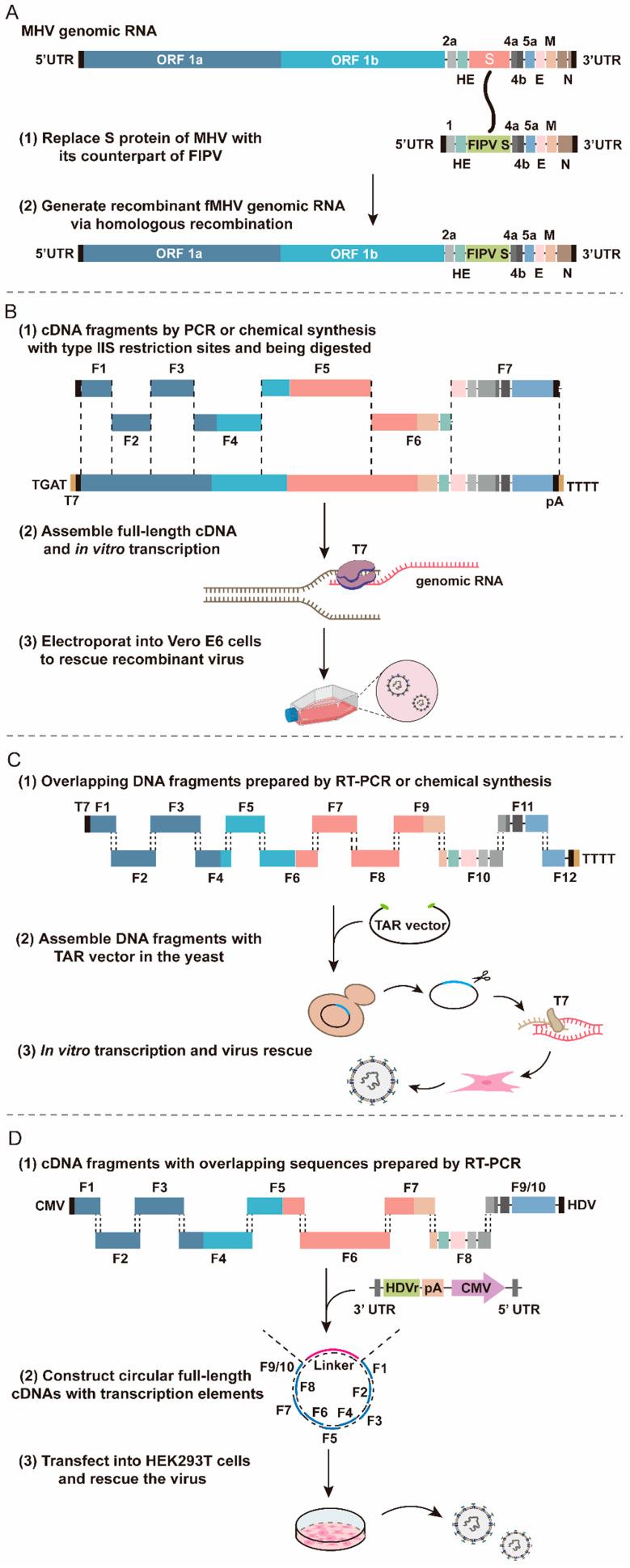
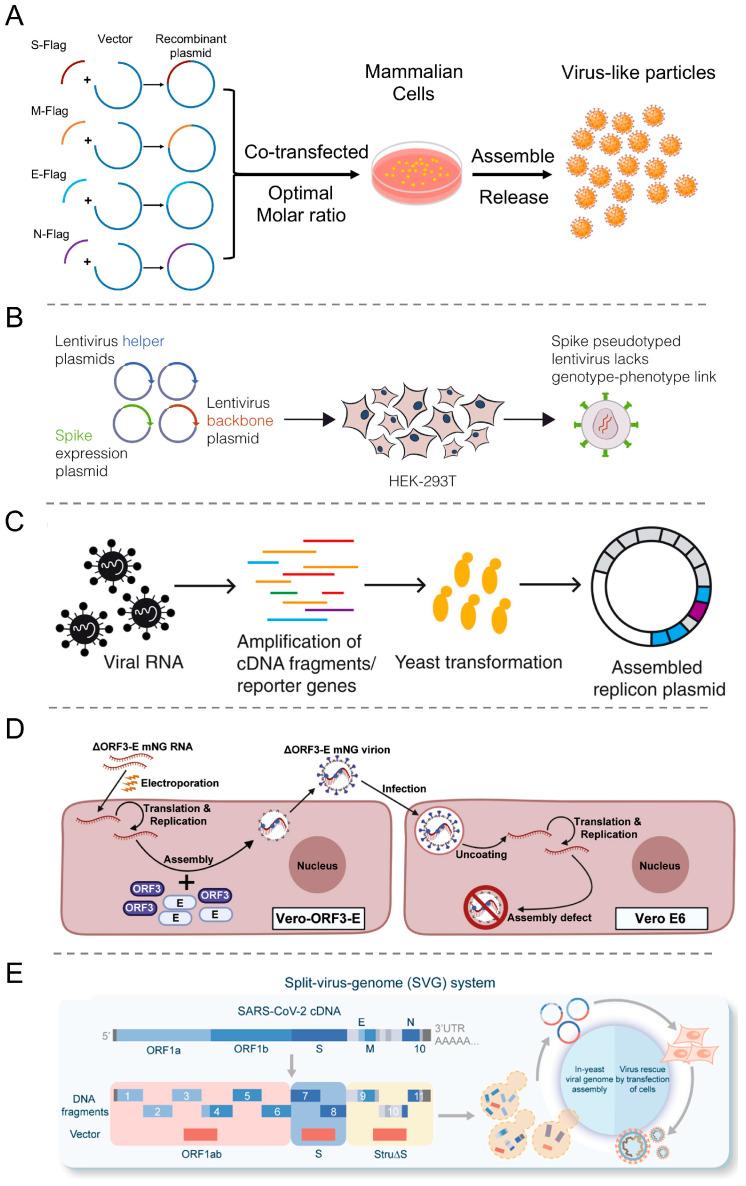
In the last twenty years, three deadly zoonotic coronaviruses (CoVs)-namely, severe acute respiratory syndrome coronavirus (SARS-CoV), Middle East respiratory syndrome coronavirus (MERS-CoV), and SARS-CoV-2-have emerged. They are considered highly pathogenic for humans, particularly SARS-CoV-2, which caused the 2019 CoV disease pandemic (COVID-19), endangering the lives and health of people globally and causing unpredictable economic losses. Experiments on wild-type viruses require biosafety level 3 or 4 laboratories (BSL-3 or BSL-4), which significantly hinders basic virological research. Therefore, the development of various biosafe CoV systems without virulence is urgently needed to meet the requirements of different research fields, such as antiviral and vaccine evaluation. This review aimed to comprehensively summarize the biosafety of CoV engineering systems. These systems combine virological foundations with synthetic genomics techniques, enabling the development of efficient tools for attenuated or non-virulent vaccines, the screening of antiviral drugs, and the investigation of the pathogenic mechanisms of novel microorganisms.
在过去的二十年中,三种致命的人畜共患冠状病毒(CoVs)——即严重急性呼吸综合征冠状病毒(SARS-CoV)、中东呼吸综合征冠状病毒(MERS-CoV)和 SARS-CoV-2——已经出现。它们被认为对人类具有高度致病性,特别是 SARS-CoV-2,它导致了 2019 年的冠状病毒病大流行(COVID-19),危及全球人民的生命和健康,并造成不可预测的经济损失。野生型病毒的实验需要生物安全 3 级或 4 级实验室(BSL-3 或 BSL-4),这极大地阻碍了基础病毒学研究。因此,迫切需要开发各种无毒性的生物安全 CoV 系统,以满足不同研究领域的要求,如抗病毒和疫苗评估。本综述旨在全面总结 CoV 工程系统的生物安全性。这些系统将病毒学基础与合成基因组学技术相结合,为减毒或非毒性疫苗的开发、抗病毒药物的筛选以及新型微生物的致病机制研究提供了高效工具。


 Zotero 插件