
双特异性抗体药物偶联物:实现1+1>2
Bispecific antibody drug conjugates: Making 1+1>2.
作者信息
Gu Yilin, Wang Zhijia, Wang Yuxi
机构信息
Targeted Tracer Research and Development Laboratory, Institute of Respiratory Health, Frontiers Science Center for Disease-Related Molecular Network, National Clinical Research Center for Geriatrics, West China Hospital, Sichuan University, Chengdu 610041, China.
Frontiers Medical Center, Tianfu Jincheng Laboratory, Chengdu 610212, China.
出版信息
Acta Pharm Sin B. 2024 May;14(5):1965-1986. doi: 10.1016/j.apsb.2024.01.009. Epub 2024 Jan 20.
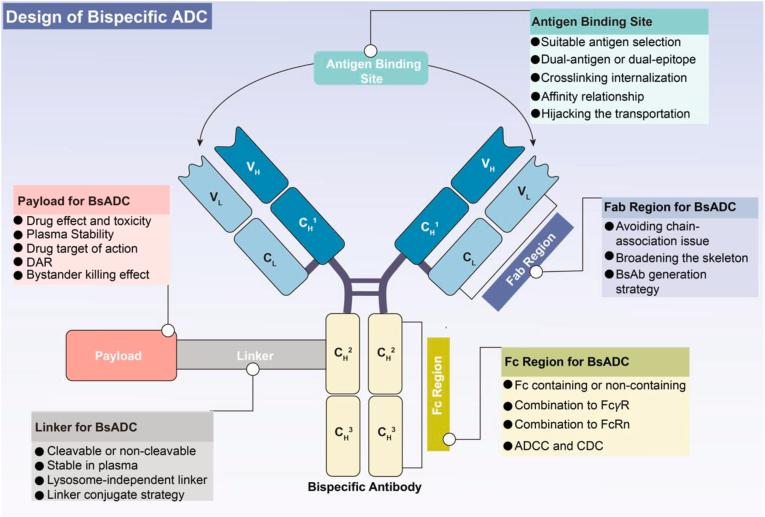
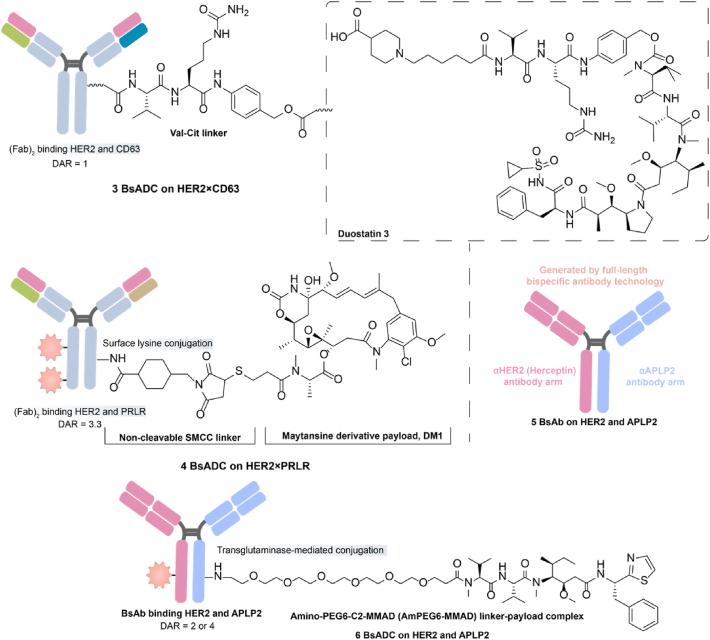
Bispecific antibody‒drug conjugates (BsADCs) represent an innovative therapeutic category amalgamating the merits of antibody‒drug conjugates (ADCs) and bispecific antibodies (BsAbs). Positioned as the next-generation ADC approach, BsADCs hold promise for ameliorating extant clinical challenges associated with ADCs, particularly pertaining to issues such as poor internalization, off-target toxicity, and drug resistance. Presently, ten BsADCs are undergoing clinical trials, and initial findings underscore the imperative for ongoing refinement. This review initially delves into specific design considerations for BsADCs, encompassing target selection, antibody formats, and the linker-payload complex. Subsequent sections delineate the extant progress and challenges encountered by BsADCs, illustrated through pertinent case studies. The amalgamation of BsAbs with ADCs offers a prospective solution to prevailing clinical limitations of ADCs. Nevertheless, the symbiotic interplay among BsAb, linker, and payload necessitates further optimizations and coordination beyond a simplistic "1 + 1" to effectively surmount the extant challenges facing the BsADC domain.
双特异性抗体-药物偶联物(BsADCs)代表了一种创新的治疗类别,融合了抗体-药物偶联物(ADCs)和双特异性抗体(BsAbs)的优点。作为下一代ADC方法,BsADCs有望改善与ADCs相关的现有临床挑战,特别是与内化不良、脱靶毒性和耐药性等问题有关的挑战。目前,十种BsADCs正在进行临床试验,初步结果强调了持续改进的必要性。本综述首先深入探讨BsADCs的具体设计考虑因素,包括靶点选择、抗体形式以及连接子-有效载荷复合物。随后的章节通过相关案例研究描述了BsADCs目前取得的进展和遇到的挑战。BsAbs与ADCs的融合为ADCs当前的临床局限性提供了一个前瞻性的解决方案。然而,BsAb、连接子和有效载荷之间的共生相互作用需要在简单的“1 + 1”之外进行进一步的优化和协调,以有效克服BsADC领域目前面临的挑战。





 Zotero 插件