
胸腔镜肺结节手术中术后输注右美托咪定与慢性术后疼痛:一项倾向评分匹配分析的回顾性研究
Postoperative Dexmedetomidine Infusion and Chronic Postsurgical Pain in Thoracoscopic Pulmonary Nodule Surgery: A Retrospective Study with Propensity-Score-Matched Analysis.
作者信息
Sun Hang, Zhong Yiwei, Wang Min, Niu Shujie, Yang Rusong, Tian Yali, Li Bingbing
机构信息
Department of Anesthesiology, Nanjing Drum Tower Hospital, Affiliated Hospital of Medical School, Nanjing University, 321 Zhongshan Road, Nanjing, 210000, China.
Department of Anesthesiology, Nanjing Drum Tower Hospital, Clinical College of Nanjing Medical University, 321 Zhongshan Road, Nanjing, 210000, China.
出版信息
Pain Ther. 2024 Aug;13(4):865-881. doi: 10.1007/s40122-024-00611-8. Epub 2024 May 28.
INTRODUCTION
Patients frequently suffer from debilitating chronic postsurgical pain (CPSP) subsequent to thoracoscopic surgery. The impact of postoperative dexmedetomidine infusion on CPSP remains elusive. This study aimed to scrutinize the effect of dexmedetomidine on both 1-year incidence of CPSP and the quality of recovery after thoracoscopic pulmonary nodule surgery.
METHODS
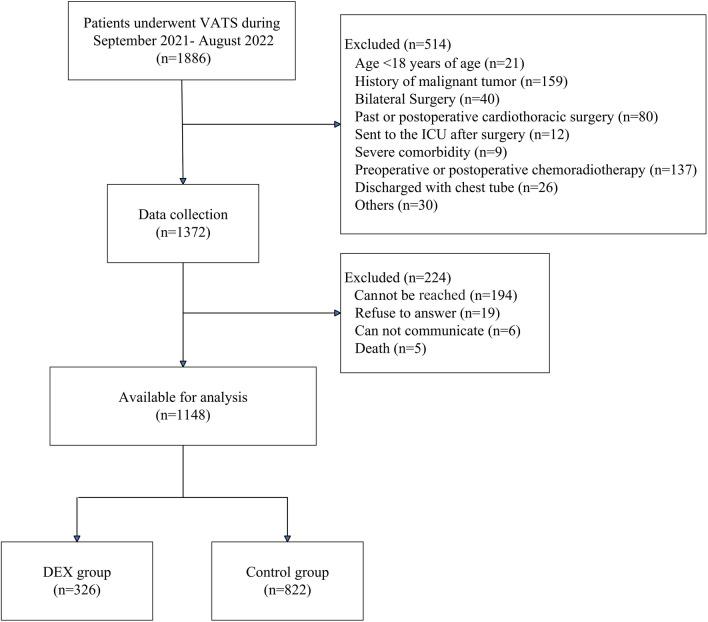
This retrospective analysis encompassed clinical and follow-up data from 1148 patients undergoing thoracoscopic pulmonary nodule surgery at our institution between September 2021 and August 2022. Depending on whether dexmedetomidine was infused intravenously or not on the first night after surgery, patients were stratified into the dexmedetomidine group or the control group, with propensity score matching applied to harmonize baseline characteristics. Comparative analysis sought to delineate distinctions of CPSP and recovery quality 1 year after surgery.
RESULTS
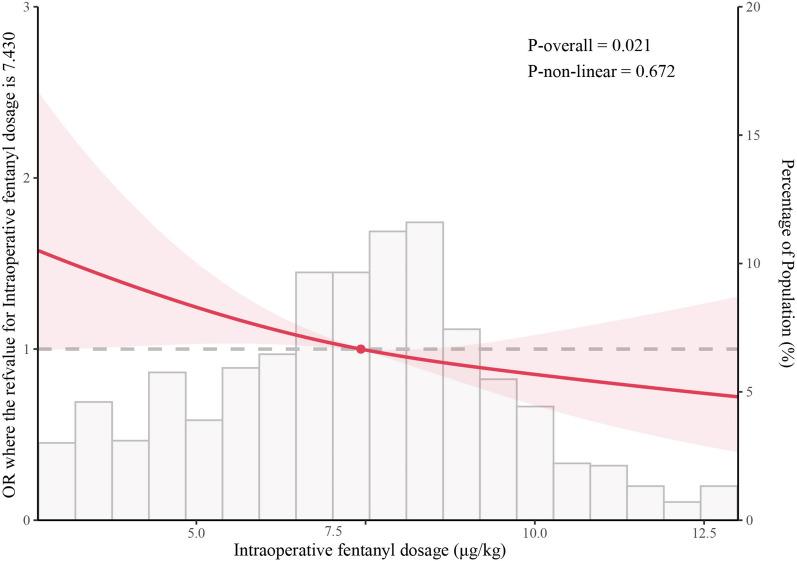
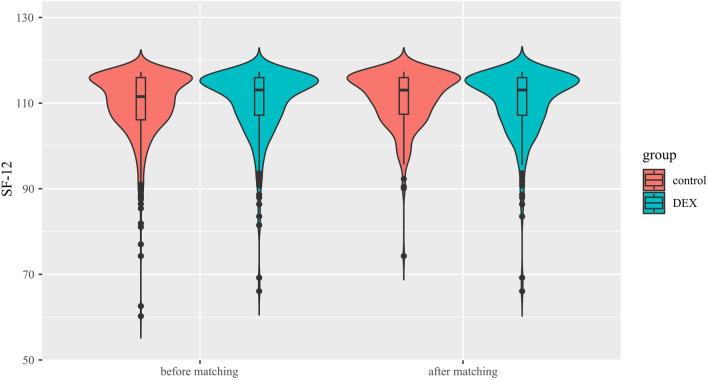
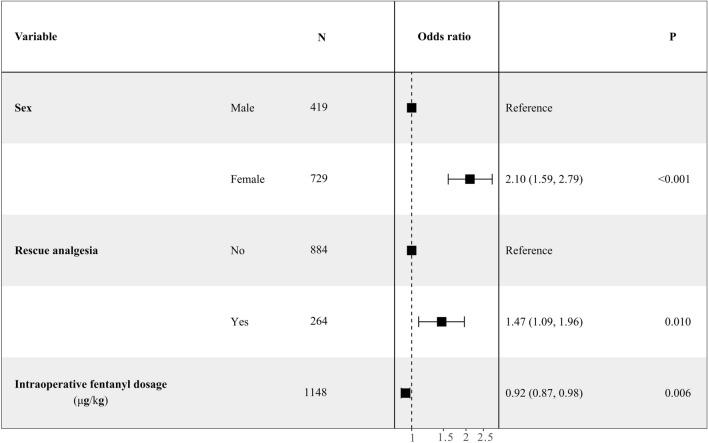
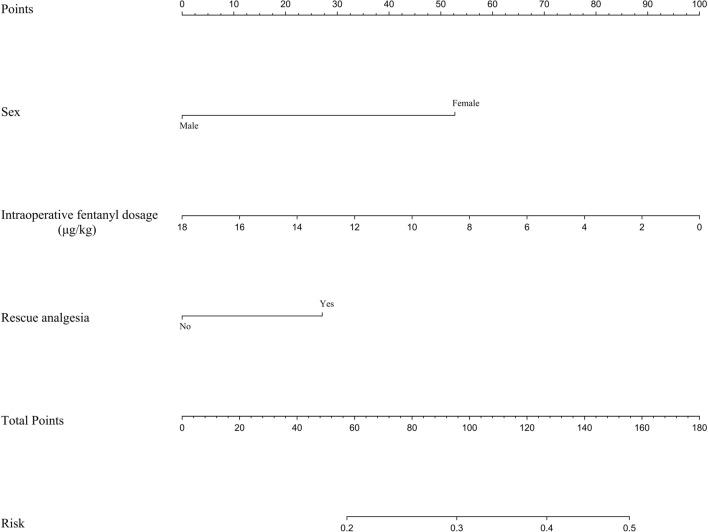
Following propensity score matching, a cohort of 258 patients in each group underwent analysis. Comparisons after matching revealed no statistically significant disparities in 1-year CPSP incidence [76/258 (29.5%) versus 78/258 (30.2%), P = 0.847], moderate-to-severe pain occurrence [17/76 (22.4%) versus 22/78 (28.2%), P = 0.405], neuropathic pain occurrence [11/76 (14.5%) versus 11/78 (14.1%), P = 0.948], and postoperative recovery quality assessed by 12-Item Short Form Health Survey (SF-12) score (113.1 [107.2, 116.0] versus 113.0 [107.4, 116.0], P = 0.328). Multivariate logistic regression analysis encompassing the entire cohort identified being female [odds ratio (OR) 2.10, 95% confidence interval (CI) 1.59-2.79, P < 0.001) and postoperative rescue analgesia (OR 1.47, 95% CI 1.09-1.96, P = 0.010) as risk factors for CPSP, while intraoperative fentanyl dosage (OR 0.92, 95% CI 0.87-0.98, P = 0.006) emerged as a protective factor.
CONCLUSION
The prolonged administration of dexmedetomidine did not yield discernible amelioration in either 1-year CPSP or the recovery quality after thoracoscopic surgery. Noteworthy risk factors for CPSP encompassed female sex, postoperative rescue analgesia, and diminished fentanyl dosage intraoperatively.
引言
患者在胸腔镜手术后经常遭受使人衰弱的慢性术后疼痛(CPSP)。术后输注右美托咪定对CPSP的影响仍不明确。本研究旨在探讨右美托咪定对胸腔镜肺结节手术后1年CPSP发生率及恢复质量的影响。
方法
本回顾性分析纳入了2021年9月至2022年8月在我院接受胸腔镜肺结节手术的1148例患者的临床和随访数据。根据术后第一晚是否静脉输注右美托咪定,将患者分为右美托咪定组和对照组,并应用倾向评分匹配来协调基线特征。比较分析旨在明确术后1年CPSP和恢复质量的差异。
结果
经过倾向评分匹配后,每组258例患者纳入分析。匹配后的比较显示,1年CPSP发生率[76/258(29.5%)对78/258(30.2%),P = 0.847]、中重度疼痛发生率[17/76(22.4%)对22/78(28.2%),P = 0.405]、神经性疼痛发生率[11/76(14.5%)对11/78(14.1%),P = 0.948]以及通过12项简短健康调查(SF - 12)评分评估的术后恢复质量(113.1[107.2,116.0]对113.0[107.4,116.0],P = 0.328)均无统计学显著差异。对整个队列进行的多因素logistic回归分析确定女性[比值比(OR)2.10,95%置信区间(CI)1.59 - 2.79,P < 0.001]和术后补救性镇痛(OR 1.47,95% CI 1.09 - 1.96,P = 0.010)为CPSP的危险因素,而术中芬太尼剂量(OR 0.92,95% CI 0.87 - 0.98,P = 0.006)为保护因素。
结论
延长右美托咪定给药时间对胸腔镜手术后1年的CPSP或恢复质量均未产生明显改善。CPSP值得注意的危险因素包括女性、术后补救性镇痛以及术中芬太尼剂量减少。
 Zotero 插件