
瑞戈非尼联合程序性死亡-1抑制剂与瑞戈非尼单药用于晚期肝细胞癌二线治疗的系统评价和荟萃分析
Regorafenib plus programmed death‑1 inhibitors vs. regorafenib monotherapy in second‑line treatment for advanced hepatocellular carcinoma: A systematic review and meta‑analysis.
作者信息
Li Zhao, Wang Jie, Zhao Jingbing, Leng Zhengwei
机构信息
Department of Hepato-Biliary-Pancreas II, Affiliated Hospital of North Sichuan Medical College, Nanchong, Sichuan 637000, P.R. China.
出版信息
Oncol Lett. 2024 May 14;28(1):318. doi: 10.3892/ol.2024.14451. eCollection 2024 Jul.
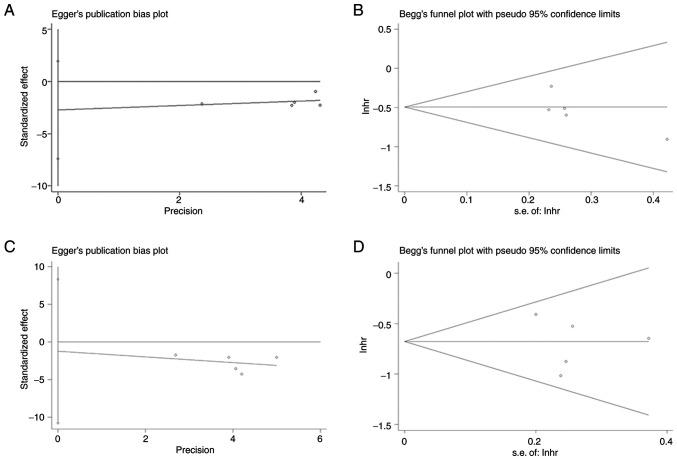
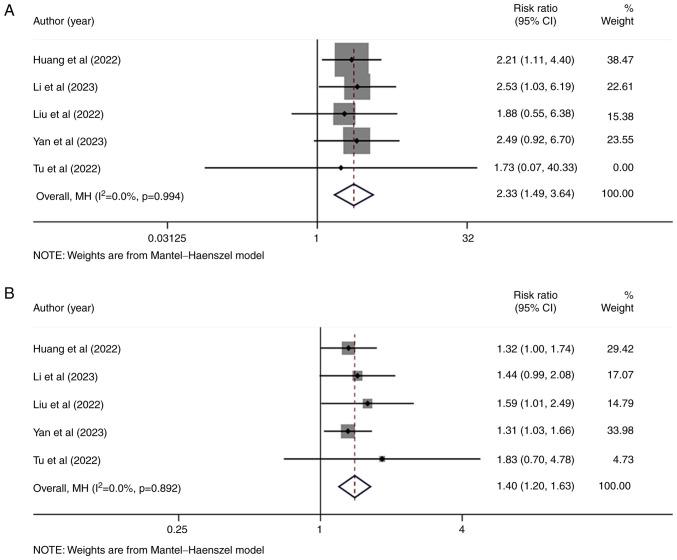
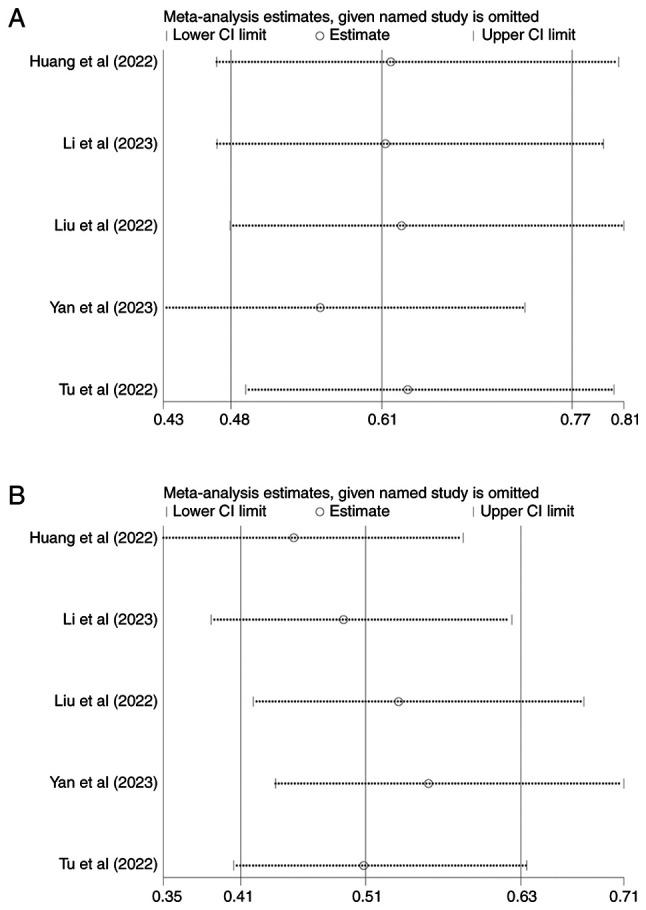
The present study compared the efficacy and safety of regorafenib plus programmed death-1 inhibitors (R-P) with regorafenib monotherapy as second-line therapies for advanced hepatocellular carcinoma (HCC). A systematic search of relevant literature published in PubMed, Embase, Web of Science and Cochrane Library databases until October 2023 was conducted. Two authors independently performed data extraction and screening using standardized protocols. Stata/MP 17.0 was used for the meta-analysis to evaluate the impact of R-P treatment on major outcome indicators, including overall survival, progression-free survival (PFS), tumor response and adverse reactions, in patients with advanced HCC. The results indicated that five cohort studies involving 444 patients with advanced HCC were included. The results revealed that R-P treatment improved overall survival [hazard ratio (HR), 0.61; 95% confidence interval (CI) 0.48-0.77; I=0.0%; P=0.663] and PFS (HR, 0.51; 95% CI 0.41-0.63; I=17.5%; P=0.303). Additionally, it increased the objective response rate (risk ratio, 2.33; 95% CI, 1.49-3.64; I=0.0%; P=0.994) and disease control rate (HR, 1.40; 95% CI, 1.20-1.63; I=0.0%; P=0.892) compared with those of regorafenib. However, R-P treatment was associated with an increased incidence of adverse events, such as hypothyroidism, thrombocytopenia and rash, compared with that in regorafenib. In conclusion, R-P is superior to regorafenib monotherapy in terms of survival benefits and tumor response.
本研究比较了瑞戈非尼联合程序性死亡-1抑制剂(R-P)与瑞戈非尼单药治疗作为晚期肝细胞癌(HCC)二线治疗的疗效和安全性。对截至2023年10月在PubMed、Embase、Web of Science和Cochrane图书馆数据库中发表的相关文献进行了系统检索。两位作者使用标准化方案独立进行数据提取和筛选。使用Stata/MP 17.0进行荟萃分析,以评估R-P治疗对晚期HCC患者主要结局指标的影响,包括总生存期、无进展生存期(PFS)、肿瘤反应和不良反应。结果表明,纳入了5项涉及444例晚期HCC患者的队列研究。结果显示,R-P治疗改善了总生存期[风险比(HR),0.61;95%置信区间(CI)0.48-0.77;I=0.0%;P=0.663]和PFS(HR,0.51;95%CI 0.41-0.63;I=17.5%;P=0.303)。此外,与瑞戈非尼相比,它提高了客观缓解率(风险比,2.33;95%CI,1.49-3.64;I=0.0%;P=0.994)和疾病控制率(HR,1.40;95%CI,1.20-1.63;I=0.0%;P=0.892)。然而,与瑞戈非尼相比,R-P治疗与不良事件发生率增加有关,如甲状腺功能减退、血小板减少和皮疹。总之,在生存获益和肿瘤反应方面,R-P优于瑞戈非尼单药治疗。


 Zotero 插件