
神经氨酸酶的纳米颗粒展示引发增强的抗体反应并提供针对甲型流感病毒攻击的保护。
Nanoparticle display of neuraminidase elicits enhanced antibody responses and protection against influenza A virus challenge.
作者信息
Pascha M N, Ballegeer M, Roelofs M C, Meuris L, Albulescu I C, van Kuppeveld F J M, Hurdiss D L, Bosch B J, Zeev-Ben-Mordehai T, Saelens X, de Haan C A M
机构信息
Section of Virology, Division of Infectious Diseases & Immunology, Department of Biomolecular Health Sciences, Faculty of Veterinary Medicine, Utrecht University, Utrecht, The Netherlands.
VIB Center for Medical Biotechnology, VIB, 9052, Ghent, Belgium.
出版信息
NPJ Vaccines. 2024 May 31;9(1):97. doi: 10.1038/s41541-024-00891-3.
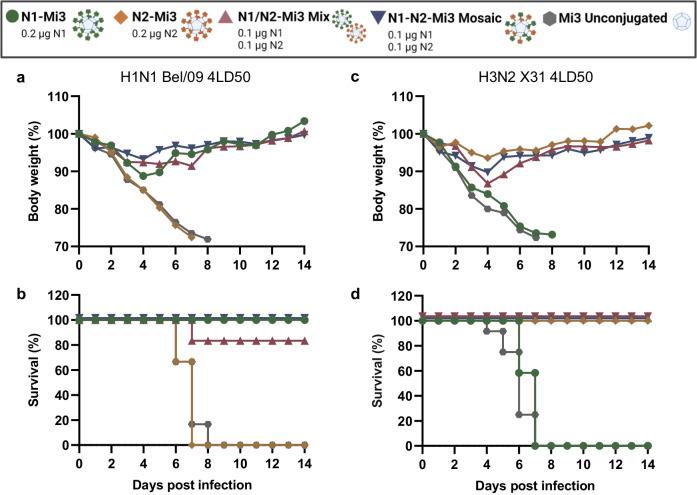
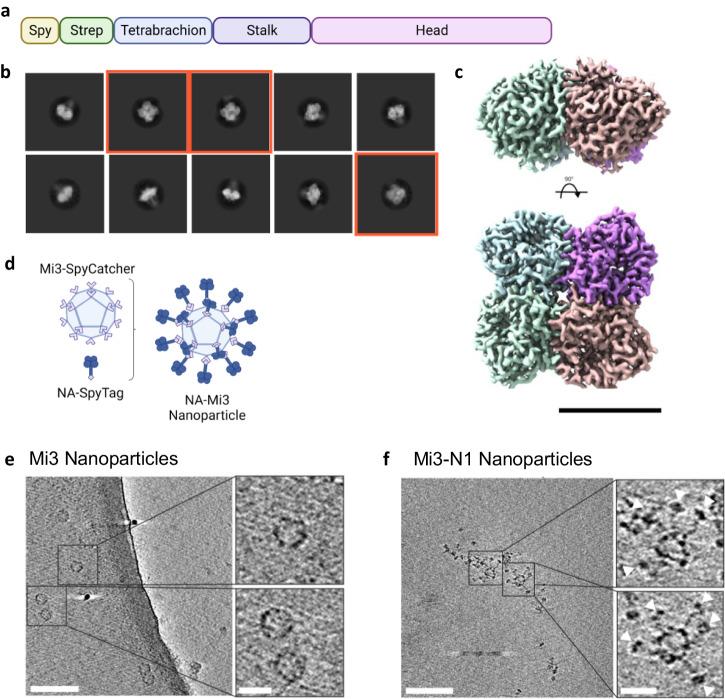
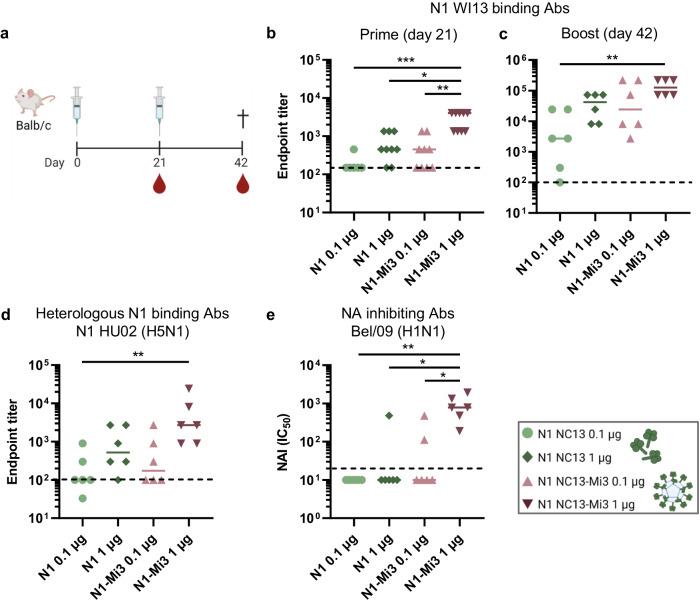
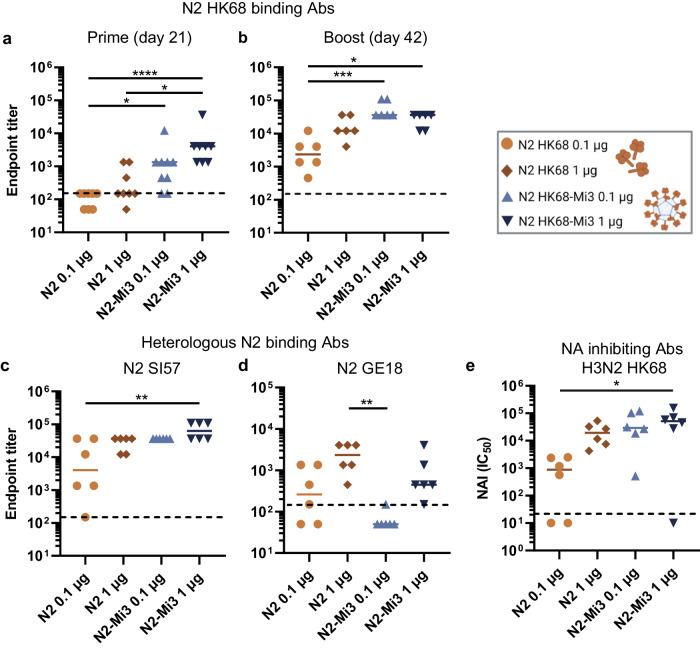
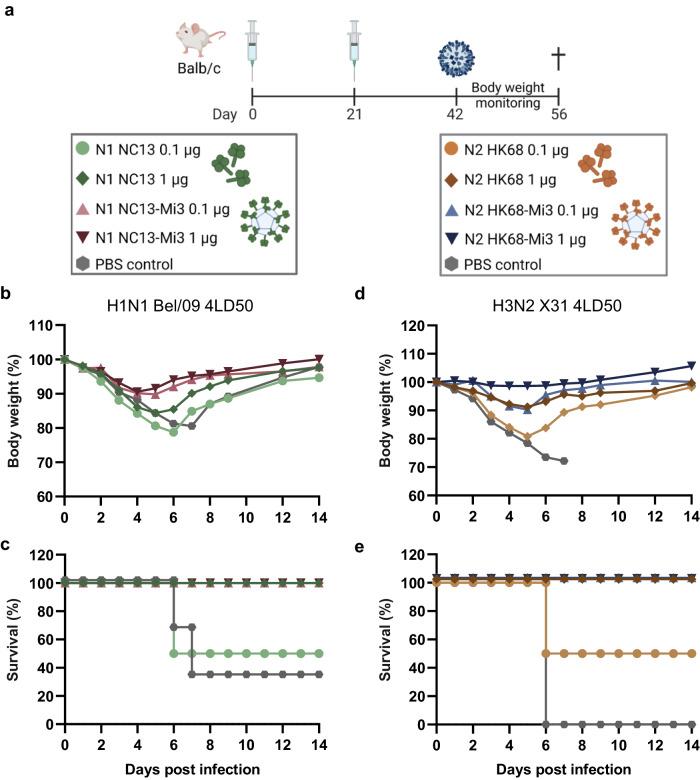
Current Influenza virus vaccines primarily induce antibody responses against variable epitopes in hemagglutinin (HA), necessitating frequent updates. However, antibodies against neuraminidase (NA) can also confer protection against influenza, making NA an attractive target for the development of novel vaccines. In this study, we aimed to enhance the immunogenicity of recombinant NA antigens by presenting them multivalently on a nanoparticle carrier. Soluble tetrameric NA antigens of the N1 and N2 subtypes, confirmed to be correctly folded by cryo-electron microscopy structural analysis, were conjugated to Mi3 self-assembling protein nanoparticles using the SpyTag-SpyCatcher system. Immunization of mice with NA-Mi3 nanoparticles induced higher titers of NA-binding and -inhibiting antibodies and improved protection against a lethal challenge compared to unconjugated NA. Additionally, we explored the co-presentation of N1 and N2 antigens on the same Mi3 particles to create a mosaic vaccine candidate. These mosaic nanoparticles elicited antibody titers that were similar or superior to the homotypic nanoparticles and effectively protected against H1N1 and H3N2 challenge viruses. The NA-Mi3 nanoparticles represent a promising vaccine candidate that could complement HA-directed approaches for enhanced potency and broadened protection against influenza A virus.
目前的流感病毒疫苗主要诱导针对血凝素(HA)中可变表位的抗体反应,因此需要频繁更新。然而,针对神经氨酸酶(NA)的抗体也可提供抗流感保护,这使得NA成为新型疫苗开发的一个有吸引力的靶点。在本研究中,我们旨在通过将重组NA抗原多价呈递在纳米颗粒载体上来增强其免疫原性。经冷冻电子显微镜结构分析确认正确折叠的N1和N2亚型可溶性四聚体NA抗原,使用SpyTag-SpyCatcher系统与Mi3自组装蛋白纳米颗粒偶联。与未偶联的NA相比,用NA-Mi3纳米颗粒免疫小鼠可诱导更高滴度的NA结合和抑制抗体,并改善对致死性攻击的保护。此外,我们探索了在同一Mi3颗粒上共同呈递N1和N2抗原,以制备一种嵌合疫苗候选物。这些嵌合纳米颗粒引发的抗体滴度与同型纳米颗粒相似或更高,并有效保护免受H1N1和H3N2攻击病毒的感染。NA-Mi3纳米颗粒是一种有前景的疫苗候选物,可补充针对HA的方法,以提高效力并扩大对甲型流感病毒的保护范围。

 Zotero 插件