
新冠疫情“暂停活动”减少了秘鲁利马新热带海鸬鹚吞食塑料的行为。
The COVID-19 pandemic "anthropause" decreased plastic ingestion in neotropic cormorants in Lima, Peru.
机构信息
Unidad de Investigación de Ecosistemas Marinos-Grupo Aves Marinas. Carrera de Biología Marina, Universidad Cientifica del Sur, Lima, Peru.
Unidad de Investigación de Ecosistemas Marinos-Grupo Aves Marinas, Universidad Cientifica del Sur, Lima, Perú.
出版信息
PeerJ. 2024 May 30;12:e17407. doi: 10.7717/peerj.17407. eCollection 2024.
BACKGROUND
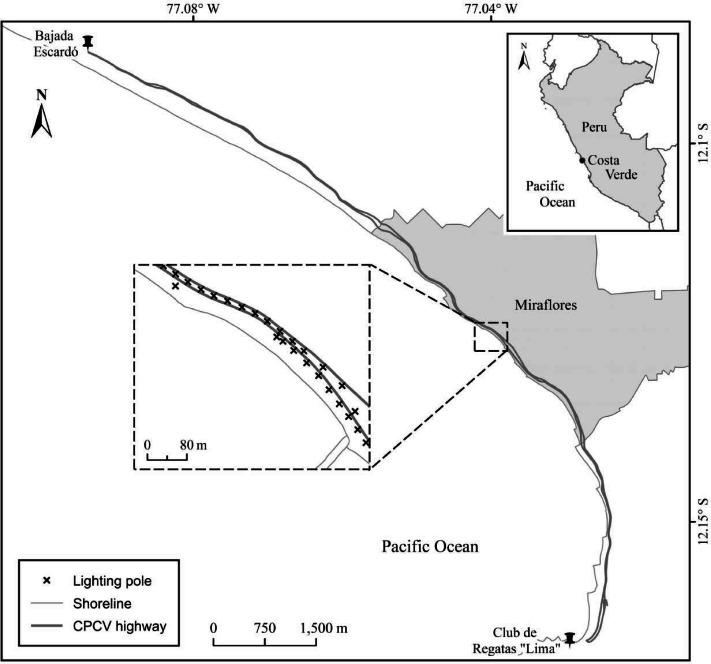
The anthropause during the recent COVID-19 pandemic provided a unique opportunity to examine the impact of human activity on seabirds. Lockdowns in Peru prevented people from visiting coastal areas, thereby reducing garbage disposal on beaches and the movement of microplastics into the ocean. This cessation of activities likely led to a temporary decrease in plastic pollution in coastal regions. We aimed to investigate this phenomenon in inshore-feeding neotropic cormorants () along the Circuito de Playas Costa Verde (CPCV), situated on the coastal strip of Lima, Peru (∼ 11 million people).
METHODS
We collected and analyzed fresh pellets along the CPCV before (over 11 months) and during the pandemic lockdowns (over 8 months).
RESULTS
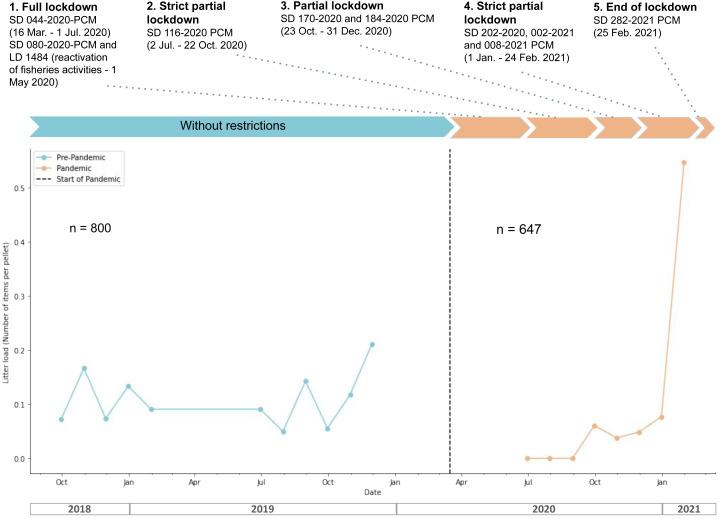
Our findings revealed a significant reduction in the occurrence of plastic in pellets during the pandemic period (% Oc = 2.47, = 647 pellets) compared to pre-pandemic conditions (% Oc = 7.13, = 800 pellets). The most common plastic debris item found in the pellets was threadlike microplastic. Additionally, our study highlights the direct correlation between human presence on beaches and the quantity of microplastics (mainly threadlike) found in cormorant pellets. We suggest that the reintroduction of these materials into the sea, previously accumulated on the coast, is likely facilitated by the movement and activity of beachgoers toward the ocean.
背景
在最近的 COVID-19 大流行期间,人类活动暂停为研究人类活动对海鸟的影响提供了独特的机会。秘鲁的封锁阻止了人们前往沿海地区,从而减少了海滩上的垃圾处理和微塑料进入海洋的数量。这些活动的停止可能导致沿海地区的塑料污染暂时减少。我们旨在调查秘鲁利马沿海带 Circuito de Playas Costa Verde(CPCV)近岸觅食的新热带鸬鹚()中出现的这种现象。
方法
我们在疫情封锁期间(8 个月以上)和之前(超过 11 个月)沿 CPCV 收集和分析了新鲜的鸟粪。
结果
我们的研究结果表明,与大流行前的情况相比(% Oc = 7.13,= 800 个鸟粪),大流行期间鸟粪中塑料的出现率显著降低(% Oc = 2.47,= 647 个鸟粪)。鸟粪中最常见的塑料碎片是线状微塑料。此外,我们的研究还强调了海滩上人类存在与鸬鹚鸟粪中微塑料(主要是线状)数量之间的直接相关性。我们认为,这些材料先前在海岸上积累,由于海滩游客向海洋移动和活动,可能更容易重新进入海洋。

 Zotero 插件