
针对白细胞介素 6/8 受体的单特异性和双特异性抗体的机制计算建模。
Mechanistic computational modeling of monospecific and bispecific antibodies targeting interleukin-6/8 receptors.
机构信息
Department of Biomedical Engineering, Johns Hopkins University School of Medicine, Baltimore, Maryland, United States of America.
Medical-Scientist Training Program, Johns Hopkins University School of Medicine, Baltimore, Maryland, United States of America.
出版信息
PLoS Comput Biol. 2024 Jun 7;20(6):e1012157. doi: 10.1371/journal.pcbi.1012157. eCollection 2024 Jun.
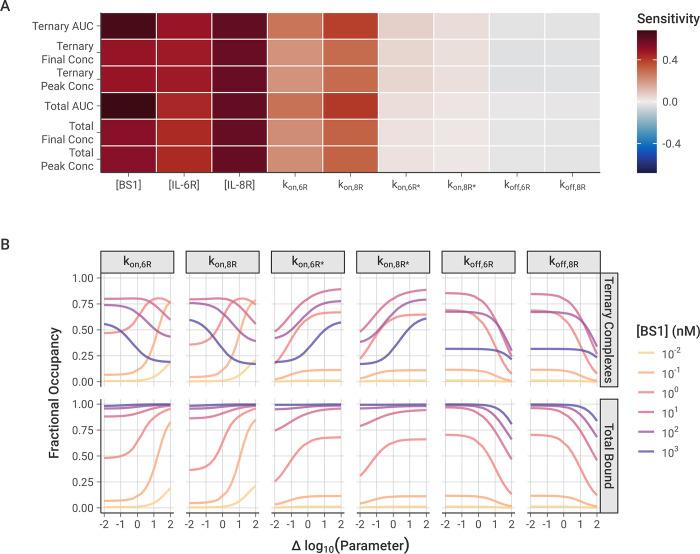
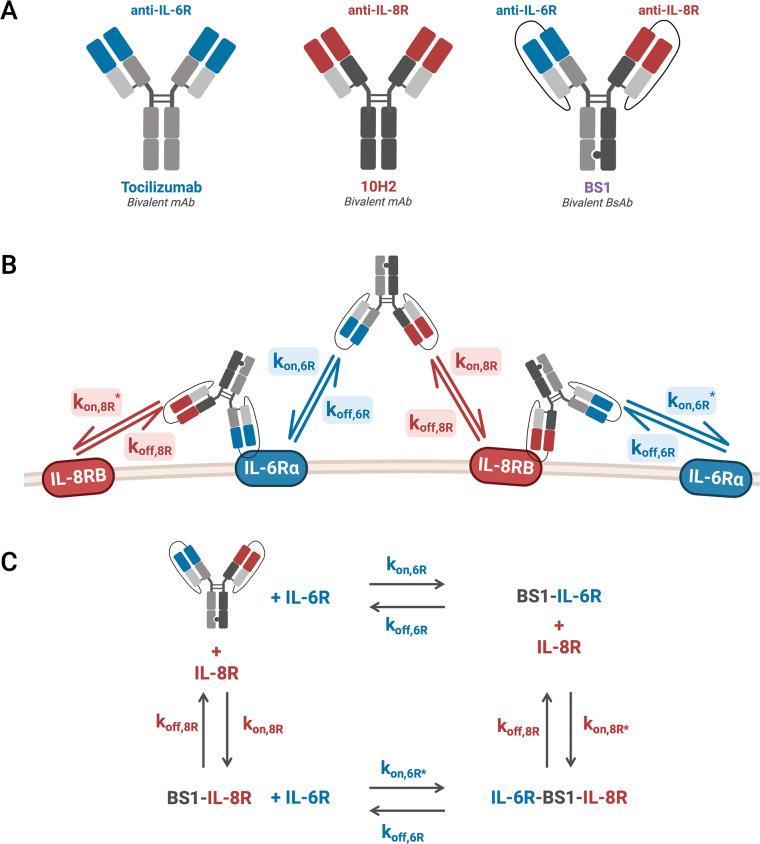
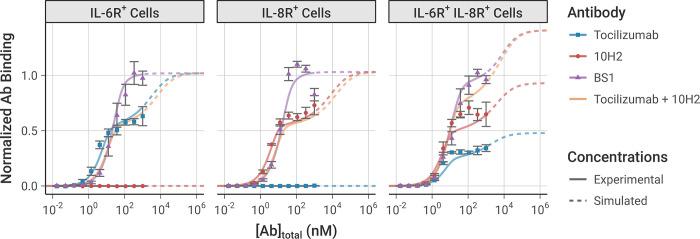
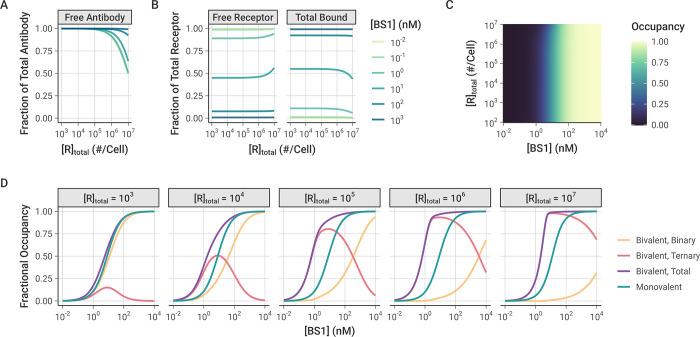
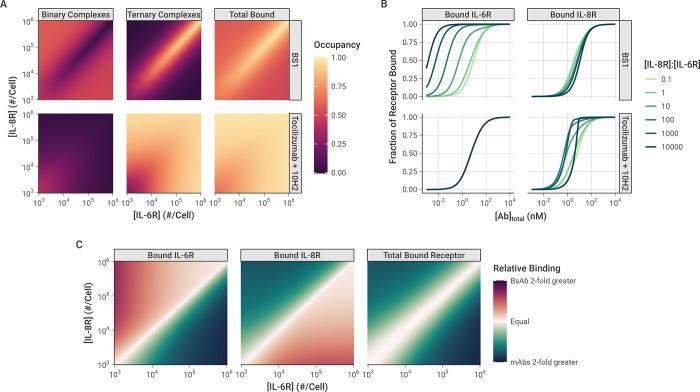
The spread of cancer from organ to organ (metastasis) is responsible for the vast majority of cancer deaths; however, most current anti-cancer drugs are designed to arrest or reverse tumor growth without directly addressing disease spread. It was recently discovered that tumor cell-secreted interleukin-6 (IL-6) and interleukin-8 (IL-8) synergize to enhance cancer metastasis in a cell-density dependent manner, and blockade of the IL-6 and IL-8 receptors (IL-6R and IL-8R) with a novel bispecific antibody, BS1, significantly reduced metastatic burden in multiple preclinical mouse models of cancer. Bispecific antibodies (BsAbs), which combine two different antigen-binding sites into one molecule, are a promising modality for drug development due to their enhanced avidity and dual targeting effects. However, while BsAbs have tremendous therapeutic potential, elucidating the mechanisms underlying their binding and inhibition will be critical for maximizing the efficacy of new BsAb treatments. Here, we describe a quantitative, computational model of the BS1 BsAb, exhibiting how modeling multivalent binding provides key insights into antibody affinity and avidity effects and can guide therapeutic design. We present detailed simulations of the monovalent and bivalent binding interactions between different antibody constructs and the IL-6 and IL-8 receptors to establish how antibody properties and system conditions impact the formation of binary (antibody-receptor) and ternary (receptor-antibody-receptor) complexes. Model results demonstrate how the balance of these complex types drives receptor inhibition, providing important and generalizable predictions for effective therapeutic design.
癌症从一个器官转移到另一个器官(转移)是导致绝大多数癌症死亡的原因;然而,大多数现有的抗癌药物旨在阻止或逆转肿瘤生长,而不直接解决疾病的扩散。最近发现,肿瘤细胞分泌的白细胞介素-6(IL-6)和白细胞介素-8(IL-8)以细胞密度依赖的方式协同增强癌症转移,并用一种新型双特异性抗体 BS1 阻断 IL-6 和 IL-8 受体(IL-6R 和 IL-8R),可显著降低多种癌症临床前小鼠模型的转移负担。双特异性抗体(BsAbs)将两个不同的抗原结合位点结合到一个分子中,由于其增强的亲和力和双重靶向作用,是一种很有前途的药物开发模式。然而,虽然 BsAbs 具有巨大的治疗潜力,但阐明其结合和抑制的机制对于最大限度地提高新 BsAb 治疗的疗效至关重要。在这里,我们描述了一种 BS1 BsAb 的定量计算模型,展示了多价结合如何为抗体亲和力和效价效应提供关键见解,并可指导治疗设计。我们展示了不同抗体结构与 IL-6 和 IL-8 受体之间的单价和双价结合相互作用的详细模拟,以确定抗体特性和系统条件如何影响二元(抗体-受体)和三元(受体-抗体-受体)复合物的形成。模型结果表明,这些复杂类型的平衡如何驱动受体抑制,为有效的治疗设计提供了重要的、可推广的预测。



 Zotero 插件