
一项全基因组关联研究揭示了自报听力正常个体在噪声环境下言语感知缺陷的多基因结构。
A genome-wide association study reveals a polygenic architecture of speech-in-noise deficits in individuals with self-reported normal hearing.
机构信息
Department of Communication Sciences and Disorders, University of Iowa, 250 Hawkins Dr, Iowa City, IA, 52242, USA.
Holden Comprehensive Cancer Center, University of Iowa, Iowa City, IA, 52242, USA.
出版信息
Sci Rep. 2024 Jun 7;14(1):13089. doi: 10.1038/s41598-024-63972-2.
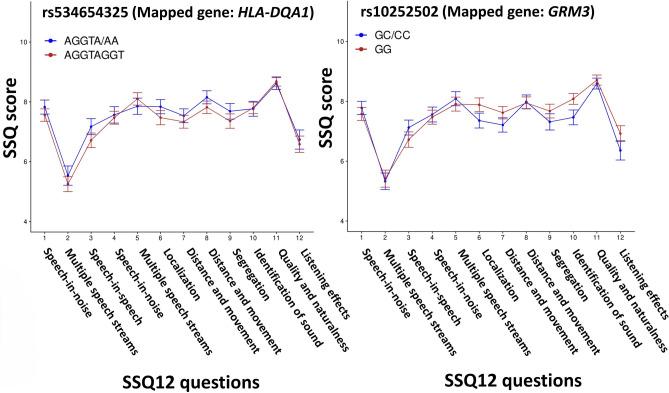
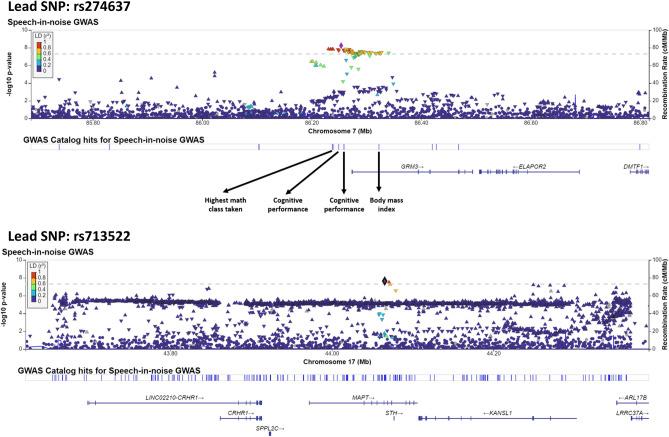
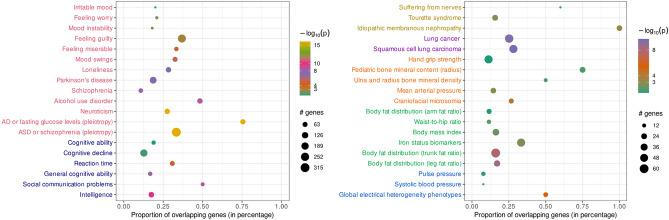
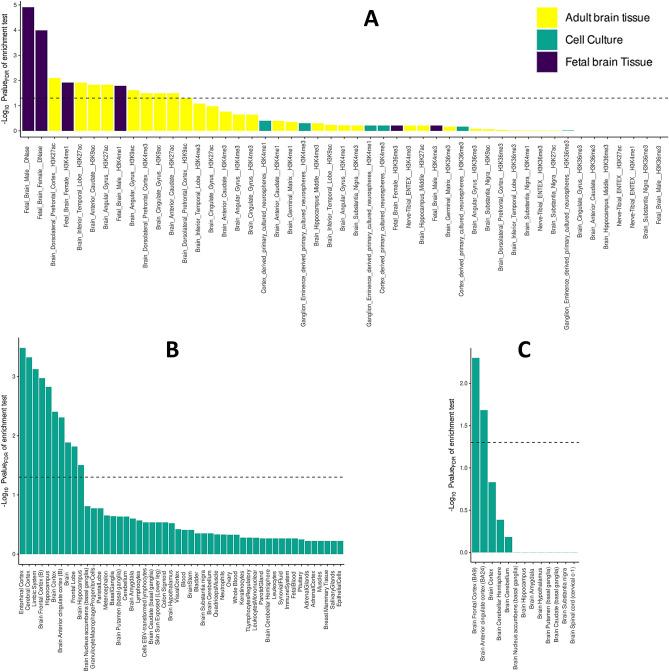
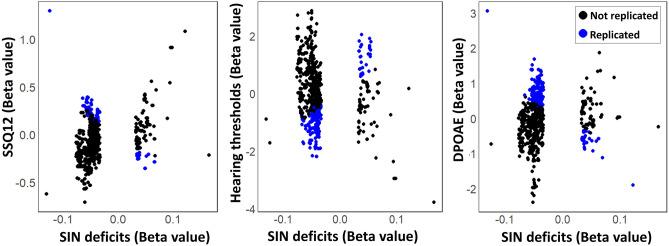
Speech-in-noise (SIN) perception is a primary complaint of individuals with audiometric hearing loss. SIN performance varies drastically, even among individuals with normal hearing. The present genome-wide association study (GWAS) investigated the genetic basis of SIN deficits in individuals with self-reported normal hearing in quiet situations. GWAS was performed on 279,911 individuals from the UB Biobank cohort, with 58,847 reporting SIN deficits despite reporting normal hearing in quiet. GWAS identified 996 single nucleotide polymorphisms (SNPs), achieving significance (p < 5*10) across four genomic loci. 720 SNPs across 21 loci achieved suggestive significance (p < 10). GWAS signals were enriched in brain tissues, such as the anterior cingulate cortex, dorsolateral prefrontal cortex, entorhinal cortex, frontal cortex, hippocampus, and inferior temporal cortex. Cochlear cell types revealed no significant association with SIN deficits. SIN deficits were associated with various health traits, including neuropsychiatric, sensory, cognitive, metabolic, cardiovascular, and inflammatory conditions. A replication analysis was conducted on 242 healthy young adults. Self-reported speech perception, hearing thresholds (0.25-16 kHz), and distortion product otoacoustic emissions (1-16 kHz) were utilized for the replication analysis. 73 SNPs were replicated with a self-reported speech perception measure. 211 SNPs were replicated with at least one and 66 with at least two audiological measures. 12 SNPs near or within MAPT, GRM3, and HLA-DQA1 were replicated for all audiological measures. The present study highlighted a polygenic architecture underlying SIN deficits in individuals with self-reported normal hearing.
言语噪声(SIN)感知是听力损失个体的主要抱怨之一。即使在听力正常的个体中,SIN 表现也差异巨大。本全基因组关联研究(GWAS)调查了在安静环境中自我报告听力正常的个体中 SIN 缺陷的遗传基础。对来自 UB 生物库队列的 279911 名个体进行了 GWAS,其中 58847 名个体报告了 SIN 缺陷,尽管他们在安静环境中报告听力正常。GWAS 确定了 996 个单核苷酸多态性(SNP),跨越四个基因组座达到了显著水平(p < 5*10)。在 21 个座中有 720 个 SNP 达到了提示性显著水平(p < 10)。GWAS 信号在大脑组织中富集,如前扣带皮层、背外侧前额叶皮层、内嗅皮层、额叶皮层、海马体和颞下回。耳蜗细胞类型与 SIN 缺陷无显著关联。SIN 缺陷与各种健康特征相关,包括神经精神、感觉、认知、代谢、心血管和炎症状况。对 242 名健康年轻成年人进行了复制分析。利用自我报告的言语感知、听力阈值(0.25-16 kHz)和畸变产物耳声发射(1-16 kHz)进行了复制分析。73 个 SNP 用自我报告的言语感知测量进行了复制。211 个 SNP 至少用一个和 66 个至少用两个听力学测量进行了复制。MAPT、GRM3 和 HLA-DQA1 附近或内部的 12 个 SNP 被所有听力学测量复制。本研究强调了自我报告听力正常个体中 SIN 缺陷的多基因结构。



 Zotero 插件