
成人乳腺癌或肺癌的密集纵向方法:范围综述。
Intensive Longitudinal Methods Among Adults With Breast or Lung Cancer: Scoping Review.
机构信息
End-of-Life Care Research Group, Vrije Universiteit Brussel, Brussels, Belgium.
Department of Radiotherapy, Universitair Ziekenhuis Brussel, Vrije Universiteit Brussel, Brussels, Belgium.
出版信息
J Med Internet Res. 2024 Jun 12;26:e50224. doi: 10.2196/50224.
BACKGROUND
Intensive longitudinal methods offer a powerful tool for capturing daily experiences of individuals. However, its feasibility, effectiveness, and optimal methodological approaches for studying or monitoring experiences of oncology patients remain uncertain.
OBJECTIVE
This scoping review aims to describe to what extent intensive longitudinal methods with daily electronic assessments have been used among patients with breast or lung cancer and with which methodologies, associated outcomes, and influencing factors.
METHODS
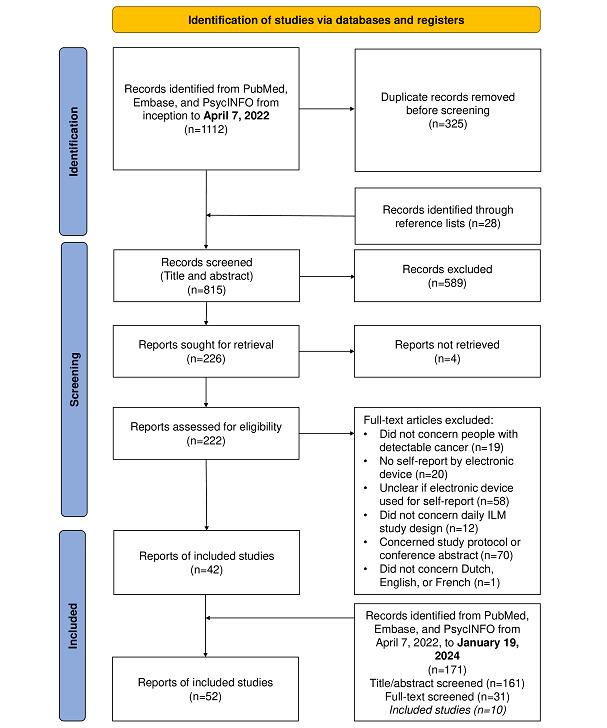
We searched the electronic databases (PubMed, Embase, and PsycINFO) up to January 2024 and included studies reporting on the use of these methods among adults with breast or lung cancer. Data were extracted on population characteristics, intensive monitoring methodologies used, study findings, and factors influencing the implementation of these methods in research and clinical practice.
RESULTS
We identified 1311 articles and included 52 articles reporting on 41 studies. Study aims and intensive monitoring methodologies varied widely, but most studies focused on measuring physical and psychological symptom constructs, such as pain, anxiety, or depression. Compliance and attrition rates seemed acceptable for most studies, although complete methodological reporting was often lacking. Few studies specifically examined these methods among patients with advanced cancer. Factors influencing implementation were linked to both patient (eg, confidence with intensive monitoring system) and methodology (eg, option to use personal devices).
CONCLUSIONS
Intensive longitudinal methods with daily electronic assessments hold promise to provide unique insights into the daily lives of patients with cancer. Intensive longitudinal methods may be feasible among people with breast or lung cancer. Our findings encourage further research to determine optimal conditions for intensive monitoring, specifically in more advanced disease stages.
背景
密集纵向方法为捕捉个体的日常体验提供了强有力的工具。然而,其在研究或监测肿瘤患者体验方面的可行性、有效性和最佳方法学方法仍不确定。
目的
本范围综述旨在描述在乳腺癌或肺癌患者中使用密集纵向方法(每日电子评估)的程度,以及使用的方法学、相关结果和影响因素。
方法
我们检索了电子数据库(PubMed、Embase 和 PsycINFO),检索时间截至 2024 年 1 月,并纳入了报告这些方法在成年乳腺癌或肺癌患者中应用的研究。提取的信息包括人群特征、使用的密集监测方法学、研究结果以及影响这些方法在研究和临床实践中应用的因素。
结果
我们共识别出 1311 篇文章,并纳入了 52 篇报告了 41 项研究的文章。研究目的和密集监测方法学差异很大,但大多数研究都集中在测量身体和心理症状结构,如疼痛、焦虑或抑郁。尽管完整的方法学报告往往缺乏,但大多数研究的依从性和失访率似乎可以接受。很少有研究专门研究这些方法在晚期癌症患者中的应用。影响实施的因素与患者(如对密集监测系统的信心)和方法学(如使用个人设备的选择)都有关。
结论
使用每日电子评估的密集纵向方法有可能为癌症患者的日常生活提供独特的见解。密集纵向方法在乳腺癌或肺癌患者中可能是可行的。我们的研究结果鼓励进一步研究,以确定密集监测的最佳条件,特别是在更晚期的疾病阶段。
 Zotero 插件