
调查一条大河及其周边环境条件对Cfa气候城市中行人夏季热感知的影响。
Investigating the impact of a large river and its surrounding contextual conditions on pedestrians' summer thermal perceptions in a Cfa-climate city.
作者信息
Liu Ting, Wang Siqi, Zhang Jian, He Lintai, Cheng Bin, Peng Huiyun, Liu Fanchun, Tan Bo, Shang Xiaowei, Liu Fan
机构信息
School of Civil Engineering and Architecture, Southwest University of Science and Technology, Mianyang, China.
Mianyang Municipal Bureau of Natural Resources and Planning, Mianyang, China.
出版信息
Sci Rep. 2024 Jun 15;14(1):13833. doi: 10.1038/s41598-024-64729-7.
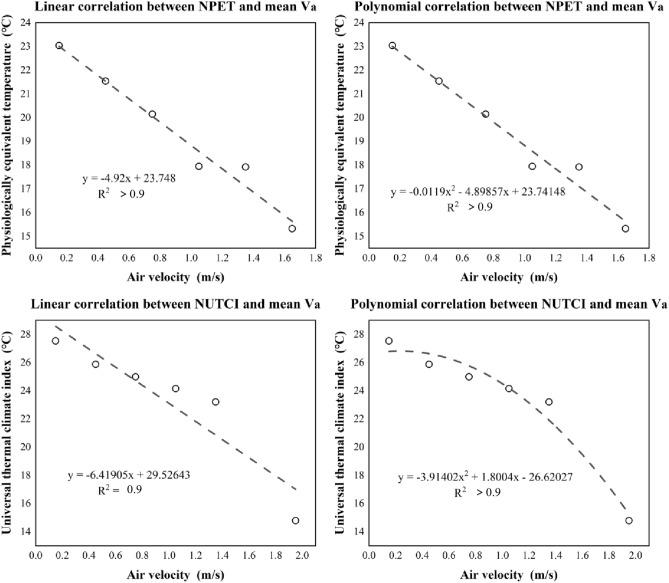
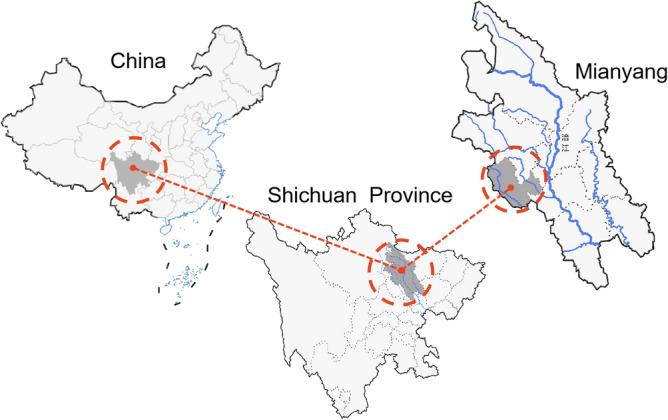
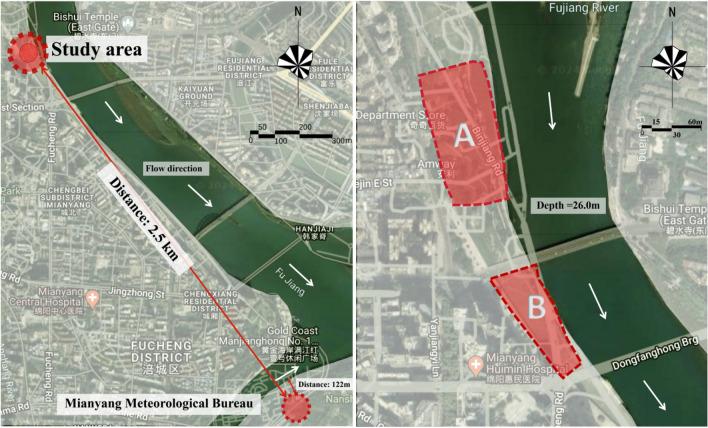
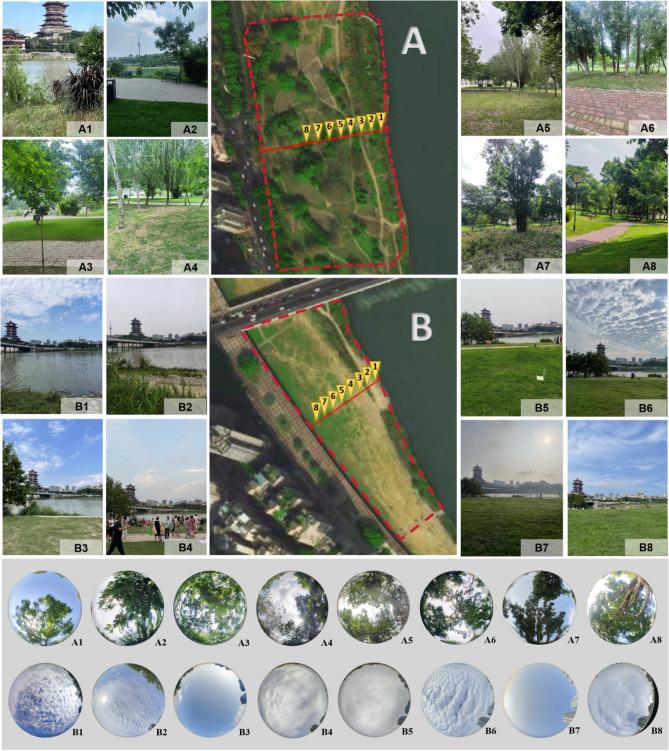
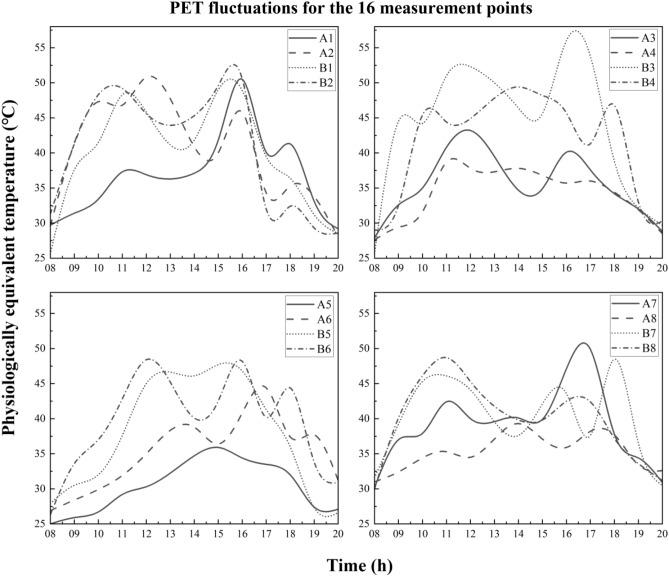
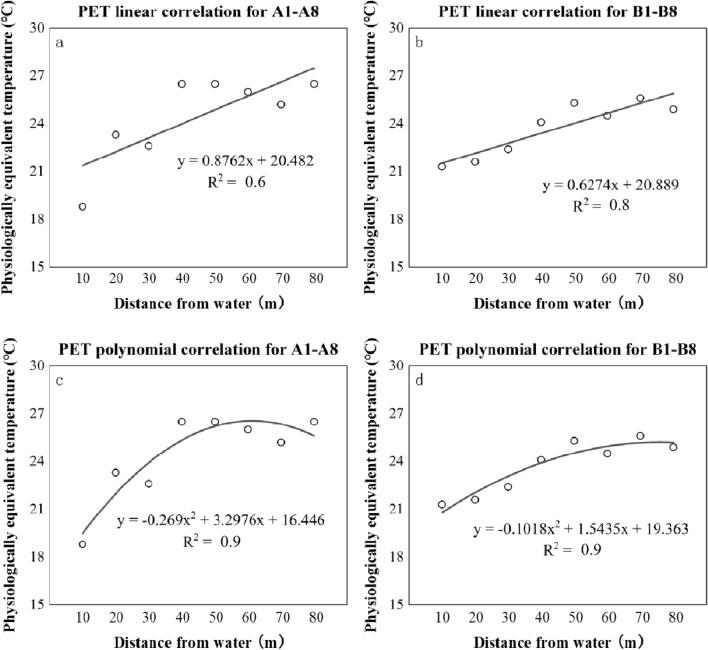
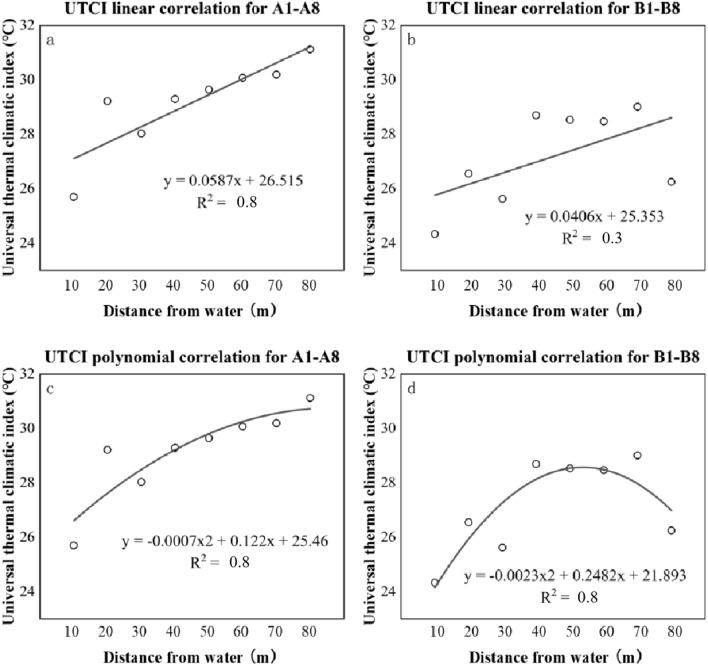
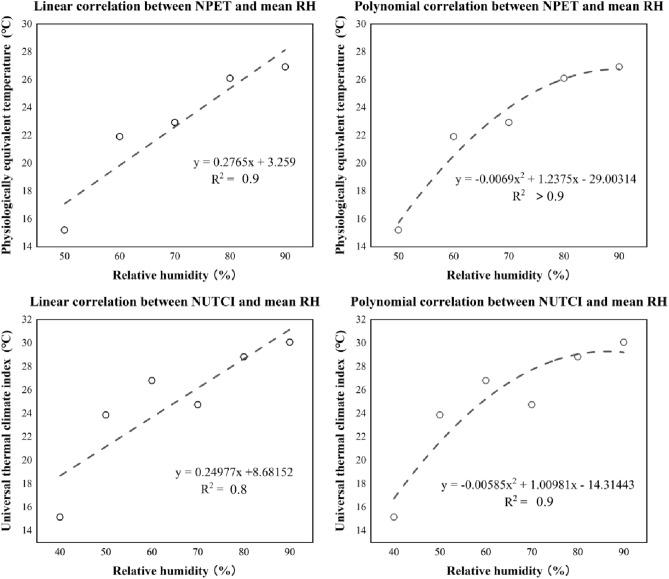
Thermal comfort studies are usually employed to find subjective thermal responses [indicated by neutral temperature (NT), i.e. the temperature with no thermal stress] of residents from a region towards thermal environments. According to the recently published works in the literature, NTs are affected by many factors, such as geographical location and microenvironments. To elucidate the origins of these effects, the impact of microenvironment elements around a water surface on pedestrians' thermal perceptions was systematically investigated in this work. The Fujiang River (FJR) in Mianyang City was taken as the sample site. The municipal meteorology station is located next to the site by around 2.5 km. By performing meteorology measurements combining questionnaires, it was found that the riverside NT (indicated by physiologically equivalent temperature, PET) of Mianyang in the summer of 2023 was 21.4 °C. The relationship between the distance from the water (DFW) and NT was quadratic linear. The same phenomenon took place by using either PET or Universal Thermal Climate Index (UTCI) indexes. Meanwhile, the meteorological contexts also affected NTs, including relative humidity (RH) and air velocity (V). Regarding RH, the NPET increased from 15.2 °C (RH = 50%) to 26.9 °C (RH = 90%). In contrast, the NPET dropped from 23.0 to - 50.6 °C when the V increased from 0.2 to 2.5 m/s, respectively. From our analysis, it was demonstrated that human thermal responses are significantly affected by both the microenvironmental and meteorological backgrounds around the water surface. Our work provides valuable insights for the proper use of water surfaces in urban design for adjusting thermal comfort.
热舒适研究通常用于找出某一地区居民对热环境的主观热响应[以中性温度(NT)表示,即无热应力时的温度]。根据文献中最近发表的研究成果,中性温度受地理位置和微环境等多种因素影响。为了阐明这些影响的根源,本研究系统地调查了水面周围微环境要素对行人热感知的影响。以绵阳市的涪江为样本地点。市气象站位于该地点旁边约2.5公里处。通过结合问卷调查进行气象测量发现,2023年夏季绵阳的河边中性温度(以生理等效温度PET表示)为21.4℃。离水距离(DFW)与中性温度之间的关系呈二次线性关系。使用PET或通用热气候指数(UTCI)指标时都出现了同样的现象。同时,气象背景也会影响中性温度,包括相对湿度(RH)和风速(V)。关于相对湿度,生理等效温度PET从15.2℃(相对湿度=50%)增加到26.9℃(相对湿度=90%)。相比之下,当风速分别从0.2米/秒增加到2.5米/秒时,生理等效温度PET从23.0℃降至-50.6℃。通过我们的分析表明,人体热响应受到水面周围微环境和气象背景的显著影响。我们的工作为城市设计中合理利用水面来调节热舒适度提供了有价值的见解。


 Zotero 插件