
一种用于大气微塑料在线测量技术的荧光方法。
A fluorescence approach for an online measurement technique of atmospheric microplastics.
作者信息
Gratzl Jürgen, Seifried Teresa M, Stolzenburg Dominik, Grothe Hinrich
机构信息
Institute of Materials Chemistry TU Wien Vienna Austria
Department of Chemistry, University of British Columbia Vancouver British Columbia Canada.
出版信息
Environ Sci Atmos. 2024 Mar 14;4(6):601-610. doi: 10.1039/d4ea00010b. eCollection 2024 Jun 13.
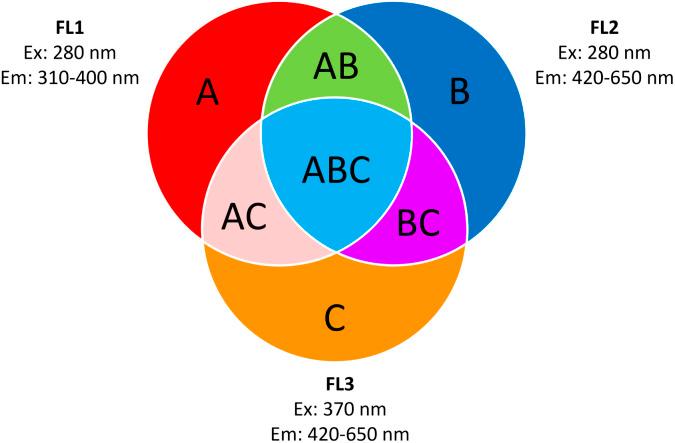
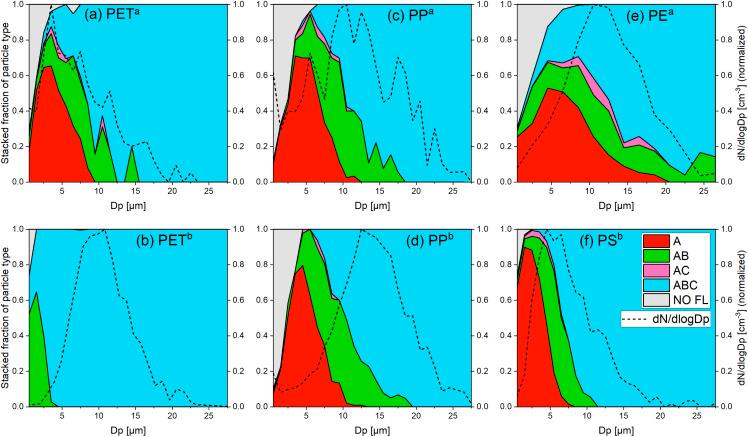
Microplastic particles in the atmosphere are regularly detected in urban areas as well as in very remote locations. Yet the sources, chemical transformation, transport, and abundance of airborne microplastics still remain largely unexplained. Therefore, their impact on health, weather and climate related processes lacks comprehensive understanding. Single particle detection presents a substantial challenge due to its time-consuming process and is conducted solely offline. To get more information about the distribution, fluxes and sources of microplastics in the atmosphere, a reliable and fast online measurement technique is of utmost importance. Here we demonstrate the use of the autofluorescence of microplastic particles for their online detection with a high sensitivity towards different widely used polymers. We deploy online, single particle fluorescence spectroscopy with a Wideband Integrated Bioaerosol Sensor WIBS 5/NEO (Droplet Measurement Technologies, USA), which enables single particle fluorescence measurements at two excitation wavelengths (280 nm and 370 nm) and in two emission windows (310-400 nm and 420-650 nm). We investigated shredded (<100 μm) everyday plastic products (drinking bottles and yogurt cups) and pure powders of polyethylene terephthalate (PET), polyethylene and polypropylene. For the broad range of typical plastic products analyzed, we detected fluorescence on a single particle level using the WIBS. The online detection can identify particles smaller than 2 μm. In the case of microplastic particles from a PET bottle, 1.2 μm sized particles can be detected with 95% efficiency. Comparison with biological aerosols reveals that microplastics can be distinguished from two abundant pollen species and investigation of the complete fluorescence excitation emission maps of all samples shows that online identification of microplastics might be possible with fluorescence techniques if multiple channels are available.
城市地区以及非常偏远的地方都能定期检测到大气中的微塑料颗粒。然而,空气中微塑料的来源、化学转化、传输和丰度在很大程度上仍不清楚。因此,人们对它们对健康、天气和气候相关过程的影响缺乏全面的了解。单颗粒检测由于其耗时的过程而面临重大挑战,并且只能离线进行。为了获取更多关于大气中微塑料的分布、通量和来源的信息,一种可靠且快速的在线测量技术至关重要。在此,我们展示了利用微塑料颗粒的自发荧光对其进行在线检测,该检测对不同广泛使用的聚合物具有高灵敏度。我们使用宽带集成生物气溶胶传感器WIBS 5/NEO(美国Droplet Measurement Technologies公司)进行在线单颗粒荧光光谱分析,该传感器能够在两个激发波长(280纳米和370纳米)以及两个发射窗口(310 - 400纳米和420 - 650纳米)进行单颗粒荧光测量。我们研究了切碎的(<100微米)日常塑料制品(饮料瓶和酸奶杯)以及聚对苯二甲酸乙二酯(PET)、聚乙烯和聚丙烯的纯粉末。对于所分析的广泛典型塑料制品,我们使用WIBS在单颗粒水平上检测到了荧光。在线检测能够识别小于2微米的颗粒。对于来自PET瓶的微塑料颗粒,1.2微米大小的颗粒检测效率可达95%。与生物气溶胶的比较表明,微塑料可以与两种常见花粉种类区分开来,并且对所有样品完整的荧光激发发射图谱的研究表明,如果有多个通道可用,利用荧光技术可能实现在线识别微塑料。


 Zotero 插件