
定量构效关系表明极性残基亲脂性降低决定了抗菌肽活性的选择性。
QSAR Reveals Decreased Lipophilicity of Polar Residues Determines the Selectivity of Antimicrobial Peptide Activity.
作者信息
van der Walt Mandelie, Möller Dalton S, van Wyk Rosalind J, Ferguson Philip M, Hind Charlotte K, Clifford Melanie, Do Carmo Silva Phoebe, Sutton J Mark, Mason A James, Bester Megan J, Gaspar Anabella R M
机构信息
Department of Biochemistry, Genetics and Microbiology, Faculty of Natural and Agricultural Sciences, University of Pretoria, Pretoria 0002, South Africa.
Institute of Pharmaceutical Science, School of Cancer & Pharmaceutical Science, King's College London, Franklin-Wilkins Building, 150 Stamford Street, London SE1 9NH, United Kingdom.
出版信息
ACS Omega. 2024 Jun 3;9(24):26030-26049. doi: 10.1021/acsomega.4c01277. eCollection 2024 Jun 18.
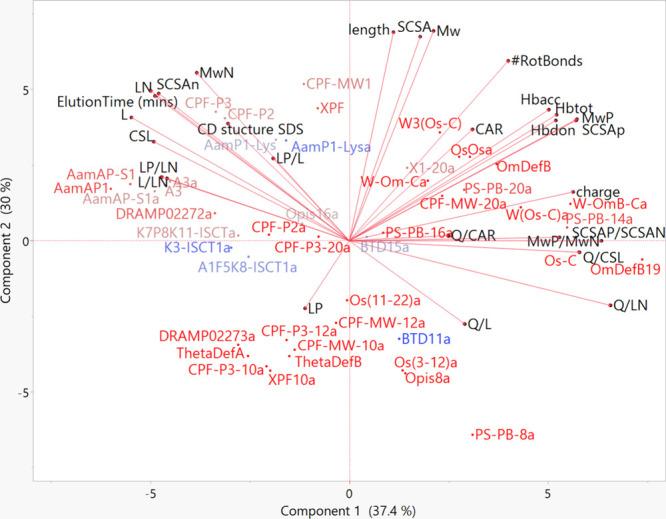
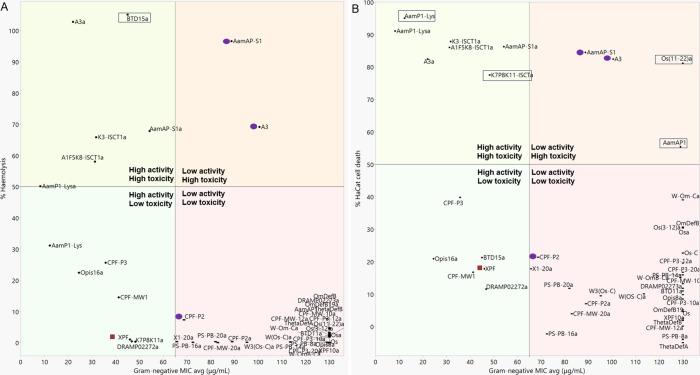
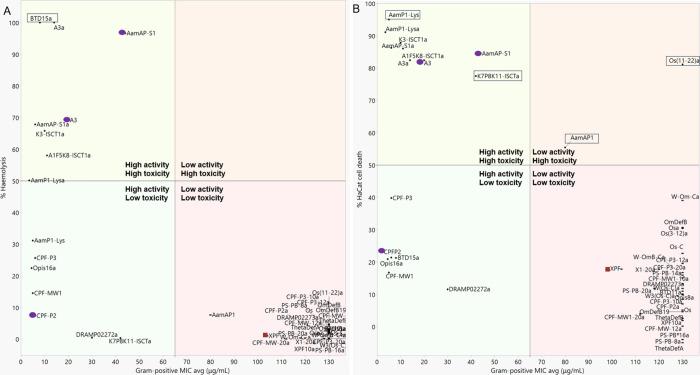
Antimicrobial resistance has increased rapidly, causing daunting morbidity and mortality rates worldwide. Antimicrobial peptides (AMPs) have emerged as promising alternatives to traditional antibiotics due to their broad range of targets and low tendency to elicit resistance. However, potent antimicrobial activity is often accompanied by excessive cytotoxicity toward host cells, leading to a halt in AMP therapeutic development. Here, we present multivariate analyses that correlate 28 peptide properties to the activity and toxicity of 46 diverse African-derived AMPs and identify the negative lipophilicity of polar residues as an essential physiochemical property for selective antimicrobial activity. Twenty-seven active AMPs are identified, of which the majority are of scorpion or frog origin. Of these, thirteen are novel with no previously reported activities. Principal component analysis and quantitative structure-activity relationships (QSAR) reveal that overall hydrophobicity, lipophilicity, and residue side chain surface area affect the antimicrobial and cytotoxic activity of an AMP. This has been well documented previously, but the present QSAR analysis additionally reveals that a decrease in the lipophilicity, contributed by those amino acids classified as polar, confers selectivity for a peptide to pathogen over mammalian cells. Furthermore, an increase in overall peptide charge aids selectivity toward Gram-negative bacteria and fungi, while selectivity toward Gram-positive bacteria is obtained through an increased number of small lipophilic residues. Finally, a conservative increase in peptide size in terms of sequence length and molecular weight also contributes to improved activity without affecting toxicity. Our findings suggest a novel approach for the rational design or modification of existing AMPs to increase pathogen selectivity and enhance therapeutic potential.
抗生素耐药性迅速增加,在全球范围内导致了令人畏惧的发病率和死亡率。抗菌肽(AMPs)因其广泛的靶点和低耐药诱导倾向,已成为传统抗生素的有前景的替代品。然而,强大的抗菌活性往往伴随着对宿主细胞的过度细胞毒性,导致抗菌肽治疗开发停滞不前。在此,我们进行了多变量分析,将28种肽的特性与46种不同的非洲来源抗菌肽的活性和毒性相关联,并确定极性残基的负亲脂性是选择性抗菌活性的关键物理化学性质。我们鉴定出27种活性抗菌肽,其中大多数来自蝎子或青蛙。其中,有13种是新发现的,以前没有报道过其活性。主成分分析和定量构效关系(QSAR)表明,总体疏水性、亲脂性和残基侧链表面积会影响抗菌肽的抗菌和细胞毒性活性。这一点以前已有充分记录,但目前的QSAR分析还表明,那些归类为极性的氨基酸所导致的亲脂性降低,赋予了肽对病原体而非哺乳动物细胞的选择性。此外,肽总体电荷的增加有助于对革兰氏阴性菌和真菌的选择性,而对革兰氏阳性菌的选择性则通过增加小亲脂性残基的数量来实现。最后,在序列长度和分子量方面保守地增加肽的大小,也有助于在不影响毒性的情况下提高活性。我们的研究结果为合理设计或修饰现有抗菌肽以提高病原体选择性和增强治疗潜力提供了一种新方法。


 Zotero 插件