
利用类器官芯片技术建模神经退行性疾病的挑战和未来展望。
Challenges and Future Perspectives in Modeling Neurodegenerative Diseases Using Organ-on-a-Chip Technology.
机构信息
Department of Mechanical Engineering and Biological Engineering, Massachusetts Institute of Technology, Cambridge, MA, 02139, USA.
出版信息
Adv Sci (Weinh). 2024 Aug;11(32):e2403892. doi: 10.1002/advs.202403892. Epub 2024 Jun 23.
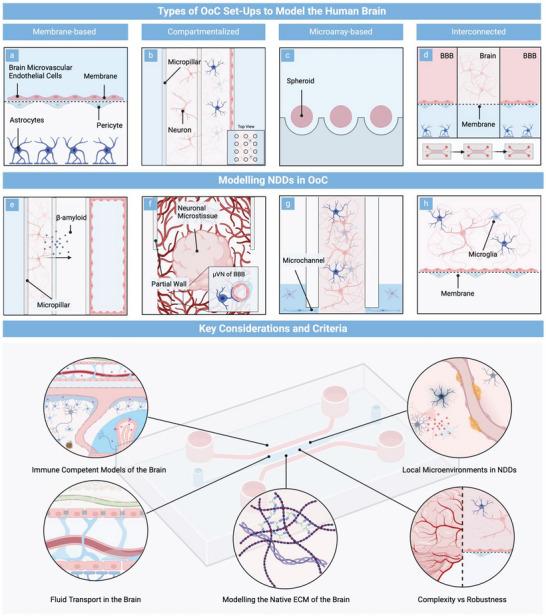
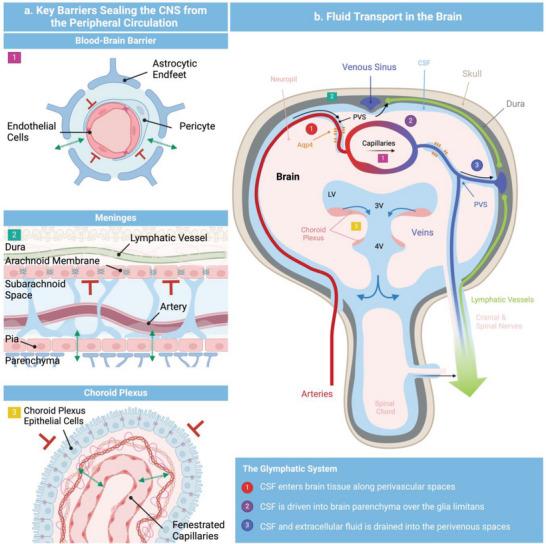
Neurodegenerative diseases (NDDs) affect more than 50 million people worldwide, posing a significant global health challenge as well as a high socioeconomic burden. With aging constituting one of the main risk factors for some NDDs such as Alzheimer's disease (AD) and Parkinson's disease (PD), this societal toll is expected to rise considering the predicted increase in the aging population as well as the limited progress in the development of effective therapeutics. To address the high failure rates in clinical trials, legislative changes permitting the use of alternatives to traditional pre-clinical in vivo models are implemented. In this regard, microphysiological systems (MPS) such as organ-on-a-chip (OoC) platforms constitute a promising tool, due to their ability to mimic complex and human-specific tissue niches in vitro. This review summarizes the current progress in modeling NDDs using OoC technology and discusses five critical aspects still insufficiently addressed in OoC models to date. Taking these aspects into consideration in the future MPS will advance the modeling of NDDs in vitro and increase their translational value in the clinical setting.
神经退行性疾病(NDDs)影响着全球超过 5000 万人,不仅是一项重大的全球健康挑战,也是一个巨大的社会经济负担。随着老龄化成为阿尔茨海默病(AD)和帕金森病(PD)等一些 NDD 的主要风险因素之一,考虑到预计人口老龄化的增加以及有效治疗方法的发展有限,预计这种社会代价将会上升。为了解决临床试验高失败率的问题,已经实施了立法改革,允许使用传统的临床前体内模型的替代品。在这方面,器官芯片(OoC)等微生理系统(MPS)平台由于能够模拟复杂和人类特异性的组织小生境,因此是一种很有前途的工具。本综述总结了目前使用 OoC 技术对 NDD 进行建模的进展,并讨论了 OoC 模型迄今为止仍未充分解决的五个关键方面。在未来的 MPS 中考虑这些方面,将有助于提高体外 NDD 模型的建模水平,并增加其在临床环境中的转化价值。


 Zotero 插件