
头颈部癌中癌症相关成纤维细胞(CAFs)与肿瘤细胞之间的串扰
Crosstalk between CAFs and tumour cells in head and neck cancer.
作者信息
Li Xinyang, González-Maroto Celia, Tavassoli Mahvash
机构信息
Head and Neck Oncology Group, Centre for Host Microbiome Interaction, King's College London, Hodgkin Building, London, SE1 1UL, UK.
Blizard Institute, Barts and the London School of Medicine and Dentistry, Queen Mary University of London, London, UK.
出版信息
Cell Death Discov. 2024 Jun 26;10(1):303. doi: 10.1038/s41420-024-02053-9.
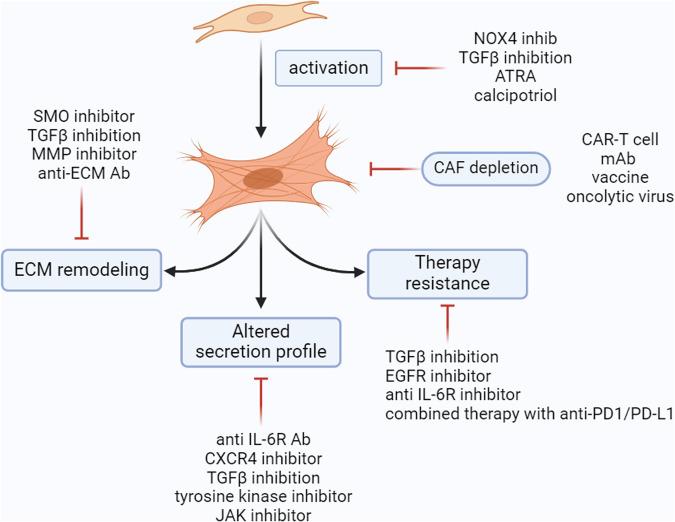
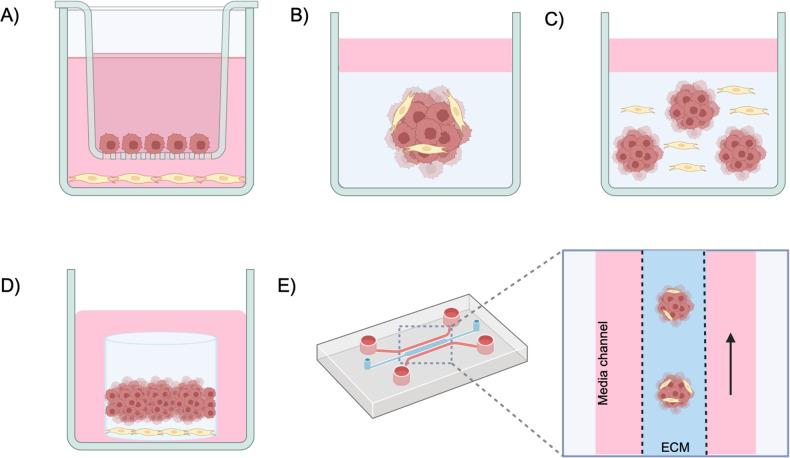
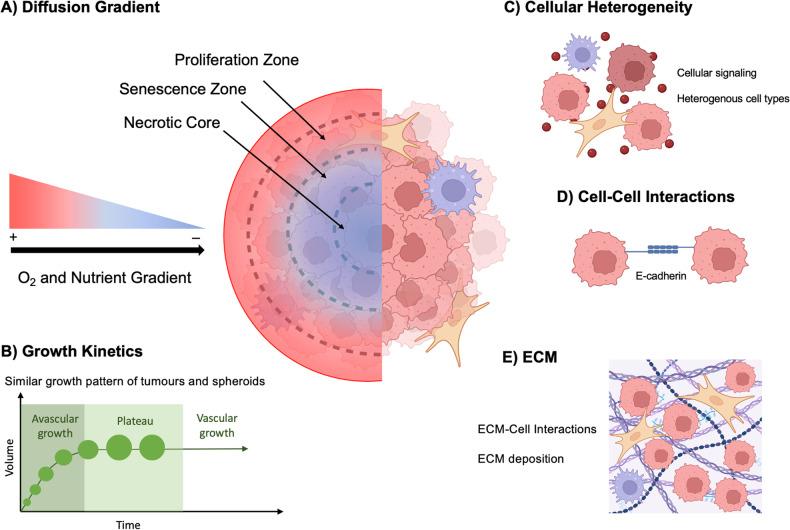
Head and neck squamous cell carcinomas (HNSCCs) are amongst the most aggressive, complex, and heterogeneous malignancies. The standard of care treatments for HNC patients include surgery, radiotherapy, chemotherapy, or their combination. However, around 50% do not benefit while suffering severe toxic side effects, costing the individuals and society. Decades have been spent to improve HNSCC treatment outcomes with only limited success. Much of the research in HNSCC treatment has focused on understanding the genetics of the HNSCC malignant cells, but it has become clear that tumour microenvironment (TME) plays an important role in the progression as well as treatment response in HNSCC. Understanding the crosstalk between cancer cells and TME is crucial for inhibiting progression and treatment resistance. Cancer-associated fibroblasts (CAFs), the predominant component of stroma in HNSCC, serve as the primary source of extra-cellular matrix (ECM) and various pro-tumoral composites in TME. The activation of CAFs in HNSCC is primarily driven by cancer cell-secreted molecules, which in turn induce phenotypic changes, elevated secretive status, and altered ECM production profile. Concurrently, CAFs play a pivotal role in modulating the cell cycle, stemness, epithelial-mesenchymal transition (EMT), and resistance to targeted and chemoradiotherapy in HNSCC cells. This modulation occurs through interactions with secreted molecules or direct contact with the ECM or CAF. Co-culture and 3D models of tumour cells and other TME cell types allows to mimic the HNSCC tumour milieu and enable modulating tumour hypoxia and reprograming cancer stem cells (CSC). This review aims to provide an update on the development of HNSCC tumour models comprising CAFs to obtain better understanding of the interaction between CAFs and tumour cells, and for providing preclinical testing platforms of current and combination with emerging therapeutics.
头颈部鳞状细胞癌(HNSCC)是最具侵袭性、复杂性和异质性的恶性肿瘤之一。HNC患者的标准治疗方法包括手术、放疗、化疗或联合治疗。然而,约50%的患者不仅没有受益,还遭受严重的毒副作用,给个人和社会带来了代价。数十年来,人们一直在努力改善HNSCC的治疗效果,但成效有限。HNSCC治疗的许多研究都集中在了解HNSCC恶性细胞的遗传学上,但很明显,肿瘤微环境(TME)在HNSCC的进展以及治疗反应中也起着重要作用。了解癌细胞与TME之间的相互作用对于抑制进展和治疗耐药性至关重要。癌症相关成纤维细胞(CAF)是HNSCC间质的主要成分,是TME中细胞外基质(ECM)和各种促肿瘤复合物的主要来源。HNSCC中CAF的激活主要由癌细胞分泌的分子驱动,这些分子反过来又诱导表型变化、分泌状态升高和ECM产生谱改变。同时,CAF在调节HNSCC细胞的细胞周期、干性、上皮-间质转化(EMT)以及对靶向治疗和放化疗的耐药性方面起着关键作用。这种调节通过与分泌分子的相互作用或与ECM或CAF的直接接触来实现。肿瘤细胞与其他TME细胞类型的共培养和3D模型可以模拟HNSCC肿瘤环境,并能够调节肿瘤缺氧和重编程癌症干细胞(CSC)。本综述旨在提供关于包含CAF的HNSCC肿瘤模型发展的最新信息,以更好地理解CAF与肿瘤细胞之间的相互作用,并为当前和新兴治疗方法的联合提供临床前测试平台。


 Zotero 插件