
CD59保护原代人脑血管平滑肌细胞免受溶细胞性膜攻击复合物的损伤。
CD59 Protects Primary Human Cerebrovascular Smooth Muscle Cells from Cytolytic Membrane Attack Complex.
作者信息
Whinnery Carson D, Nie Ying, Boskovic Danilo S, Soriano Salvador, Kirsch Wolff M
机构信息
Division of Biochemistry, Department of Basic Sciences, School of Medicine, Loma Linda University, Loma Linda, CA 92350, USA.
Neurosurgery Center for Research, Training and Education, School of Medicine, Loma Linda University, Loma Linda, CA 92350, USA.
出版信息
Brain Sci. 2024 Jun 14;14(6):601. doi: 10.3390/brainsci14060601.
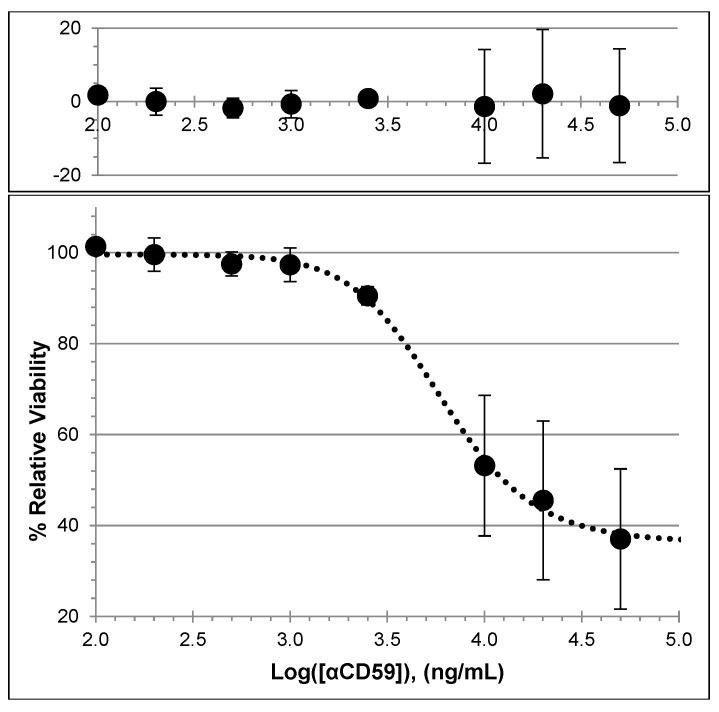
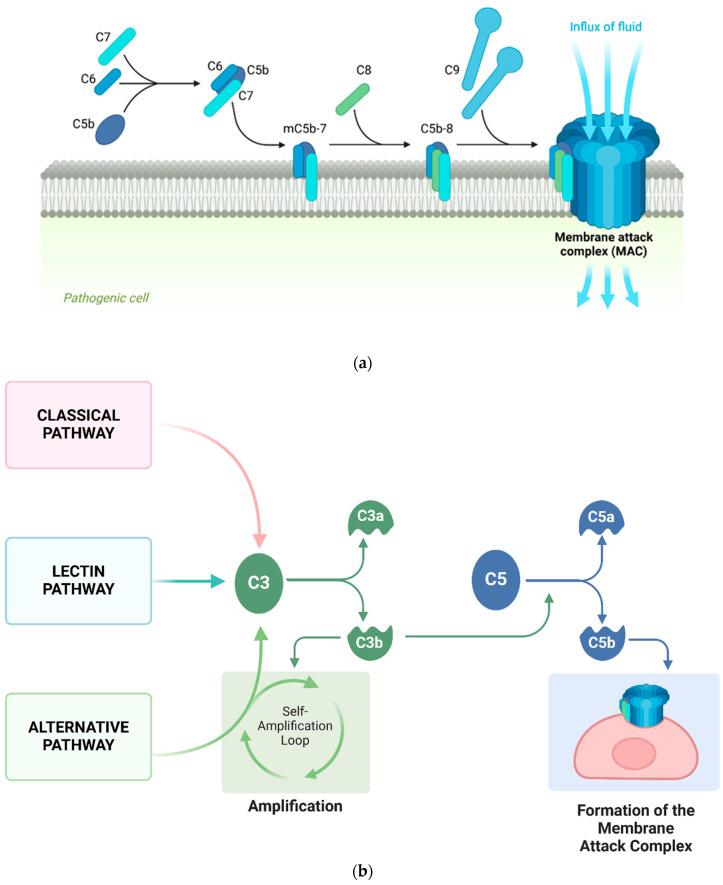
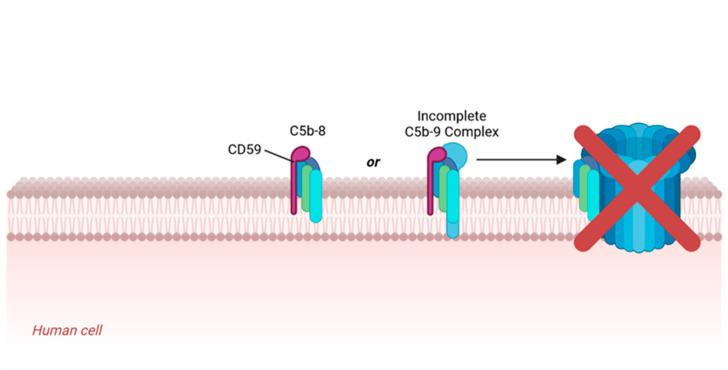
Cerebral amyloid angiopathy is characterized by a weakening of the small- and medium-sized cerebral arteries, as their smooth muscle cells are progressively replaced with acellular amyloid β, increasing vessel fragility and vulnerability to microhemorrhage. In this context, an aberrant overactivation of the complement system would further aggravate this process. The surface protein CD59 protects most cells from complement-induced cytotoxicity, but expression levels can fluctuate due to disease and varying cell types. The degree to which CD59 protects human cerebral vascular smooth muscle (HCSM) cells from complement-induced cytotoxicity has not yet been determined. To address this shortcoming, we selectively blocked the activity of HCSM-expressed CD59 with an antibody, and challenged the cells with complement, then measured cellular viability. Unblocked HCSM cells proved resistant to all tested concentrations of complement, and this resistance decreased progressively with increasing concentrations of anti-CD59 antibody. Complete CD59 blockage, however, did not result in a total loss of cellular viability, suggesting that additional factors may have some protective functions. Taken together, this implies that CD59 plays a predominant role in HCSM cellular protection against complement-induced cytotoxicity. The overexpression of CD59 could be an effective means of protecting these cells from excessive complement system activity, with consequent reductions in the incidence of microhemorrhage. The precise extent to which cellular repair mechanisms and other complement repair proteins contribute to this resistance has yet to be fully elucidated.
脑淀粉样血管病的特征是中小脑动脉变弱,因为其平滑肌细胞逐渐被无细胞淀粉样β蛋白取代,增加了血管脆性和微出血的易感性。在这种情况下,补体系统的异常过度激活会进一步加剧这一过程。表面蛋白CD59可保护大多数细胞免受补体诱导的细胞毒性,但表达水平会因疾病和细胞类型的不同而波动。CD59保护人脑血管平滑肌(HCSM)细胞免受补体诱导的细胞毒性的程度尚未确定。为了解决这一缺陷,我们用抗体选择性阻断HCSM表达的CD59的活性,并用补体攻击细胞,然后测量细胞活力。未被阻断的HCSM细胞对所有测试浓度的补体均具有抗性,并且随着抗CD59抗体浓度的增加,这种抗性逐渐降低。然而,完全阻断CD59并没有导致细胞活力完全丧失,这表明其他因素可能具有一些保护作用。综上所述,这意味着CD59在HCSM细胞保护免受补体诱导的细胞毒性中起主要作用。CD59的过表达可能是保护这些细胞免受过度补体系统活性影响的有效手段,从而降低微出血的发生率。细胞修复机制和其他补体修复蛋白对这种抗性的具体贡献程度尚未完全阐明。


 Zotero 插件