
揭示曲马多和他喷他多神经行为毒性背后的海马体分子和细胞改变
Unraveling the Hippocampal Molecular and Cellular Alterations behind Tramadol and Tapentadol Neurobehavioral Toxicity.
作者信息
Soares-Cardoso Cristiana, Leal Sandra, Sá Susana I, Dantas-Barros Rita, Dinis-Oliveira Ricardo Jorge, Faria Juliana, Barbosa Joana
机构信息
Associate Laboratory i4HB-Institute for Health and Bioeconomy, University Institute of Health Sciences-CESPU, 4585-116 Gandra, Portugal.
UCIBIO-Applied Molecular Biosciences Unit, Translational Toxicology Research Laboratory, University Institute of Health Sciences (1H-TOXRUN, IUCS-CESPU), 4585-116 Gandra, Portugal.
出版信息
Pharmaceuticals (Basel). 2024 Jun 17;17(6):796. doi: 10.3390/ph17060796.
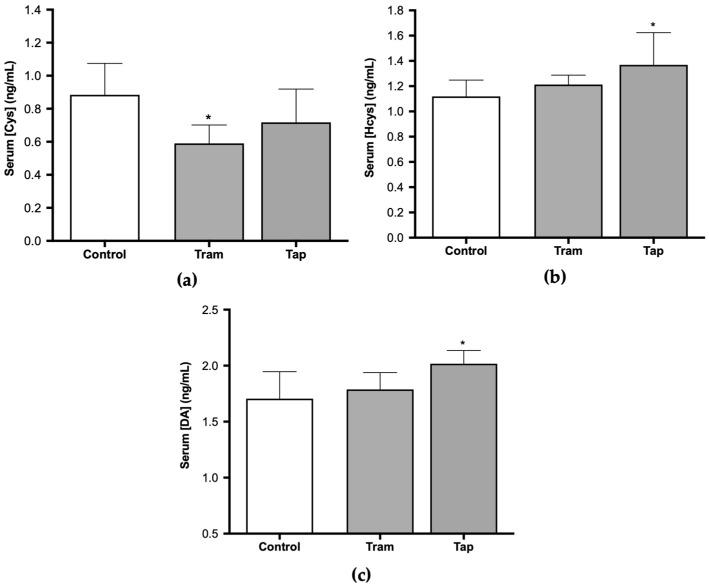
Tramadol and tapentadol are chemically related opioids prescribed for the analgesia of moderate to severe pain. Although safer than classical opioids, they are associated with neurotoxicity and behavioral dysfunction, which arise as a concern, considering their central action and growing misuse and abuse. The hippocampal formation is known to participate in memory and learning processes and has been documented to contribute to opioid dependence. Accordingly, the present study assessed molecular and cellular alterations in the hippocampal formation of Wistar rats intraperitoneally administered with 50 mg/kg tramadol or tapentadol for eight alternate days. Alterations were found in serum hydrogen peroxide, cysteine, homocysteine, and dopamine concentrations upon exposure to one or both opioids, as well as in hippocampal 8-hydroxydeoxyguanosine and gene expression levels of a panel of neurotoxicity, neuroinflammation, and neuromodulation biomarkers, assessed through quantitative real-time polymerase chain reaction (qRT-PCR). Immunohistochemical analysis of hippocampal formation sections showed increased glial fibrillary acidic protein (GFAP) and decreased cluster of differentiation 11b (CD11b) protein expression, suggesting opioid-induced astrogliosis and microgliosis. Collectively, the results emphasize the hippocampal neuromodulator effects of tramadol and tapentadol, with potential behavioral implications, underlining the need to prescribe and use both opioids cautiously.
曲马多和他喷他多是化学相关的阿片类药物,用于中度至重度疼痛的镇痛。尽管它们比传统阿片类药物更安全,但考虑到它们的中枢作用以及日益增加的误用和滥用情况,它们与神经毒性和行为功能障碍有关。已知海马结构参与记忆和学习过程,并且已有文献证明其与阿片类药物依赖有关。因此,本研究评估了Wistar大鼠连续八天交替腹腔注射50mg/kg曲马多或他喷他多后海马结构中的分子和细胞变化。在暴露于一种或两种阿片类药物后,血清过氧化氢、半胱氨酸、同型半胱氨酸和多巴胺浓度出现变化,同时通过定量实时聚合酶链反应(qRT-PCR)评估发现海马中的8-羟基脱氧鸟苷以及一组神经毒性、神经炎症和神经调节生物标志物的基因表达水平也发生了变化。海马结构切片的免疫组织化学分析显示胶质纤维酸性蛋白(GFAP)表达增加,分化簇11b(CD11b)蛋白表达减少,提示阿片类药物诱导的星形胶质细胞增生和小胶质细胞增生。总体而言,研究结果强调了曲马多和他喷他多对海马神经调节的作用及其潜在的行为影响,突显了谨慎开具和使用这两种阿片类药物的必要性。




 Zotero 插件