
危重症脓毒症患者组氨酸丰富糖蛋白水平的变化。
CHANGES OF HISTIDINE-RICH GLYCOPROTEIN LEVELS IN CRITICALLY ILL SEPTIC PATIENTS.
机构信息
Department of Advanced Emergency and Disaster medicine, Graduate School of Medical Sciences, Kyushu University, Fukuoka, Japan.
Department of Anesthesiology and Critical Care Medicine, Graduate School of Medical Sciences, Kyushu University, Fukuoka, Japan.
出版信息
Shock. 2024 Sep 1;62(3):351-356. doi: 10.1097/SHK.0000000000002406. Epub 2024 Jun 25.
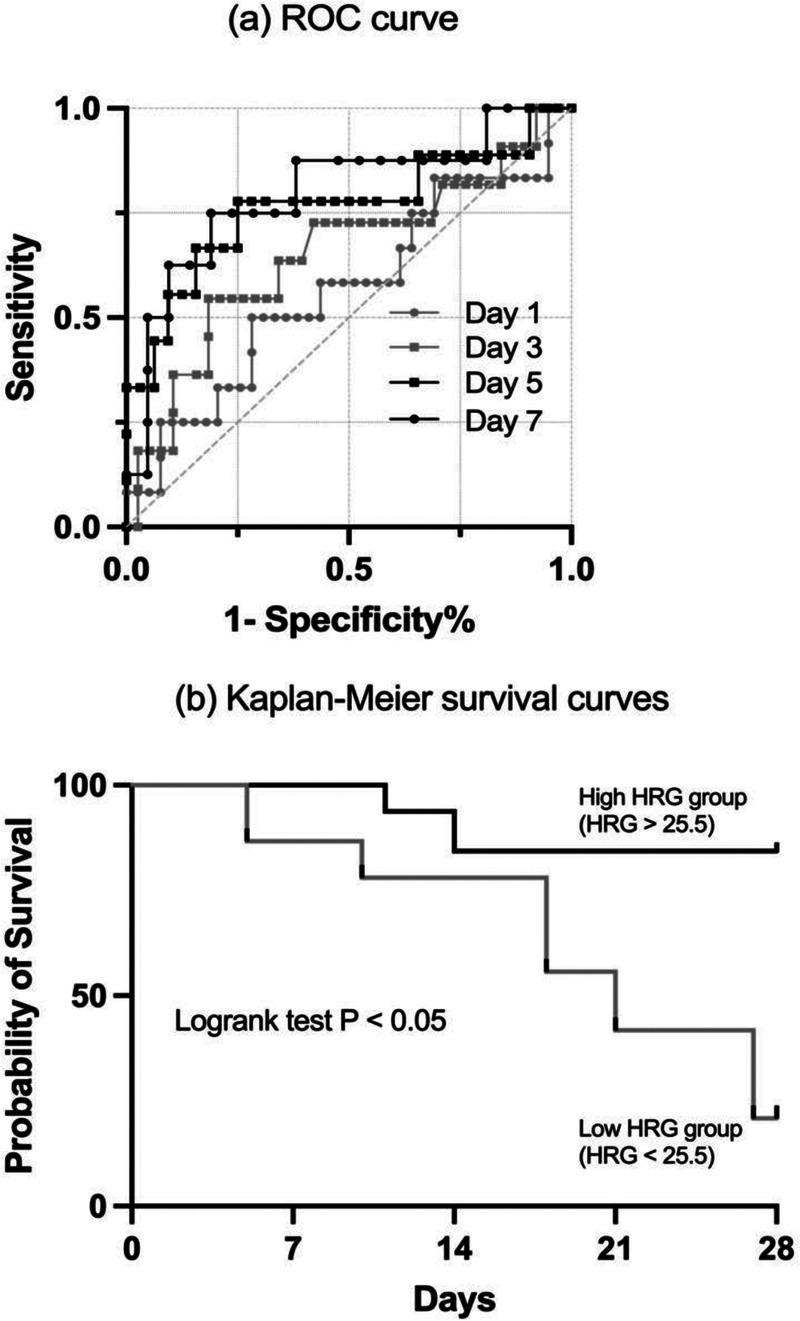
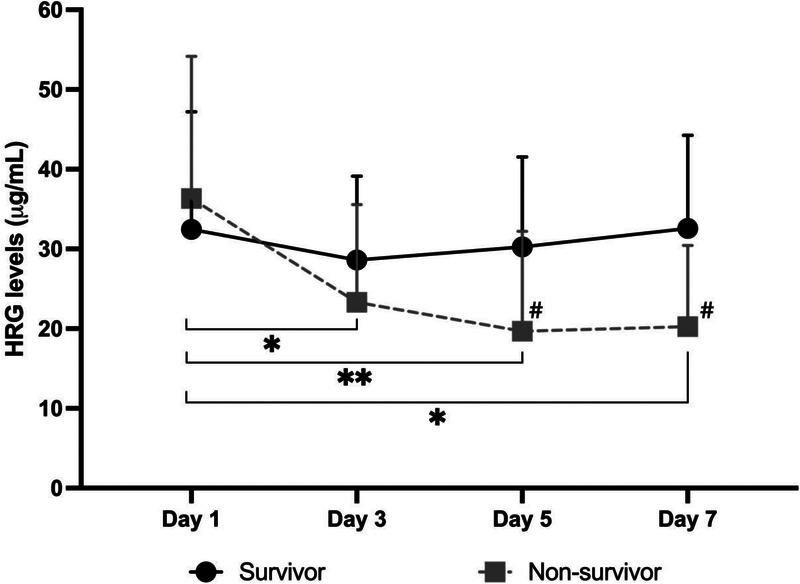
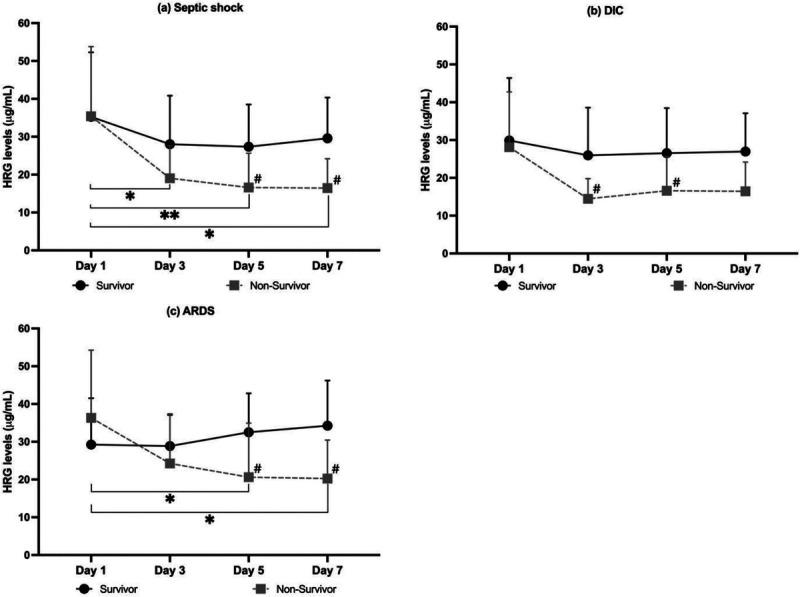
Background: Histidine-rich glycoprotein (HRG), a potential prognostic factor in sepsis, lacks clarity regarding its relevance in septic-induced shock, disseminated intravascular coagulation (DIC), and acute respiratory distress syndrome (ARDS) pathogenesis. This study investigated the association between HRG concentrations and these critical conditions. Methods: Blood samples were collected from 53 critically ill patients on days 1, 3, 5, and 7 after ICU admission at the Kyushu University Hospital. Daily clinical and laboratory data were recorded, and patient survival was assessed 28 days after ICU admission. Results: Serum HRG concentrations were significantly reduced on days 3, 5, and 7 in patients with septic shock and DIC but not in those with ARDS. While initial HRG levels on day one were not correlated with survival, nonsurvivors displayed decreased HRG levels, notably on days 3, 5, and 7 post-ICU admissions. The HRG levels remained stable in survivors. A progressive decrease was associated with higher mortality rates, particularly on days 5 and 7. On day 5, an HRG level with a cutoff of 25.5 μg/mL showed a sensitivity of 0.77 and a specificity of 0.75, indicating significantly lower survival rates (log-rank test, P < 0.05). Conclusion: HRG presents a potential intervention for critically ill sepsis patients, providing a novel strategy to enhance outcomes. Further research is needed to explore the therapeutic potential of HRG in sepsis management.
背景
组氨酸丰富糖蛋白(HRG)是脓毒症的一种潜在预后因子,但其在脓毒症诱导性休克、弥散性血管内凝血(DIC)和急性呼吸窘迫综合征(ARDS)发病机制中的相关性尚不清楚。本研究旨在探讨 HRG 浓度与这些危急情况之间的关联。方法:在九州大学医院 ICU 入院后第 1、3、5 和 7 天,采集了 53 名危重症患者的血液样本。记录了每日临床和实验室数据,并评估了 ICU 入院后 28 天的患者生存情况。结果:脓毒性休克和 DIC 患者的血清 HRG 浓度在第 3、5 和 7 天显著降低,但在 ARDS 患者中则没有。虽然第 1 天的初始 HRG 水平与生存无关,但非幸存者的 HRG 水平下降,尤其是在 ICU 入院后的第 3、5 和 7 天。幸存者的 HRG 水平保持稳定。HRG 水平逐渐下降与更高的死亡率相关,尤其是在第 5 和 7 天。在第 5 天,HRG 水平的截断值为 25.5 μg/mL 时,其敏感性为 0.77,特异性为 0.75,表明生存率显著降低(对数秩检验,P<0.05)。结论:HRG 为危重症脓毒症患者提供了一种潜在的干预手段,为改善结局提供了一种新策略。需要进一步研究以探索 HRG 在脓毒症管理中的治疗潜力。


 Zotero 插件