
溴化物介导的硅烷氧化:一种用于非水深度还原电合成的实用对电极工艺。
Bromide-Mediated Silane Oxidation: A Practical Counter-Electrode Process for Nonaqueous Deep Reductive Electrosynthesis.
作者信息
Avanthay Mickaël E, Goodrich Oliver H, Tiemessen David, Alder Catherine M, George Michael W, Lennox Alastair J J
机构信息
School of Chemistry, University of Bristol, Cantock's Close, Bristol BS8 1TS, U.K.
School of Chemistry, University of Nottingham, University Park, Nottingham NG7 2RD, U.K.
出版信息
JACS Au. 2024 Jun 3;4(6):2220-2227. doi: 10.1021/jacsau.4c00186. eCollection 2024 Jun 24.
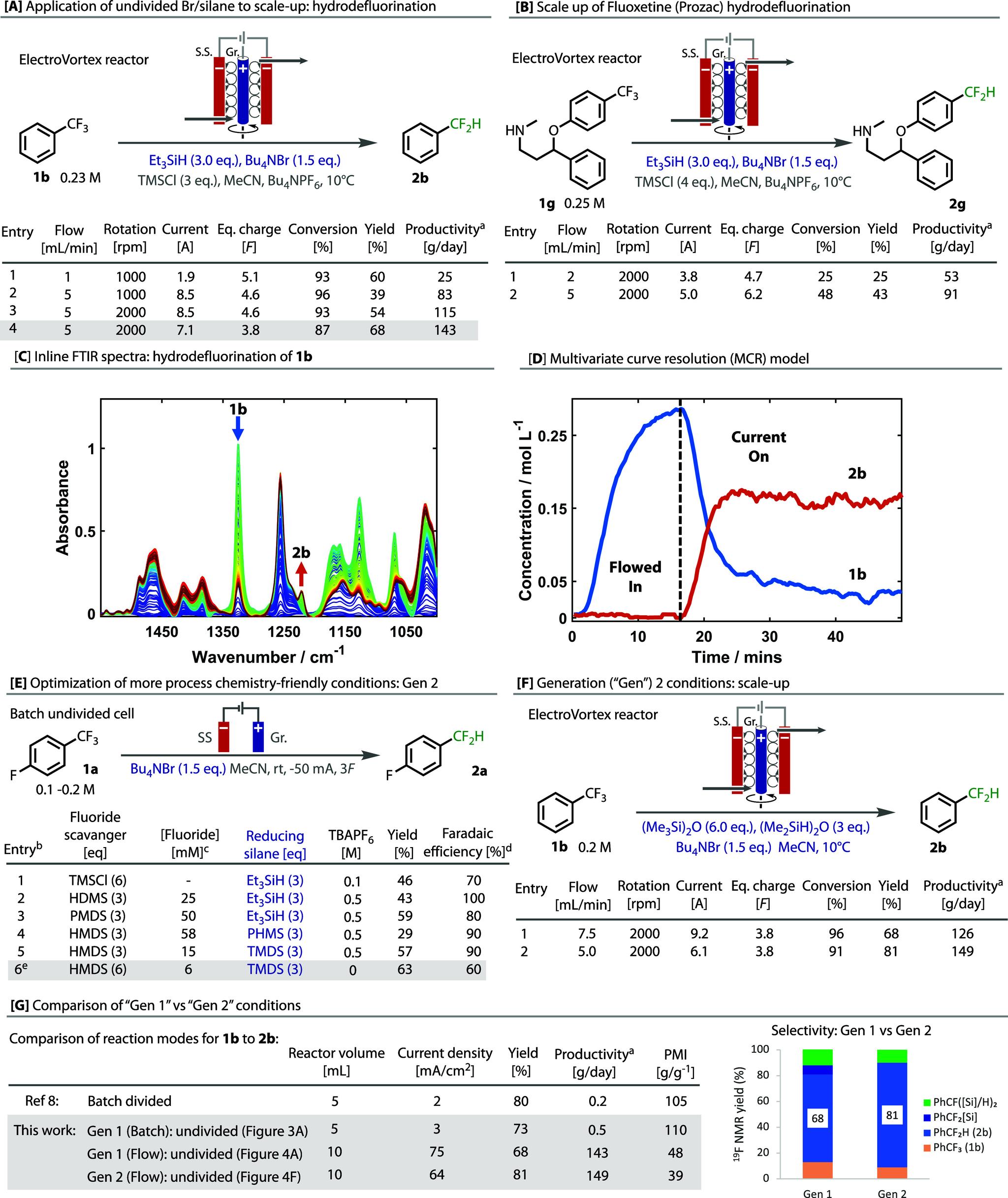
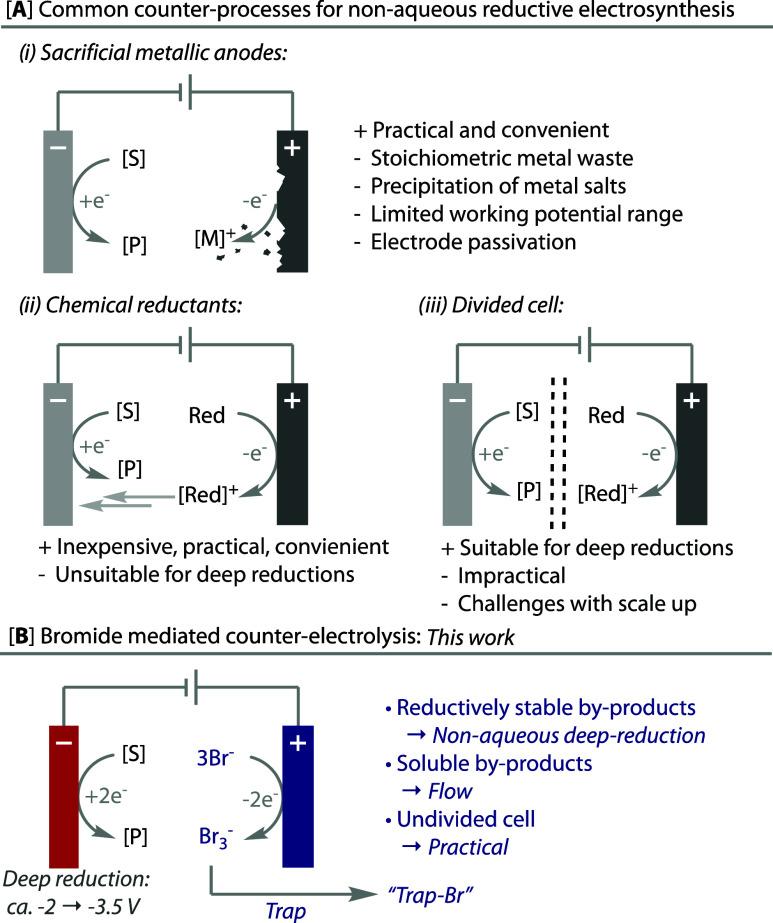
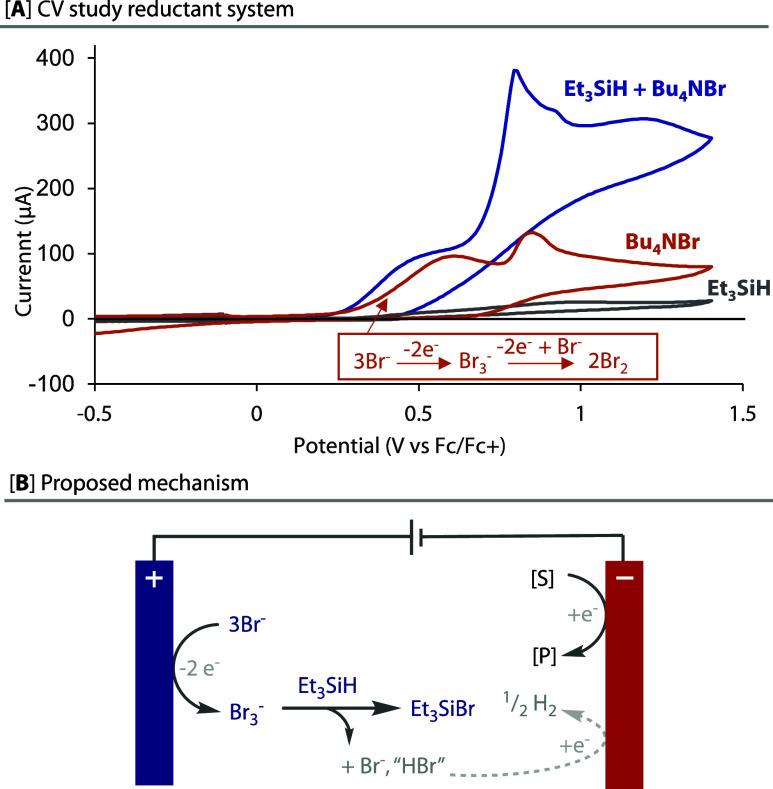
The counter-electrode process of an organic electrochemical reaction is integral for the success and sustainability of the process. Unlike for oxidation reactions, counter-electrode processes for reduction reactions remain limited, especially for deep reductions that apply very negative potentials. Herein, we report the development of a bromide-mediated silane oxidation counter-electrode process for nonaqueous electrochemical reduction reactions in undivided cells. The system is found to be suitable for replacing either sacrificial anodes or a divided cell in several reported reactions. The conditions are metal-free, use inexpensive reagents and a graphite anode, are scalable, and the byproducts are reductively stable and readily removed. We showcase the translation of a previously reported divided cell reaction to a >100 g scale in continuous flow.
有机电化学反应的对电极过程对于该过程的成功与可持续性至关重要。与氧化反应不同,还原反应的对电极过程仍然有限,特别是对于施加非常负电位的深度还原反应。在此,我们报道了一种用于无分隔电池中非水电化学还原反应的溴化物介导的硅烷氧化对电极过程。该体系被发现适用于在几个已报道的反应中替代牺牲阳极或分隔电池。该条件无金属,使用廉价试剂和石墨阳极,可扩展,且副产物具有还原稳定性且易于去除。我们展示了将先前报道的分隔电池反应在连续流中放大至>100 g规模的转化。

 Zotero 插件