
比较数字检测平台在细胞外囊泡高灵敏度免疫表型分析中的应用
Comparing digital detection platforms in high sensitivity immune-phenotyping of extracellular vesicles.
作者信息
Frigerio Roberto, Musicò Angelo, Strada Alessandro, Bergamaschi Greta, Panella Stefano, Grange Cristina, Marelli Marcello, Ferretti Anna M, Andriolo Gabriella, Bussolati Benedetta, Barile Lucio, Chiari Marcella, Gori Alessandro, Cretich Marina
机构信息
Istituto di Scienze e Tecnologie Chimiche "Giulio Natta" (SCITEC) - Consiglio Nazionale delle Ricerche Milano Italy.
Istituto Cardiocentro Ticino, Ente Ospedaliero Cantonale Lugano Switzerland.
出版信息
J Extracell Biol. 2022 Aug 3;1(8):e53. doi: 10.1002/jex2.53. eCollection 2022 Aug.
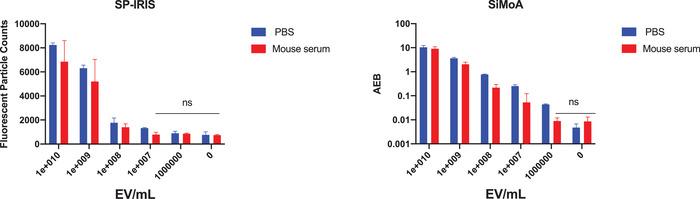
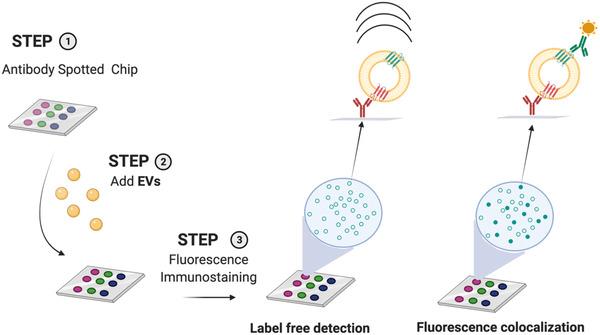
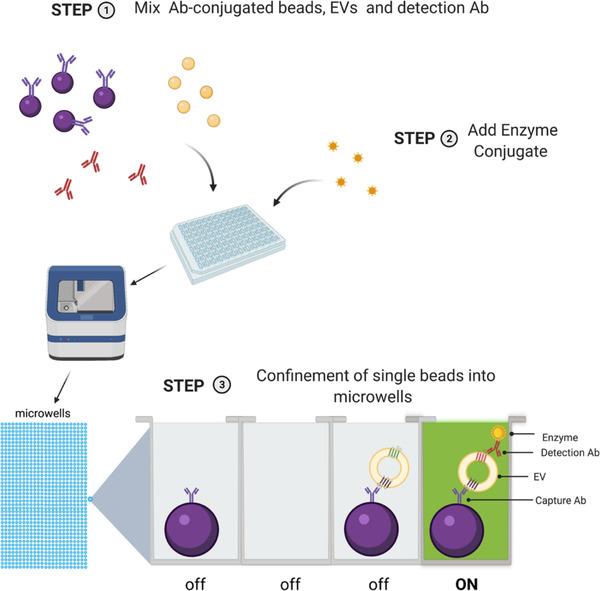
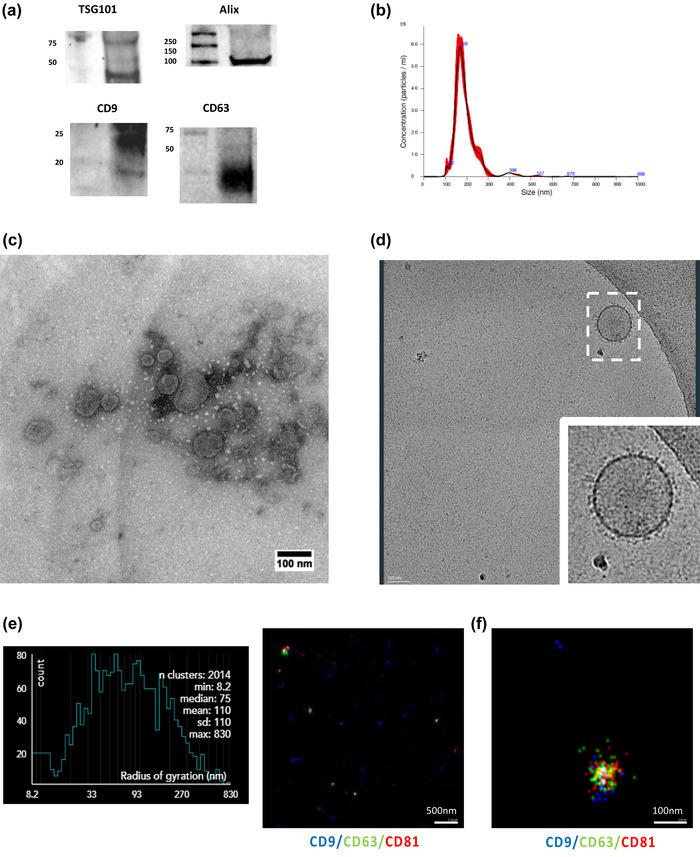
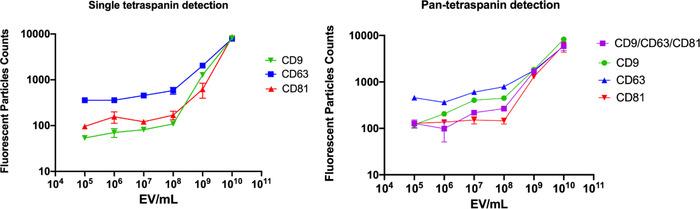
Despite their clinical potential, Extracellular Vesicles (EVs) struggle to take the scene as a preeminent source of biomarkers in liquid biopsy. Limitations in the use of EVs origin from their inherent complexity and heterogeneity and from the sensitivity demand in detecting low to very low abundant disease-specific sub-populations. Such need can be met by digital detection, namely capable to reach the single-molecule sensitivity. Here we set to compare, side by side, two digital detection platforms that have recently gained increasing importance in the field of EVs. The platforms, both commercially available, are based on the principles of the Single Particle Interferometric Reflectance Imaging Sensing (SP-IRIS) and the Single Molecule Array technology (SiMoA) respectively. Sensitivity in immune-phenotyping of a well characterized EV sample is reported, discussing possible applicative implications and rationales for alternative or complementary use of the two platforms in biomarker discovery or validation.
尽管细胞外囊泡(EVs)具有临床应用潜力,但在液体活检中,它们作为生物标志物的卓越来源仍难以崭露头角。EVs使用中的局限性源于其固有的复杂性和异质性,以及检测低丰度至极低丰度疾病特异性亚群时对灵敏度的要求。数字检测能够满足这种需求,即能够达到单分子灵敏度。在此,我们将并排比较最近在EVs领域日益重要的两种数字检测平台。这两种平台均有商业产品,分别基于单粒子干涉反射成像传感(SP-IRIS)原理和单分子阵列技术(SiMoA)。报告了对一个特征明确的EV样本进行免疫表型分析时的灵敏度,并讨论了这两种平台在生物标志物发现或验证中替代使用或互补使用的可能应用意义和基本原理。




 Zotero 插件