
K7通道激活剂氟吡汀和ML213减轻糖尿病性神经病变链脲佐菌素大鼠模型中的神经性疼痛行为。
K7 Channel Activators Flupirtine and ML213 Alleviate Neuropathic Pain Behavior in the Streptozotocin Rat Model of Diabetic Neuropathy.
作者信息
Ahmed Ashraf Ibrahim, Al-Nuaimi Salma, Mustafa Ayman, Zeidan Asad, Agouni Abdelali, Djouhri Laiche
机构信息
Department of Basic Medical Science, College of Medicine, QU Health, Qatar University, Doha, Qatar.
Department of Pharmaceutical Sciences, College of Pharmacy, QU health, Qatar University, Doha, Qatar.
出版信息
J Pain Res. 2024 Jun 26;17:2267-2278. doi: 10.2147/JPR.S467535. eCollection 2024.
BACKGROUND & OBJECTIVE: Chronic peripheral neuropathic pain (PNP) is a debilitating condition that is associated with many types of injury/diseases, including diabetes mellitus. Patients with longstanding diabetes develop diabetic PNP (DPNP), which is resilient to currently available drugs. The underlying molecular mechanisms of DPNP are still illusive, but K7 channels that have been implicated in the pathogenesis of various types of chronic pain are likely to be involved. Indeed, using the streptozotocin (STZ) rat model of DPNP, we have previously shown that K7 activation with their non-selective activator retigabine attenuated neuropathic pain behavior suggesting that these channels are implicated in DPNP pathogenesis. Here, we evaluated, in the same STZ model, whether the more potent and more selective K7 channel openers flupirtine and ML213 attenuate STZ-induced pain hypersensitivity.
METHODS
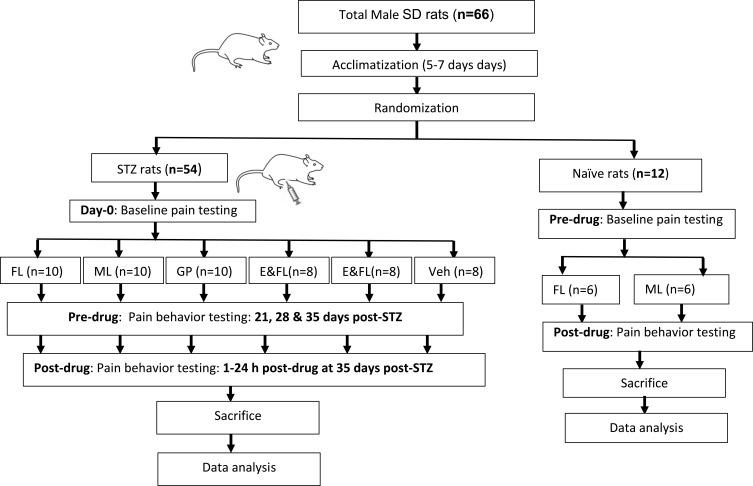
Male Sprague Dawley rats (250-300 g) were used. The STZ model involved a single injection of STZ (60 mg/kg, i.p.). Behavioral testing for mechanical and heat pain sensitivity was performed using a dynamic plantar aesthesiometer and Hargreaves analgesiometer, respectively.
RESULTS
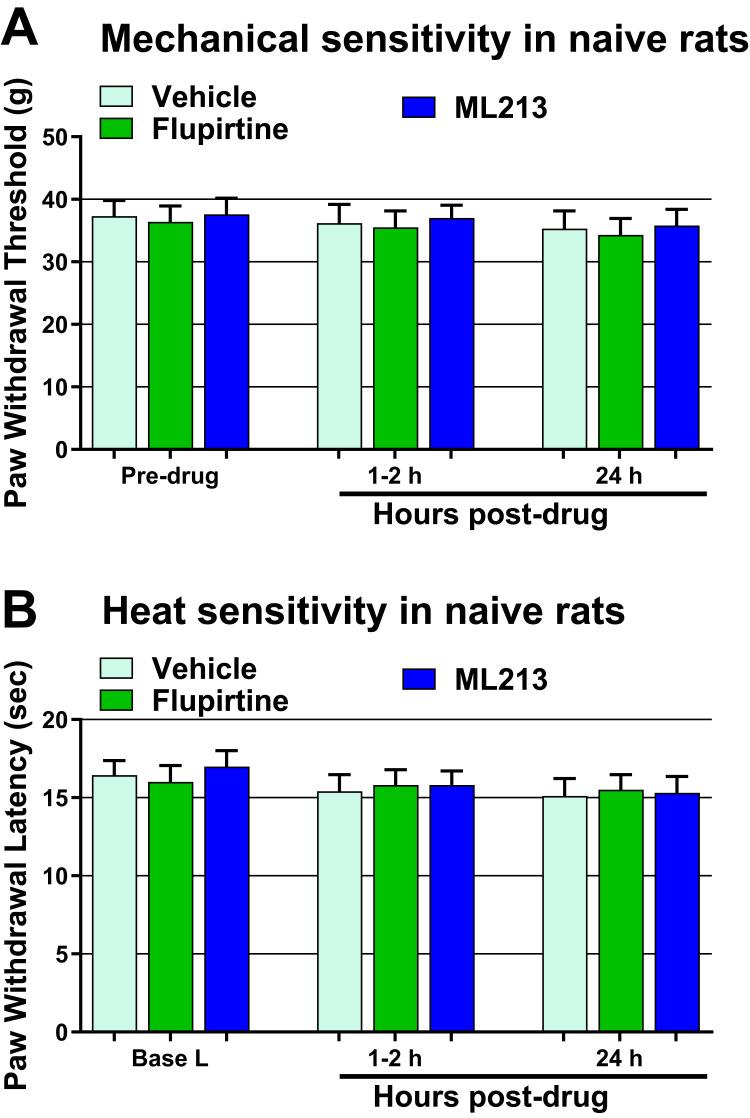
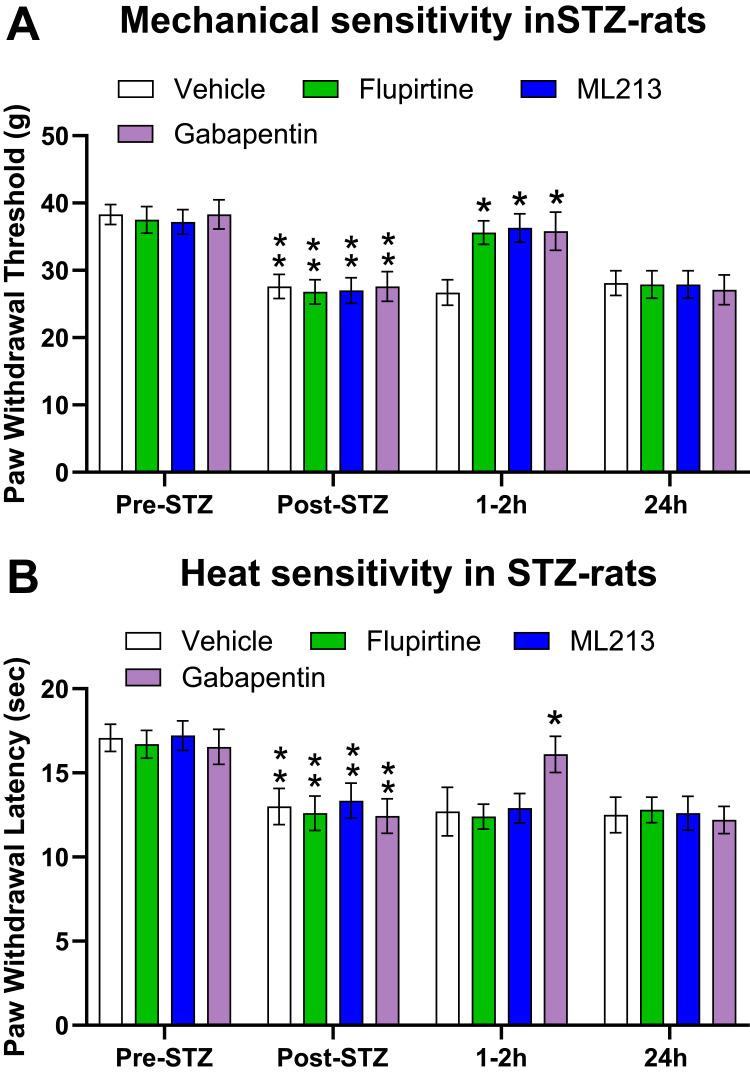
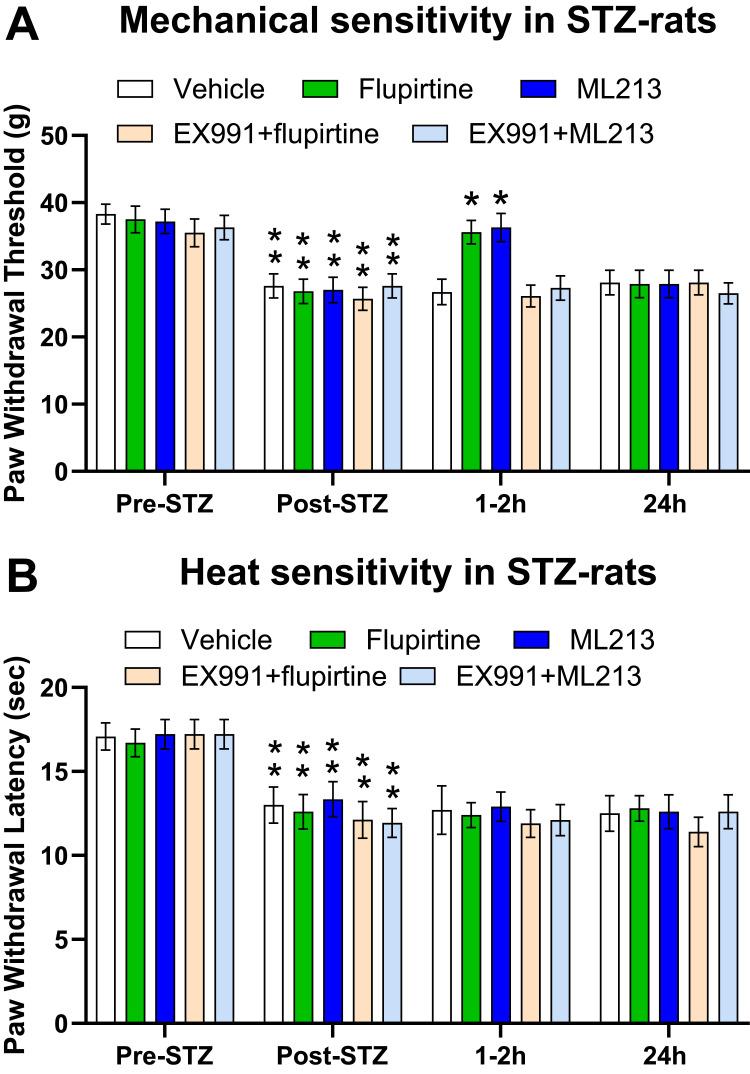
STZ rats exhibited behavioral signs of mechanical and heat hypersensitivity as indicated by significant decreases in the mean paw withdrawal threshold (PWT) and mean paw withdrawal latency (PWL), respectively, at 35 days post-STZ treatment. Single injections of flupirtine (10 mg/kg, i.p.) and ML213 (5 mg/kg, i.p.) to STZ rats (35-days after STZ treatment) caused significant increases in the mean PWT, but not PWL, indicating attenuation of mechanical, but not heat hypersensitivity. Both flupirtine and ML213 were as effective as the positive control gabapentin (10/kg, i.p.), and their anti-allodynic effects were prevented by the K7 channel-specific blocker XE991 (3 mg/kg, i.p.).
CONCLUSION
The findings suggest that K7 channels are involved in the mechanisms of mechanical but not heat hypersensitivity associated with DPNP, and that their activation may prove to be effective in alleviating DPNP symptoms.
背景与目的
慢性周围神经性疼痛(PNP)是一种使人衰弱的病症,与多种类型的损伤/疾病相关,包括糖尿病。长期患糖尿病的患者会发展为糖尿病性周围神经性疼痛(DPNP),而DPNP对目前可用的药物具有抗性。DPNP的潜在分子机制仍不清楚,但已被证明与各种类型慢性疼痛发病机制有关的K7通道可能参与其中。事实上,利用DPNP的链脲佐菌素(STZ)大鼠模型,我们之前已经表明,用其非选择性激活剂瑞替加滨激活K7可减轻神经性疼痛行为,这表明这些通道与DPNP发病机制有关。在此,我们在同一STZ模型中评估了更有效、更具选择性的K7通道开放剂氟吡汀和ML213是否能减轻STZ诱导的疼痛超敏反应。
方法
使用雄性Sprague Dawley大鼠(250 - 300 g)。STZ模型涉及单次腹腔注射STZ(60 mg/kg)。分别使用动态足底测痛仪和哈格里夫斯痛觉测定仪对机械性和热痛敏感性进行行为测试。
结果
在STZ治疗后35天,STZ大鼠表现出机械性和热超敏反应的行为迹象,分别表现为平均缩爪阈值(PWT)和平均缩爪潜伏期(PWL)显著降低。对STZ大鼠(STZ治疗后35天)单次腹腔注射氟吡汀(10 mg/kg)和ML213(5 mg/kg)可使平均PWT显著升高,但PWL未升高,表明可减轻机械性超敏反应,但不能减轻热超敏反应。氟吡汀和ML213的效果与阳性对照加巴喷丁(10 mg/kg,腹腔注射)相同,并且它们的抗痛觉过敏作用可被K7通道特异性阻滞剂XE991(3 mg/kg,腹腔注射)阻断。
结论
这些发现表明,K7通道参与了与DPNP相关的机械性而非热超敏反应机制,并且激活这些通道可能被证明对缓解DPNP症状有效。

 Zotero 插件